I’m Dreaming of an Orange Christmas

What if all you got for Christmas was an orange?

You’d no doubt feel disappointed and short-changed, as though Scrooge had been put in charge of the gift-giving this year.

A measly orange? Where was the new big-screen TV you were expecting? Or the latest iPhone you thought would be in your Christmas stocking?

Actually, there was a time when receiving an orange for Christmas was considered a special treat. Oranges were once so rare in northern countries that Christmas was the only time you would splurge on them, and they came to symbolize the holiday season. In some families, an orange would be the only present you’d receive, and you would be thankful for it.

These days, we receive so many gifts that one individual present doesn’t stand out as much. Not only that, we seem to expect increasingly expensive gifts as the years go by.

Surveys show that the average American will spend about $1,000 on Christmas each year, which includes gifts, food, and decorations. Parents spend an average of $200-$300 per child on Christmas presents for their offspring.

That would buy a lot of oranges!

But with all this spending, we don’t seem to cherish the most important gift enough:

Jesus.

Somehow the incalculable worth of the gift of Jesus to humankind gets lost in the mix.

So how do we return to viewing the celebration of the birth of the Christ child as central to our Christmas celebrations?

Read more

Forgive and Forget? Not!

Image by John Liu on Flickr CC BY-2.0

I know you’ll love these wise insights on forgiveness from my friend Veronica Gerber. We’re very fortunate to have her as our guest blogger today!


It’s popular to think of “forgive and forget” but, paradoxically, the bridge to forgiveness includes remembering, not forgetting!

Remembering what?

  • How much I’ve been forgiven and what it cost the Savior
  • Actions have consequences; learning from past mistakes
  • Vengeance belongs to the Lord

What dynamic is at work when you find it hard to forgive?

In my own experience, I’ve found it easiest to forgive when I remember how much I myself have been forgiven. When it’s hard to forgive, perhaps it’s because I’ve actually forgotten how much the Lord has forgiven me.

"Be kind and compassionate to one another, forgiving each other, just as in Christ God forgave you." (Ephesians 4:32, NIV)

That being said, actions do have repercussions. There is often a place for rebuke. Forgiving one another does not mean sweeping consequences aside! It’s not an easy or glib exercise.

"He who rebukes a man will in the end gain more favour than he who has a flattering tongue." (Proverbs 28:23, NIV)

True forgiveness includes a thorough assessment of the offence and yet chooses to extend the grace of forgiveness.

Read more

How to Pack for Eternity

Image by Irina L from Pixabay

The way you pack for a trip says something about you.

Some people are super-organized, and that’s reflected in their packing behaviour.

They create lists of things to be done before the trip. Colour-coding of priority tasks is often involved. Any item they could possibly need while abroad is obtained, efficiently packed, and checked off the list.

Some nations have gone to war with less preparation than this.

Other people are more random. Sure, they’ll throw some clothes in a suitcase, but there’s no grand plan they’re following. Often, the things they pack for a trip will be a bit puzzling.

A survey of British travellers revealed the odd things that some people bring along with them wherever they go. The top 10 strangest items that people simply couldn’t do without when on a trip included:

  • Framed pictures of dead cats;
  • A loved one’s ashes;
  • A stuffed pet hamster;
  • An emotional support boa constrictor. (Really?)

But seriously, what’s the most important thing to bring with us on a trip?

People!

The ones we love most: our best buddies or our dearest family members.

Movies like “Home Alone” have taught us the perils of leaving behind someone important when we travel.

But what about life’s most important journey?

The one to our eternal home?

The same holds true. The most important thing to bring with us is people.

Read more

The Cure for Seasickness

Image by Manfred Richter from Pixabay

Ever been to sea?

If you have, you just might have experienced a bout of seasickness. For landlubbers, the first time on a boat that is rolling and pitching on the waves can produce feelings of nausea.

Why is this?

The problem is a disconnect between the messages your eyes and your inner ear are giving your brain. If you’re in an enclosed space on a boat, your eyes tell you that you’re standing on level ground. The fluids swishing around in your inner ear, however, tell a different story: that you’re being tossed to and fro. It’s the contradictions between these messages that produces the sensation of seasickness.

So what’s the solution?

A time-tested remedy for seasickness is to get up on deck and look at the horizon: it’s the only thing that isn’t moving when the boat you’re aboard encounters heavy seas.

Looking at a fixed target gives your eyes a stationary point of reference, allowing your brain to reconcile this information with the motions your inner ear is reporting. Once you can see what “level” is, your brain can more easily deal with the feeling of movement from your inner ear.

And this isn’t just an old-wives’ tale: scientific studies have backed up the idea that staring at the horizon actually does make you feel steadier while at sea.

But what if you’re on dry land and feel “seasick” with the turbulence in your life?

What if it feels like the challenges in your life have put you in heavy, roiling seas, and you can barely tell up from down?

The same advice applies: focus on a fixed point, something that can be relied upon not to change.

For believers, that thing is Jesus.

Read more

Who Floats Your Boat?

Image by Bernd from Pixabay

Today we have a special treat—a guest post by my dear friend Veronica Gerber. Be encouraged by her insights into the story of Jesus stilling the storm!


“That day when evening came, he said to his disciples, ‘Let us go over to the other side.’ Leaving the crowd behind, they took him along, just as he was, in the boat. There were also other boats with him. A furious squall came up, and the waves broke over the boat, so that it was nearly swamped. Jesus was in the stern, sleeping on a cushion. The disciples woke him and said to him, ‘Teacher, don’t you care if we drown?’
“He got up, rebuked the wind and said to the waves, ‘Quiet! Be still!’ Then the wind died down and it was completely calm.
“He said to his disciples, ‘Why are you so afraid? Do you still have no faith?’
“They were terrified and asked each other, ‘Who is this? Even the wind and the waves obey him!’” (Mark 4:35-41)

In this true-life adventure story that Mark recounts for us, Jesus is roused by the cries of his disciples and dramatically calms the storm.

Are you also in a storm? Perhaps you are a believer and so Jesus is already living in your heart—in your boat so to speak—but you feel as if he’s asleep?

Read more

Multiply Your Thanksgiving

Image by Sabrina Ripke from Pixabay

Is it ever possible to be too thankful?

Not in my books.

Especially when Thanksgiving Day involves your favourite foods; roast turkey with all the trimmings, cranberry sauce, potatoes and gravy, and pumpkin pie.

That’s why Canadians who visit relatives in the States in the fall are lucky: they get to celebrate Thanksgiving Day twice.

This year, Canadian Thanksgiving is today, Oct. 9, while Americans celebrate their Thanksgiving on Nov. 23. Canadians popping across the border to spend time with American relatives on their holiday get to have an encore of the Thanksgiving feast.

This is not a problem if you love turkey, as I do. (If you don’t, please invite me over and I’ll eat your share for you.)

This got me thinking: is it ever possible to be too thankful to God?

Again, my answer would have to be no.

It pleases God greatly when we thank Him for what He’s done in our lives.

Read more

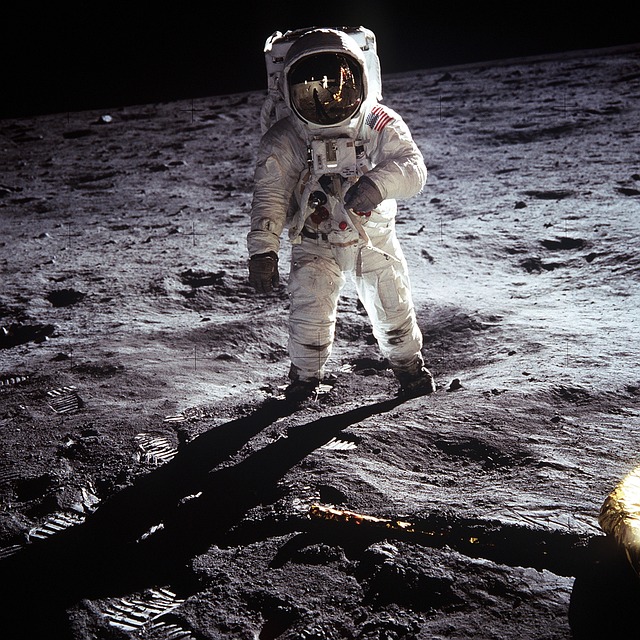
Jesus, Our Fellow Astronaut

Image by WikiImages from Pixabay

When you’re an astronaut about to set foot on a new world, you don’t want an amateur at the helm back at Mission Control on Earth.

That’s why the role of CAPCOM is so crucial to any space journey.

CAPCOM is short for Capsule Communicator, the person at NASA who is the liaison between the astronauts in their “capsule” and Mission Control. This individual is the single voice the crew members on the spacecraft hear when communicating with Earth, with all information being filtered through them.

The CAPCOM is listening to all the data about the mission from every console at Mission Control. This person hears what the Flight Director wants the crew to know, and turns it into words the crew will understand. They’re also the crew’s trusted agent on the ground, fighting battles and arguing in their stead.

The CAPCOM is essential to the success of each mission.

Understandably, this job isn’t given to just anyone.

Right from the start of the U.S. space program, it was recognized that the astronauts would need someone they could trust to be their relay back on Earth. Someone who knew what they were going through, because they’d gone through the same experience.

So the role of CAPCOM has traditionally been given almost exclusively to former astronauts.

Although there are numerous highly trained and very talented people at Mission Control who could assume the job of CAPCOM, NASA felt that someone who had been an astronaut themselves would be best able to understand what’s going on in the spacecraft and to pass information along in the clearest way.

After all, no one but an astronaut knows what it’s like to blast off in a rocket and “let slip the surly bonds of Earth.” No one but a fellow space traveller knows the vulnerable feeling of floating in the vast blackness of space, hundreds or even thousands of miles from your home planet.

Even though you and I may not be launching into space anytime soon, we still need a CAPCOM of our own.

Read more

Marinate in God’s Word

Image courtesy of Pixabay

Are you planning on firing up the grill to barbecue some meat this summer?

Many people believe the key to success is to marinate the meat beforehand.

When you marinate food before barbecuing it, more is going on than meets the eye (or the taste buds).

You’re doing more than simply soaking the food in a seasoned liquid to add extra flavour to it.

You’re actually changing its structure and making it yield.

Marinating tenderizes meat, breaking down tough connective tissues to make it more palatable. It also helps meat retain moisture, ensuring that the cooked meat will be juicy and not dry.

Marinades usually have a sharp, acidic ingredient, like wine, vinegar or lemon juice, or an enzymatic one, like yogurt of papaya. Herbs, spices and oils are added as well.

Whether you use a red-wine-based marinade for beef dishes, or a tangy yogurt-lemon one for chicken, your meat is guaranteed to turn out tender.

Likewise, when we meditate on God’s Word, or “marinate” in it, we’re doing more than simply adding Biblical quotations to our knowledge base.

As we absorb and internalize Scripture, it changes us and doesn’t leave us the same.

Read more

Amplify the Signal

Image from Pixabay.

Does your dog or cat come running when it hears the can opener?

Does your husband?

I guess we all tune in to sounds that are important to us, don’t we?

Parents are able to zero in on the specific cry of their child at a playground. They’re able to filter out the sounds of other children to focus on their own.

If you drop some coins on the floor, everyone’s head swivels toward the sound. Our ears strain out the other ambient noises in the environment and prick up at the sound of money tinkling.

Obviously, our family and money are things that are important to us.

But what about the messages that God is trying to send us?

Do we tune in to those with as much attention?

Or are there so many distractions in our lives that we’re unable to focus on the character of God and His love for us?

Maybe we need to adjust the signal-to-noise ratio in our lives.

Read more

The Wrong Idea of Dessert

Image of sweet red bean soup by Roland from Flickr, CC BY 2.0

Do you like brownies? How about chocolate cake?

If you do, then you and I are on the same page when it comes to sweets. We both have the same idea of what a perfect dessert is.

Not everyone might agree with us, however.

Take my friend John, whose background is Greek. He likes syrupy-sweet desserts like the Greek classic baklava, or nut-based ones like walnut cake, things I love as well.

John happens to be married to an Asian woman. They agree on most things, except when it comes to dessert.

Case in point: John’s in-laws once treated him to dinner at a Chinese restaurant. They promised him an extra-special dessert to finish off the banquet, something he’d absolutely love.

John couldn’t wait: his mouth was watering in anticipation of this mystery dessert. He imagined something intensely sweet to finish off the meal, perhaps a cake with multiple layers and lots of icing.

But when the dessert was placed in front of him, John was confused.

It was red bean soup.

While this dish is popular among Chinese people and is considered the crown jewel to end a banquet with, it wasn’t John’s idea of dessert. He was gracious in front of his in-laws, but secretly felt cheated.

The problem? John’s definition of dessert was different to that of his in-laws. His expectations were askew, so he was disappointed with what he got.

I think the same thing happens to us when read certain Bible verses—we may build up incorrect expectations based on our ingrained ideas.

Read more