Can storms be beautiful?
Yes, if you’re far enough away from them!
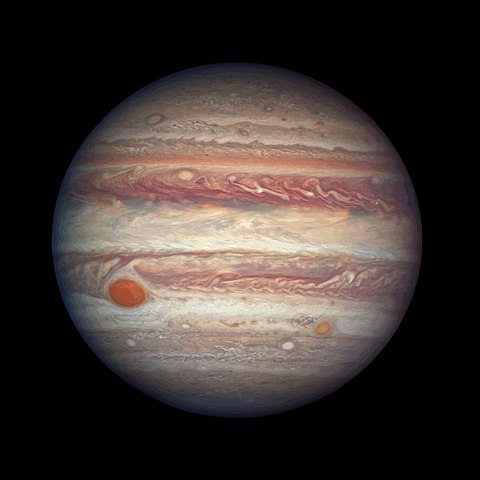
The most distinctive feature of the planet Jupiter, its Great Red Spot, is actually a massive storm.
Astronomers have been observing this maelstrom continuously since 1878, but it’s likely that it had been raging for centuries before that. The size of this storm is so vast that it could swallow the entire earth.
From a safe distance away here on earth, the Great Red Spot’s colourful swirls are beautiful, like marbled ice cream or the end papers of antique books. Jupiter’s storms appear to us like abstract art; indeed, images of them have appeared on everything from posters and ties to bedsheets and yoga mats.
But up close, they’re violent tempests, howling hurricanes of ammonia and water. Because Jupiter is a gaseous planet, there is no solid ground to dissipate the energy of these swirling vortexes, as would happen on earth when a hurricane makes landfall. At its edges, the Red Spots’s wind speeds can reach 270-425 mph (430-680 km/h), over twice the speed of even the most monstrous hurricane here on earth.
Do you feel like you’re in a storm like that right now?
Perhaps you’ve been enduring heartache, unemployment, illness, or loneliness.
Maybe it seems like the tempest has been raging in your life for years. Nothing seems to slow it down. From a distance, people can’t see how destructive it is to you.
The good news is that God offers hope to those in the midst of the storms of life.
Read more
 The Faith Cafe
