Prayers Live On, Like Lilacs

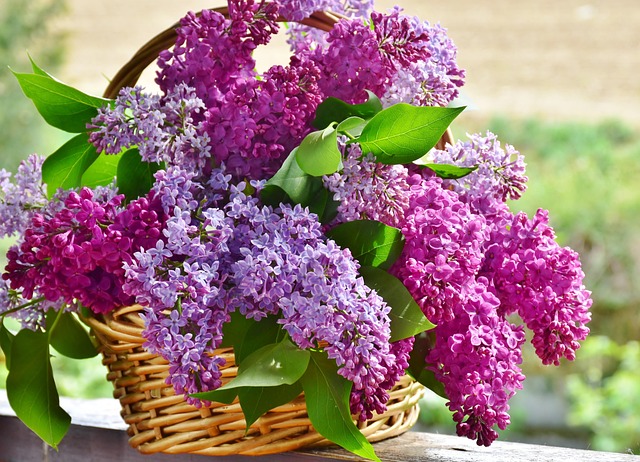
This is a special time of year in my part of Canada: the lilacs are speaking!

Lilac flowers don’t use words, of course. They announce their presence through their beautiful fragrance and delicate purple colour.

But there’s another way lilac shrubs can talk to us. Their very location can give us clues to the history of a place.

“…the story of early Canada can be read in the lilacs clustered where log cabins once stood, at the edge of abandoned fields—flowers marking time in centuries.” (from “A New Leaf,” by Merilyn Simonds)

Settlers to the northern parts of North America would often plant lilac shrubs on either side of the front door to their farmhouse. Generations or even centuries later, the building has long since been torn down, but the lilacs live on.

If you see a pair of huge lilac bushes in a field or empty lot, you can be pretty sure they used to flank someone’s front door. The house is gone, the family has moved away, but the fragrance of the lilacs they planted still fills the air.

This reminds me a bit of how prayers can live on, long after the person who prayed them is gone.

Read more

We Must Experience Christ Firsthand

What’s your favourite floral fragrance?

If you said rose or lavender, you’re in luck.

These flowers are among those from which we can easily extract essential oils. These substances can then be used in products ranging from perfumes to scented soaps. If you love the smell of these flowers, you have all manner of ways to experience the scent. You can do so directly, by smelling the flower, or secondhand, as it were, through items made from their oils.

But some flowers don’t produce enough usable essential oils.

My favourite floral scent, lilac, is one of them.

Unfortunately for me, the aromatic compounds in lilacs are nearly impossible to acquire. Trying to extract the fragrance through steam distillation can end up destroying the scent profile. And the tiny amount of essential oils that may result are so expensive to produce that it’s not economically worthwhile to bother.

The end result is that you can’t buy true lilac essential oil. Perfumers may be able to mimic the scent of lilacs through synthesis, but the resulting fragrance hasn’t been distilled solely from the actual flower itself; it’s merely an approximation, a blend of other floral notes. No chemist can authentically capture the unique scent of the lilac.

If you want to experience the true fragrance of lilacs, there’s only one way to do it. You have to experience it “live,” by smelling an actual cluster of flowers.

Likewise, if we want to experience Jesus, it has to be “live.”

Read more