The Most Astounding Thing About Christmas

What’s the most astounding thing about Christmas to you?

The amount of electricity used in powering all the Christmas lights on people’s homes?

The credit card bill you’re racking up to buy gifts for family, friends, and coworkers?

The way your Uncle Louie consistently manages to buy you the most inappropriate gift imaginable, every single year?

The ugly Christmas sweater said uncle wears to every holiday event, even formal ones?

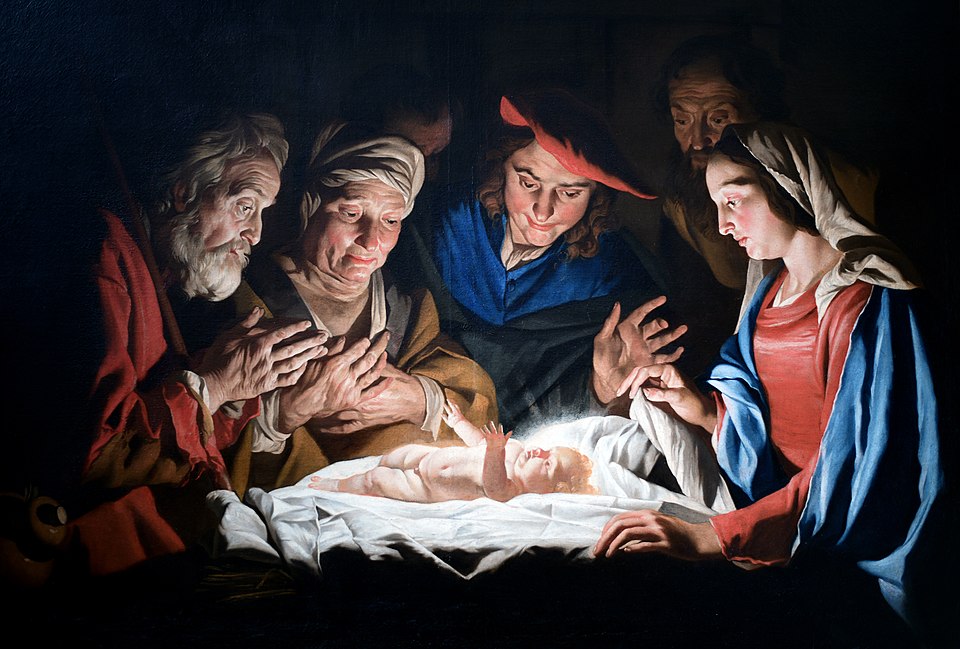
No, the most astounding thing about Christmas is that the Creator of the Universe, Almighty God, came down to earth and was born as a baby.

God Himself, the perfect and holy One, entered our messy, sinful world in the form of Jesus and dwelt with us for 33 years. Then He died on a Cross for our sins. All this was done out of immense love for us.

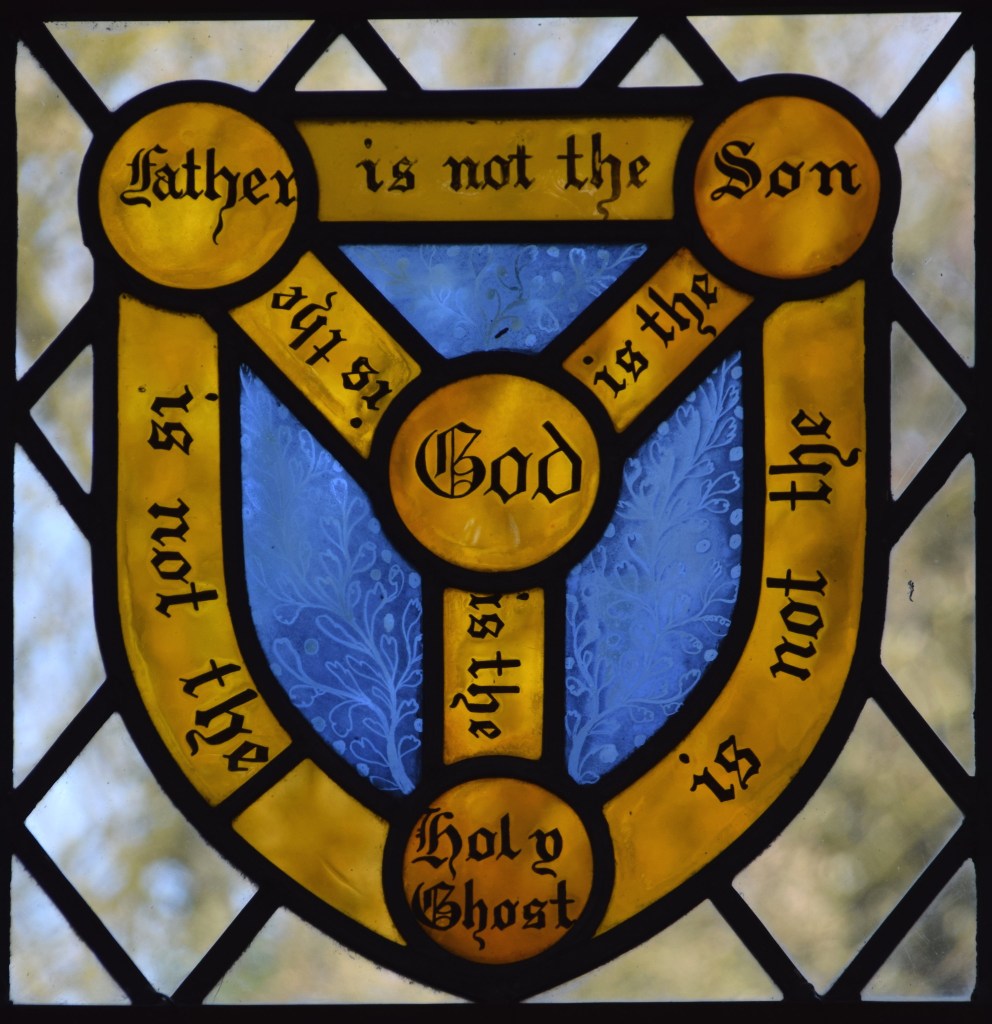
The theological term for God coming to us in this fashion is the Incarnation, which literally means “God made flesh.”

The Incarnation features heavily in my favourite Christmas carol, “Hark the Herald Angels Sing.”

Its writer, Charles Wesley, seems to have been so astounded by the fact of the Incarnation that he sprinkled this hymn with at least 10 references to it. See if you can spot them:

Read more

Follow the Cat!

If you have ever owned a cat (or have been owned by one), you’ll know that if you want to find the warmest, most comfortable place in your home, just follow the cat.

Cats unerringly zero in on the most comfortable spot in your house. They’re not above stealing your favourite chair or displacing you from your own bed in their quest for comfort.

Our feline friends consistently find the sunniest windowsill on which to perch or a warm heating vent in the floor over which to drape themselves. They’ll snuggle into the coziest, most protected part of the sofa, or stake out a claim on the most comfy lap.

Cats are masters at pinpointing zones of highest comfort.

But if you’re in need of comfort, reassurance, love and protection, where do you find it?

Follow the people who know the Source of all comfort.

Christians know that in a world that can be harsh, unfair and difficult, there is an unfailing source of comfort we can tap into.

Read more

Who Loves You?

Photo from Pxhere

How many times today has someone told you that they love you?

If you have a loving family, you’ll probably hear them express their love for you frequently.

But what if your family ties are a bit strained? What if you don’t have many close relationships at all, and consider yourself to be fairly alone in the world?

Then you probably don’t hear the words “I love you” nearly enough.

There’s a remedy for that:

Open a Bible.

The unfailing love of God is a soundtrack that reverberates through the Scriptures.

It’s easy to find verses in the New Testament that exemplify God’s love:

“But God demonstrates his own love for us in this: While we were still sinners, Christ died for us.” (Romans 5:8)
“This is real love—not that we loved God, but that he loved us and sent his Son as a sacrifice to take away our sins.” (1 John 4:10)
And of course: “For God so loved the world that he gave his one and only Son, that whoever believes in him shall not perish but have eternal life.” (John 3:16)

But what about the Old Testament?

Read more

The Garden of the Heart

Image by Miroslav Kaclík from Pixabay

As a special treat for my Faith Cafe visitors, here’s a fresh take on Psalm 23:

In the garden of the heart, where shadows fade,
I walk with the Beloved, who never leads astray.
He is the shepherd, gentle and wise,
His love, like a river, flows through the skies.
The pastures of grace are green and wide,
I rest in His presence, where peace will reside.
Still waters call, soft and serene,
In His embrace, I am cleansed, I am seen.
Though the valley of darkness may stretch its might,
I fear no shadow, for He is my light.
His staff and His rod, steady in hand,
Guide me with wisdom, through this shifting land.
Image by Kati from Pixabay
No hunger nor thirst shall find me here,
For the table He sets, overflows with cheer.
Anointing my soul with oil of bliss,
I drink from His cup, a cup of endless kiss.
In the house of the Beloved, I shall stay,
Where love is the lamp that lights my way.
From moment to moment, from breath to breath,
I walk in His grace, defying death.
In the arms of the Shepherd, I am whole,
For He leads me home, to the garden of soul.
Image by Susann Mielke from Pixabay

(In case you’re wondering who wrote this lovely poem, it was the result of my tooling around with ChatGPT!)

© 2025 Lori J. Cartmell. All rights reserved.

The Language of Flowers and the Language of God

Say it with flowers!
Wikimedia Commons, CC BY-SA-2.0

Flowers speak. Not just through their fragrance or their beauty, but with secret codes, too.

Perhaps you’ve heard of the “language of flowers” that was popular during Victorian times?

This enchanting symbolic language enabled suitors to send coded messages to their paramours, ones that couldn’t be spoken aloud. The message depended on the particular flowers and colours chosen for the bouquet. An entire conversation could be carried out solely through flowers, with no words employed at all.

We all know that red roses symbolize true love, and we’d rightly guess that the forget-me-not begs that the giver be remembered. But did you know the following flower meanings?

Red carnation: My heart aches for you
Hyacinth: Your loveliness charms me
Canterbury bell: Your letter received
Yellow rose: Jealousy
Butterfly weed: Let me go
Weeping willow: Sadness

The Victorian language of flowers is a cryptic tongue. Most people only see the surface of the flower and not the symbolic meaning hidden within it.

God has His own “language of flowers,” but it actually encompasses all of creation. God is continually speaking to us through nature:

“For ever since the world was created, people have seen the earth and sky. Through everything God made, they can clearly see his invisible qualities—his eternal power and divine nature. So they have no excuse for not knowing God.” (Romans 1:20)
“The heavens proclaim the glory of God. The skies display his craftsmanship.” (Psalm 19:1)

If we listened in to what nature was saying about its Creator, what messages would be revealed?

Read more

The Throne of Grace

Image by Ralph from Pixabay

What does your favourite chair look like?

Is it a ratty recliner held together with pieces of duct tape, like the one used by Marty Crane on the TV sitcom “Frasier”?

Or is it more regal and imposing, dominating the room like a throne?

I think many of us rather like the idea of having a throne like the ones monarchs throughout history sat on.

The seat of the Chinese emperors was known as the Dragon Throne. The Mughal emperors of India had the Peacock Throne.

Korean monarchs sat on the Phoenix Throne, and Japanese emperors on the Chrysanthemum Throne.

The Shahs of Persia sat on a royal throne known as the Marble Throne, while Swedish monarchs were crowned on the Silver Throne.

Both the emperors of Vietnam and the Pharaoh Tutankhamen were enthroned on a Golden Throne.

And of course fantasy novelist George R. R. Martin has given us the Iron Throne, the seat of the monarch in the fictional Seven Kingdoms of Westeros. It was said to have been made of the swords of defeated enemies.

But there’s a throne made of something infinitely more precious than any of the above…

The Throne of Grace.

Read more

It’s Raining Diamonds!

If diamonds are a girl’s best friend, I’m on the wrong planet.

I’ve just discovered that there are planets on which it rains diamonds.

Scientists believe that diamond rain could occur deep in the atmospheres of our gas giant neighbours in the solar system: Jupiter, Saturn, Uranus and Neptune.

Thousands of miles below the surface of these planets, carbon atoms come under such crushing pressure in the dense atmospheres that diamonds could form. The conditions are so extreme that further down, the diamonds could melt into liquid, forming diamond “rain” drops.

On some planets in the universe, these drizzles could involve diamonds millions of carats in size.

The wonders of the cosmos don’t end there. Scientists suggest that on the exoplanet WASP-121b it rains liquid rubies and sapphires. Clouds on this planet could be made of corundum, a mineral out of which these precious gems are formed.

It gets better.

The asteroid Psyche 16, which orbits the sun in the asteroid belt between Mars and Jupiter, is made entirely of solid metal. It has enough gold to turn every person on Earth into a billionaire. As well as gold, this intriguing minor planet contains metals such as platinum, iron and nickel in abundance. If Psyche 16’s metals were on Earth, their combined value would be worth perhaps $100,000 quadrillion.

Talk about an embarrassment of riches!

What does all this tell us?

That the precious gems and metals we covet are a dime a dozen in God’s universe. After all, Scripture tells us that in Heaven, the streets are paved with gold.

More importantly, God has an inexhaustible supply of the things that we truly need: grace, mercy, love, and forgiveness.

Read more

What Love Looks Like

The incomparable Taj Mahal, India

The Taj Mahal, in Agra, India, is considered to be one of the world’s most beautiful buildings, and rightly so.

Built from white marble, it was commissioned in 1631 by Shah Jahan as a memorial to his favourite wife, Mumtaz Mahal, who died that year giving birth to their fourteenth child.

For many in India and around the world, the Taj Mahal is an iconic symbol of love. Every stone and jewel used in its construction speaks of the tremendous affection the Shah had for his wife, and his grief at her passing. To many people, the Taj Mahal is the embodiment of love.

What does love look like to you?

Read more

The Ultimate Love Story

Image by lillaby from Pixabay

Valentine’s Day is just around the corner!

On this beloved day of the calendar, we celebrate our love for that special someone in our lives. Many of us will be giving (or receiving) boxes of chocolates and bouquets of roses as an expression of that love.

But sometimes those roses have thorns, don’t they?

The truth is, love sometimes hurts. It can cost us something.

We think of Valentine’s Day as simply about romantic love, but the history behind this day shows us that true love is often about sacrifice.

This was certainly the case for Saint Valentine of Rome, for whom Valentine’s Day is named.

This third-century priest was known for his evangelistic work and for aiding persecuted Christians. He was martyred for his faith on February 14 in AD 269, executed by order of Emperor Claudius for refusing to deny Christ.

Saint Valentine patterned for us a life focussed on loving others; he refused to deny the Source of that love, even if it cost him his life.

Christ modelled that sort of sacrificial love, too.

He would let nothing stop His purpose of showing love to others by securing for them a way to spend eternity with Him, even if it cost Him His life.

And it did.

Read more

Keep Your Eyes On The Son

Image by mbll from Pixabay

Why don’t trees freeze to death in winter?

After all, if you or I stood outside naked for several months in sub-zero temperatures, we’d soon be turned into frosty statues.

Trees can’t burrow into the ground and hibernate like bears, and they can’t fly south like migratory birds. They’re fixed in place, at the mercy of the elements.

And yet they somehow survive through the cold depths of winter. Why don’t they turn to ice, since, like other living things, they’re made mostly of water?

Their trick is something called “hardening.”

In autumn, trees in cold climates undergo a change whereby water flows out of their cells. The concentrated sugars, proteins, and acids left behind act as a potent antifreeze. The water now in the spaces between the cells is so pure that ice crystals can’t form. This ultra-pure water can be cooled to -40 degrees F and still remain an ice-free liquid.

Pretty cool, isn’t it?

But what is it that triggers the hardening?

Ah, this is where we can learn a lesson from the trees.

Read more