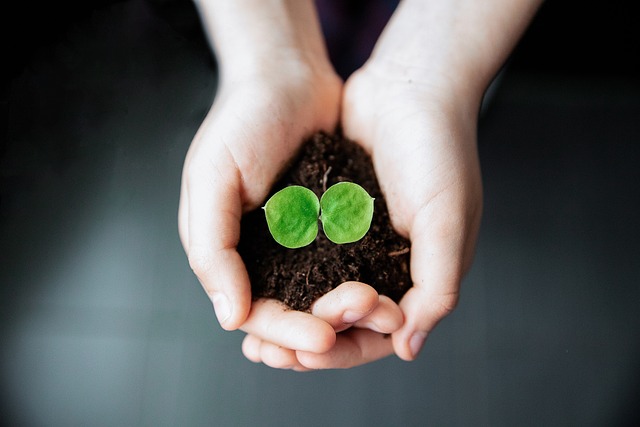
The God of Second Chances

Image by Irina from Pixabay

It’s an awesome feeling to realize that you’ve got a second chance, isn’t it?

A friend of mine discovered this after moving into a house with a large garden in the summer. A beginner gardener, she was delighted to finally have enough space for an extensive vegetable garden. She immediately planted some tomato and cucumber seedlings, which are now growing vigorously.

Because she’d moved in mid-summer, however, she lamented that she’d missed the chance to start growing vegetables like beets, spinach, peas, and carrots from seed in spring. She knew that cool-weather-loving veggies like peas wouldn’t thrive in the summer heat. She figured that if you didn’t plant those seeds in the spring, you’d missed your chance for the whole year.

But the garden, like God, often gives us second chances.

I told my friend that she could actually plant those seeds in summer for a fall harvest. There was still time to grow a second crop before the frosts of November hit. She hadn’t missed out after all: she could still grow the cool-weather veggies she’d hoped for.

What a wonderful metaphor for how God deals with us!

So often, we think we’ve missed out on what we’d wanted to accomplish or what God had planned for us. We figure that either the passage of time or our own mistakes have disqualified us from achieving our dreams. We lament that it’s too late for us.

But with God, it’s never too late. Our Heavenly Father never gives up on us, and never writes us off.

Read more

What Is Your “Burning Bush”?

Image by Leonora Enking via Flickr CC BY-SA 2.0

You’ve got to love a plant that turns pink in the autumn.

I’m referring to the Euonymus alatus shrub, whose leaves change from green to a vivid, hot pink in the fall.

One of its nicknames is “burning bush,” because in autumn the shrub looks like it’s on fire. It must have reminded people of the burning bush Moses encountered in Exodus 3, through which God spoke to him.

I think God uses many different ways to speak to us today, each a “burning bush” tailored to our unique personalities.

Probably the primary way that God communicates to us is through Scripture. We read or hear a verse that seems to speak directly into our situation. By reading the words of Jesus, we “hear” God’s heart. We may also receive a word from the Holy Spirit or sense God’s guidance through prayer.

There are many instances in the Bible of God giving someone a message through dreams or visions. He may relay information in a dramatic fashion via an audible voice, or the more subtle “still, small voice.”

Other times God may use another person to convey something to you: a Christian speaker or author, or a family member or friend who’s a believer. God may also speak to you through the lyrics of a song or hymn.

He might be sending a message to you through your circumstances, especially via some difficult situation. Or, you may encounter a coincidence that seems like a “sign,” and you think God may be trying to tell you something.

With me, I feel that God occasionally “speaks” to me through nature.

Read more

Your Training Won’t Make Sense at First

Image by Bart via Flickr. CC-BY-NC 2.0

“Why do we have to learn math? We’ll never use it in real life!”

Did you ever say something like that to your teachers in school?

It’s true that you may never have used algebra once you graduated from high school. Your knowledge of trigonometry or calculus may have lain dormant since then, too.

But that wasn’t actually the point of algebra, or any other subject.

The point of learning math was to train your brain.

Mastering mathematical concepts increases your problem-solving skills, develops flexible thinking and creativity, and encourages analytical reasoning.

These are things that are extremely valuable in every area of life.

But you might not have been able to see that when you were trying to understand the Pythagorean theorem in school.

That’s because your training often won’t make sense until much later.

Several heroes in the Bible found this out:

Read more

The Company We Keep

Tony and his mustachioed friend Frank. But which is which?
Image by Tony Alter on Flickr.

They say that sometimes spouses eventually start to resemble one another.

Some husbands and wives may not find this idea terribly thrilling.

A more disturbing trend is when people are dead ringers for their dogs, with the same flowing locks as their Afghan hound, jowls of their English bulldog, or roly-poly wrinkles of their Shar-Pei.

(Let’s hope none of my readers resembles the Komondor dog, which looks like a walking mop head!)

I guess it’s true to say that we become more like the people we spend a lot of time with.

We tend to conform to our friends’ attitudes and emotions, to their likes and dislikes, and even to their speech patterns. This can affect us for good or ill.

The Bible has a few things to say about how important it is to carefully choose the company we keep…

Read more

Turning the Bitter Sweet

Image by Steve Buissinne from Pixabay

“Go suck a lemon!”

Have you ever heard anyone say that?

It means they’re annoyed with you and want you to experience something unpleasant. Lemon juice is so sour that it makes your mouth pucker.

But if lemon juice is so bitter, why are lemon desserts so yummy?

It’s thanks to the addition of a sweetener.

I like lemon-based desserts much better than orange-flavoured ones. It seems to me that the combination of sour and sweet is what makes lemon desserts so satisfying (see below for Lemon Poppyseed Cake recipe).

They say when life hands you lemons, make lemonade.

No, when life hands you lemons, turn it over to God.

He can transform your unwelcome experiences into something good, and make the bitter waters of your life sweeter than any lemonade.

Read more

Straight Out of Left Field

Image by Pexels from Pixabay

Have you ever had a time in your life when God did a work for you that came straight out of left field?

The blessing, provision or miracle he bestowed on you caught you off guard and astonished you. It was completely unexpected and surprising.

You never saw it coming.

God seems to like to work that way, doesn’t he?

Think of Moses in the Old Testament, when he was leading the children of Israel out of bondage in Egypt.

They found themselves in a jam: cornered at the Red Sea with the Egyptian army snapping at their heels.

Moses had faith that God would save them, but I wonder if he was racking his brains trying to figure out just how it would happen.

Maybe God would send a flotilla of boats from the other side to rescue them, Dunkirk-style? But no one knew they were coming, and at any rate, the only people on the other side were either enemies or strangers.

Maybe God would send an affable and reasonable Egyptian captain to negotiate with Moses? Not likely, since all of Egypt’s firstborn had just been killed. The Egyptians were in no mood to parley with their escaped slaves.

No matter what Moses came up with as a potential solution, he never could have expected the curveball that God threw:

God miraculously parted the waters of the Red Sea and allowed the Israelites to cross over on dry ground, then closed up the waters to drown their enemies. Moses surely didn’t see that one coming!

And that’s not the only curveball that God threw…

Read more

What Will You Grow: Fear or Faith?

Image by HeungSoon from Pixabay

With the arrival of spring, gardeners are faced with some difficult decisions:

What should I grow in my garden?

You only have so much square footage and only so much soil.

You have to make hard choices about what plants will be given space, and which ones you’ll have to forgo this year.

Maybe you’d like to grow dozens of pink roses in your garden plot. That’s a great idea: it would look gorgeous and smell beautiful.

But then you’d have to give up on the idea of growing a vegetable garden in that spot. You simply don’t have the space to do both.

If you dream of having a wildflower meadow in your yard, you’ll have to skip your plan of creating a formal French garden. You have enough room for one or the other, but not both.

Similarly, you only have so much real estate in your mind.

You have to make decisions about what you’ll let take up space.

What will you grow there?

Faith or fear?

They both grow in the same soil, so to speak: uncertainty.

But only one of them produces a harvest that’s worthwhile.

Read more

God Can Use Anything And Anyone

Image by Terri Cnudde from Pixabay

Now that spring has arrived, the birds are starting to build their nests.

It’s delightful to watch them collect items to fashion into a new home.

They’ll mostly gather twigs and leaves as their construction materials. They might also add moss, plant fluff, dried grass, or feathers to make the nest soft for their chicks.

But sometimes birds use unexpected things when constructing a home.

They’ve been known to use mud, pet fur, discarded snake skins, and spider silk for their nests. They’ll even use man-made items, such as plastic, tinsel, dryer lint, or even purloined underwear from a clothesline!

Birds don’t seem to count anything out: they’ll use the most unlikely things to achieve their goal.

And so does God.

God also uses unexpected things and unlikely people to fulfill His purposes. The Bible is chock-full of examples of this:

Read more

The Banana Paradox

Image by Alexas_Fotos from Pixabay

Who doesn’t like banana cake?

Even people who won’t eat bananas seem to like banana cake or bread. It seems to be one of those desserts that is universally liked. In fact, each year we celebrate National Banana Bread Day on February 23rd.

And what kind of bananas do you use to make a banana cake? Only the most uniformly yellow, firm, spot-free, perfect ones, right?

Wrong.

Counterintuitively, banana cake or bread is made using mushy, overripe, spotted, or even brownish-black bananas. The kind that no grocery store would even think of trying to sell. The kind that look sort of yucky, to be honest. The kind no one wants to eat. The kind that was used as an insult in the Christmas song about Mr. Grinch: “You’re a bad banana with a greasy black peel!”

Whenever we had those sorts of bananas in the kitchen when I was little, my Dad would say to my Mom, “Honey, why don’t you throw those things out? They look awful!”

My mother would interpose her body protectively between my Dad and the bananas and say, “No, no! I’m saving them for a banana cake.”

You see, Mom understood the banana paradox. She knew that the mushiest bananas make the best cake. She could see beyond the decaying exterior to what the banana could become.

She saw what my Dad couldn’t see: their potential.

In the same way, God can see beyond our faults and failures to what we can become. God sees the potential in people who have been written off by others, who seem to have disqualified themselves from ever achieving anything great for the Kingdom. God can still use those of us who feel our record is too spotty, that we have too many black marks against us.

Read more

Too Many Cooks

Chef Blair Rasmussen and colleagues, Vancouver, 2009
Photo by VancouverConvention on Flickr, CC BY-NC-SA 2.0

Can you have too much of a good thing?

When it comes to chocolate, I would say an unequivocal no.

What about when it comes to having assistance in the kitchen? Surely you can’t go wrong having an abundance of help when you’re cooking?

You would think not, wouldn’t you?

But there’s a limit to how many “sous-chefs” you should have.

You’ve probably heard the phrase, “too many cooks spoil the broth.” This idiom can be literally true. One person might decide the soup needs more salt, so liberally adds more. The next helper might think the soup is too salty, so dilutes it to compensate.

Some might figure the soup needs more onion; others think it’s too spicy. Each tries to correct the perceived mistakes of the others until you end up with an inedible mess.

Sometimes we need to be judicious about who we listen to.

There are some key examples in Scripture which teach us that too many “cooks” or advisors can confuse and divide us.

Read more