
Shine Your Light!

Image by StockSnap from Pixabay

If you’re fumbling around in the darkness, what should you do?

Turn on a light, of course.

But there are places on earth where this truism can have unexpected effects.

The “midnight zone” of oceans is one of them.

This zone, ranging from about 3,000 to 13,000 feet below the water’s surface, is in constant darkness. The sun’s rays simply cannot penetrate this far down.

The only light at this extreme depth comes from the bioluminescence of various sea creatures themselves.

Scientists who want to study the sea life in this region are faced with a problem. Normally, if you want to examine a dark area, you’d simply shine a light into it. Indeed, the submersibles scientists use for underwater research have headlights for this express purpose.

But casting a light on the creatures in the midnight zone freaks them out. They’re not used to bright light, and assume it’s some sort of enemy.

Startled swordfish will attempt kamikaze runs at a submersible’s lights. Other creatures are blinded or are plunged into terror by the blazing illumination: they either freeze or flee.

Scientists soon realized that their submersibles’ lights were simply creating a no-go zone around the vessel, hampering their research. So they switched to using a red light, a colour which most of the undersea creatures can’t see.

Sometimes light can have a contradictory effect, can’t it?

As believers we see this when we introduce the light of Christ to others.

Read more
Islands of Hope

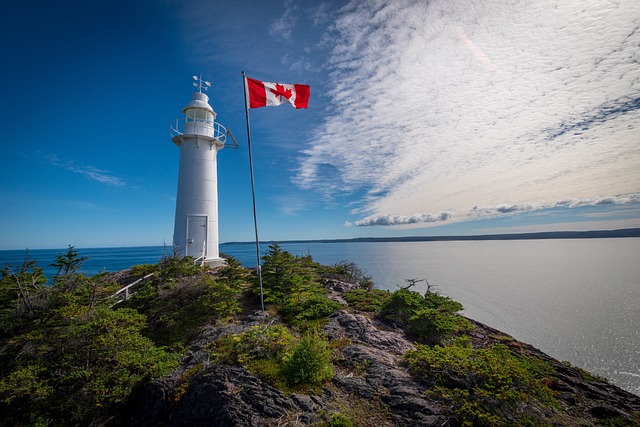
Image of lighthouse on the coast of Newfoundland by Felix Dilly from Pixabay

Transoceanic plane travel has always been fraught with potential problems.

Fuel could run low or a plane could develop mechanic problems mid-flight. The pilots would need a place to set down, pronto.

But in the middle of the ocean, where is there to land?

That’s where islands come in.

There are some handy places to land even in the vast expanse of the oceans.

In the Pacific, islands such as Midway, Wake, and Hawaii are available. The Atlantic offers Iceland, the Azores, and Bermuda, among others.

Not least is Newfoundland, an island off the eastern coast of Canada. For decades its Gander airport was used as a refuelling stop for planes making the hop across the Atlantic. It’s also an emergency landing spot for aircraft in trouble.

Gander is perhaps best known for its role in accepting 38 diverted planes that had to set down during the terrorist attacks in the U.S. on 9/11, twenty-two years ago today. Over six thousand passengers were generously hosted by the surrounding communities until U.S. airspace was reopened, a story commemorated in the hit musical, “Come From Away.”

Gander was truly an island of hope during that time.

I think we can all be islands of hope for others.

Read more

Message in a Bottle

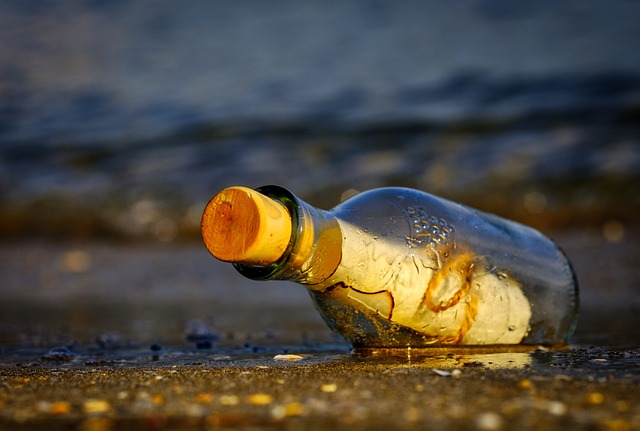
Image by Antonios Ntoumas from Pixabay

Have you ever put a message in a bottle and then thrown it into the ocean?

More importantly, has anyone ever come across it years later?

Believe it or not, there are actually people who keep track of this sort of thing.

According to the Message in a Bottle Hunter website, the world’s oldest seagoing message in a bottle is almost 132 years old. It was dropped into the Indian Ocean by a German research vessel studying ocean currents in 1886, and was found on a beach in Western Australia in 2018. (Wikipedia records an even older message, a Japanese one found after 151 years afloat.)

Bottled messages have travelled many thousands of miles. The farthest recorded distance travelled is probably the one that floated from New Zealand to Spain, almost an antipodean journey.

Perhaps the most romantic message in a bottle story concerns Swedish sailor Ake Viking. In 1956, he stuffed the message “To Someone Beautiful and Far Away” into a bottle and cast it into the sea. It was later retrieved by a young woman named Paolina in Sicily. Their subsequent correspondence culminated in marriage in 1958, with the wedding ceremony attracting 4,000 people.

We marvel at events like these: the idea that something thought lost and forgotten can show up decades later.

But there are some things we don’t want to come across again.

Who wants to be reminded of a sordid episode in our past—something that we did that now makes us cringe with regret and horror?

Fortunately, once our sins have been forgiven by God, they won’t wash up on a beach somewhere to accuse us.

Read more