When Nature Sings, Sing Along!

Image of crocuses by Annette Meyer from Pixabay

No matter where you live, spring is a time of joy.

In my part of the world, shy white snowdrops are the first flowers to bloom in spring.

Crocuses, slightly bolder in colour with their yellows or purples, are the next to make an appearance.

The tulips take their time, first poking the tips of their leaves above the ground like a periscope, as if checking to see whether it’s safe to emerge. They then burst forth in bright, vivid colours, their blooms held aloft on tall stems like upright trumpets.

“The flowers are springing up, the season of singing birds has come, and the cooing of turtledoves fills the air.” (Song of Solomon 2:12)

After a long, colourless winter, it makes my heart sing to see the arrival of spring.

But do the flowers and trees themselves sing? And if they do, what is their song telling us?

Author Linda Brooks, in her 2018 book, “Orchestra In My Garden,” seems to share my sentiments about the spring season:

”Once the snow disappears and my garden starts to emerge from its slumber, I cannot jump up fast enough to catch the first light, to lose (and find) myself among kindred spirits and bend my ear to their voices. No, I am not deluded. I do understand that plants are not human and cannot speak, but no one can convince me that they do not sing.”

She’s right: plants do sing. But she’s perhaps missed who they’re singing to.

They sing to God.

Read more
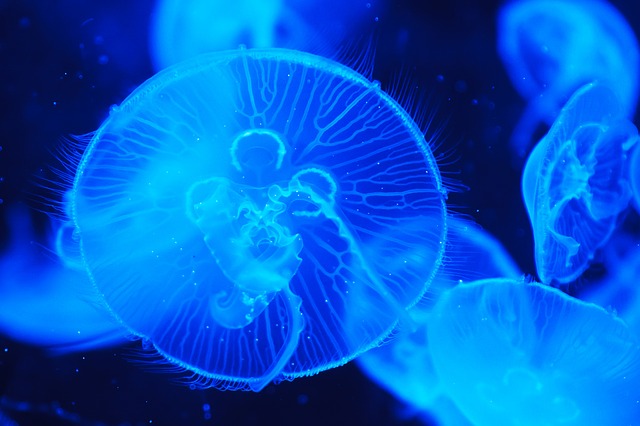
Light in the Darkness

Jellyfish Image by PublicDomainPictures from Pixabay

The Earth’s oceans are a bit mysterious to landlubbers, aren’t they? Especially the farther down you go.

The top zone of the ocean, 200 meters or less from the surface, is called the “sunlight” zone. This zone hosts the vast majority of fish, sea mammals and aquatic plant life that we’d be familiar with.

In the next zone down, the “twilight” zone, the amount of sunlight rapidly diminishes. Such a tiny amount of light penetrates this region that photosynthesis is no longer possible.

But it’s the lowest reaches of the oceans that are the most otherworldly and forbidding.

The bottom zone, below 1,000 meters, is called the “midnight” zone, and with good reason. Sunlight has no hope of penetrating this far down. These inky depths are darker than most humans have ever experienced.

And yet some creatures down here have eyes.

What on earth for? What is there to see in this eternal darkness?

There’s actually still light in the deepest part of the oceans. It comes not from the sun but from bioluminescent creatures. Some deep-sea organisms, like jellyfish, can generate and emit light much the way fireflies do here on land.

There’s still light, even in areas where sunlight never penetrates and the darkness seems impossible to vanquish. Even in the “midnight” zone.

Are you going through a “midnight” of your own?

Does it seem to you that you’re living in a kind of darkness, that you’ll never see the light of day in your situation?

Rest assured that there’s no place on earth where God’s light can’t reach you.

Read more