The Garden of the Heart

Image by Miroslav Kaclík from Pixabay

As a special treat for my Faith Cafe visitors, here’s a fresh take on Psalm 23:

In the garden of the heart, where shadows fade,
I walk with the Beloved, who never leads astray.
He is the shepherd, gentle and wise,
His love, like a river, flows through the skies.
The pastures of grace are green and wide,
I rest in His presence, where peace will reside.
Still waters call, soft and serene,
In His embrace, I am cleansed, I am seen.
Though the valley of darkness may stretch its might,
I fear no shadow, for He is my light.
His staff and His rod, steady in hand,
Guide me with wisdom, through this shifting land.
Image by Kati from Pixabay
No hunger nor thirst shall find me here,
For the table He sets, overflows with cheer.
Anointing my soul with oil of bliss,
I drink from His cup, a cup of endless kiss.
In the house of the Beloved, I shall stay,
Where love is the lamp that lights my way.
From moment to moment, from breath to breath,
I walk in His grace, defying death.
In the arms of the Shepherd, I am whole,
For He leads me home, to the garden of soul.
Image by Susann Mielke from Pixabay

(In case you’re wondering who wrote this lovely poem, it was the result of my tooling around with ChatGPT!)

© 2025 Lori J. Cartmell. All rights reserved.

It’s Raining Diamonds!

If diamonds are a girl’s best friend, I’m on the wrong planet.

I’ve just discovered that there are planets on which it rains diamonds.

Scientists believe that diamond rain could occur deep in the atmospheres of our gas giant neighbours in the solar system: Jupiter, Saturn, Uranus and Neptune.

Thousands of miles below the surface of these planets, carbon atoms come under such crushing pressure in the dense atmospheres that diamonds could form. The conditions are so extreme that further down, the diamonds could melt into liquid, forming diamond “rain” drops.

On some planets in the universe, these drizzles could involve diamonds millions of carats in size.

The wonders of the cosmos don’t end there. Scientists suggest that on the exoplanet WASP-121b it rains liquid rubies and sapphires. Clouds on this planet could be made of corundum, a mineral out of which these precious gems are formed.

It gets better.

The asteroid Psyche 16, which orbits the sun in the asteroid belt between Mars and Jupiter, is made entirely of solid metal. It has enough gold to turn every person on Earth into a billionaire. As well as gold, this intriguing minor planet contains metals such as platinum, iron and nickel in abundance. If Psyche 16’s metals were on Earth, their combined value would be worth perhaps $100,000 quadrillion.

Talk about an embarrassment of riches!

What does all this tell us?

That the precious gems and metals we covet are a dime a dozen in God’s universe. After all, Scripture tells us that in Heaven, the streets are paved with gold.

More importantly, God has an inexhaustible supply of the things that we truly need: grace, mercy, love, and forgiveness.

Read more

Hark! The Herald Angels Sing

Image courtesy of Hippopx CCO 1.0: Public Domain

What’s your favourite Christmas carol?

“Jingle Bells” seems to be at the top of many lists of the top Yuletide songs. It’s catchy, kids love it, and it puts people in a cheery mood.

Or perhaps you’re more partial to “Silent Night”? I don’t blame you—it’s a beautiful classic.

The honour of the best-selling Christmas single would have to go to Bing Crosby’s “White Christmas.” And with good reason—how can you not love this song?

(I’m hoping that your favourite Christmas number isn’t “Grandma Got Run Over By A Reindeer.” If it is, I’m not sure we can be friends.)

As for me, my favourite carol is “Hark The Herald Angels Sing,” with lyrics by Charles Wesley and a rousing melody by Felix Mendelssohn.

This hymn is not only enjoyable to sing, it’s also richly loaded with Biblical truths. It starts out this way:

“Hark! The herald angels sing:
‘Glory to the new-born king
Peace on earth and mercy mild
God and sinners reconciled.’ “

The angels are celebrating the inauguration of a new Kingdom featuring world-wide peace and the reconciliation of humanity to its creator.

But wait a minute: aren’t the angels jumping the gun in this account?

God and sinners wouldn’t be reconciled until decades later in Jesus’ life, at the Cross.

And since Jesus was born the world hasn’t had a year without war somewhere or other. Where is the peace the carol describes?

Aren’t the angels being a bit premature in celebrating?

Not at all.

Read more

Weed-Free Living

Image of dandelions by Hans Linde from Pixabay

Is it just my imagination, or do weeds actually grow faster than the flowers I’m trying to nurture?

Gardeners will know what I’m talking about. Weeds seem to be gifted with internal steroids that accelerate their growth, outpacing the delicate flowers that we’ve brought home from the garden centre.

Weeds don’t seem to be affected by lack of rain or by intense heat. They’ll grow just about anywhere. They’re speed demons of growth compared to the flowers we try to baby along with regular watering and fertilizing.

I looked into this crucial issue on behalf of readers of The Faith Cafe, and found that weeds do have some competitive advantages.

Weeds which are perennials have the benefit of established root systems that have been alive for many years; these dormant roots have a lot of stored energy. Perennial weeds grow faster and are harder to kill than annuals.

Weeds are already acclimated to the region’s soil, and are highly adaptable. They’re usually native plants that thrive in the local ecosystem, unlike plants from the garden centre which may be non-native and need time to adjust.

Weed seeds are already present in our garden soil. They bide their time until the right conditions present themselves, and then race out of the soil. They’re often excellent self-propagators and are opportunistic growers.

All these things give weeds a head start over the flowers we favour.

This got me thinking:

Why do the “weeds” of our character grow better than the fruits of the Spirit?

Are there lessons we can learn from the natural world?

Read more

Doomscrolling? Try Hopescrolling!

Image by Robin Higgins from Pixabay

Have you been prone to “doomscrolling” recently?

Doomscrolling is a new word that’s been coined to describe the habit of obsessively consuming a large quantity of negative online news.

The committee of the Australian Macquarie Dictionary even named “doomscrolling” their Word of the Year for 2020.

Humans have a natural tendency to pay more attention to bad news, but the doomscrolling trend has accelerated during the pandemic.

We compulsively check our news apps and social media feeds, endlessly scanning the latest ominous headlines. We feed ourselves a steady diet shocking or disheartening news about rising COVID-19 case numbers, hospital intensive care units filling up, businesses shutting down, political instability or even weather woes.

We can’t seem to help ourselves, even when we sense that doomscrolling is probably detrimental to our mental health. All this bad news saturating our minds can leave us depressed, anxious, angry or hopeless.

We need an antidote to the feeling of despair that doomscrolling can produce.

I’d like to propose that we adopt a new habit:

Hopescrolling!

Read more

How Are You Sleeping?

Photo by Danny Chang on Pixabay

How have you been sleeping recently? Do you find yourself waking at night, worried about the future?

Wish you could sleep as soundly as your pet?

Cats and dogs have an advantage when it comes to sleeping deeply. They’re predator animals: in the wild, canines and felines are hunters. Large predator mammals generally spend more time in deep non-REM sleep than their prey.

Prey animals such as rabbits or deer, the hunted, spend more time in lighter non-REM sleep. They also experience very little REM sleep at all. Their survival is dependent on being permanently alert, and the paralysis of REM sleep would make them too vulnerable to their predators.

I wonder if the poor sleep we humans often experience relates to our feeling “hunted,” relentlessly chased by worries, deadlines, and obligations?

Is there a way we can calm our anxious minds and get a good night’s rest?

Yes! I believe the Bible offers some tips to help us sleep better.

Read more

Good Fear Vs. Bad Fear

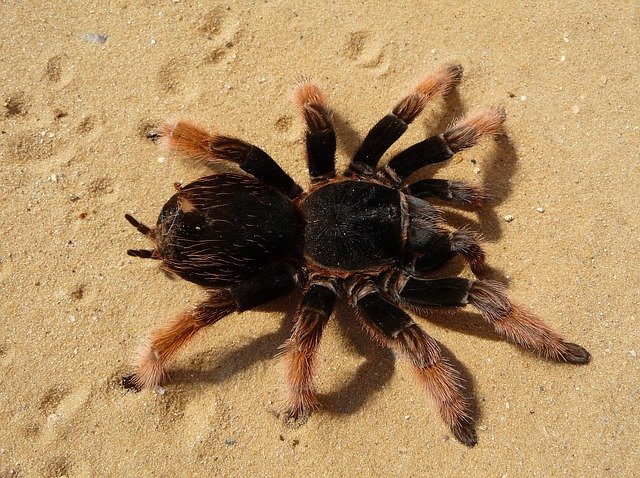
A tarantula, one of the most feared spiders
Photo by WikiImages on Pixabay

Has this pandemic made you fearful? Are you afraid that you or your loved ones might catch the COVID-19 virus? Are you nervous about even going out in public? Afraid that life will never be quite the same again?

For many of us, the coronavirus crisis has only added to our list of things to fear. As if we didn’t already have enough things to be afraid of!

There are fears common to many of us, such as fear of spiders or snakes, fear of public speaking or fear of falling.

Then there are the more unusual phobias, such as fear of clocks or clowns, balloons or buttons, and even beards. (Full marks to you if you know that triskaidekaphobia means fear of the number thirteen.)

There’s no end of things to be afraid of in this world. But is fear always bad?

No. God gave us the emotion of fear: it’s there to save us from danger.

But we need to differentiate between good fear and bad fear.

Read more

What Lions Guard Your Door?

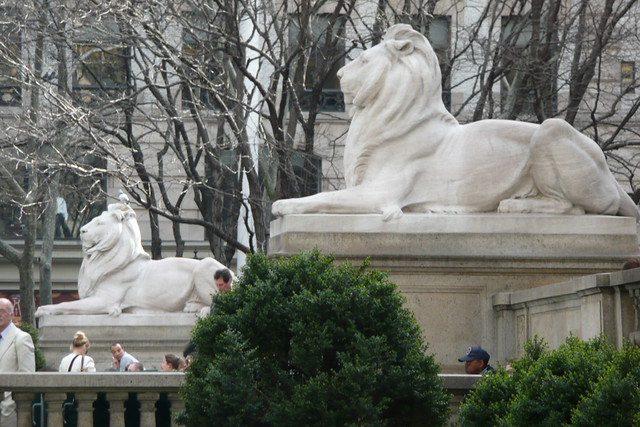
New York City’s library lions, “Patience” and “Fortitude”
Photo by Dave and Margie Hill on flickr cc by-sa 2.0

For over a century, two marble lions have guarded the main branch of the New York Public Library at Fifth Avenue and 42nd Street in Manhattan. These majestic stone creatures flank the entrance to the building, keeping careful watch over all who enter.

During the 1930s the library lions were officially named “Patience” and “Fortitude” by then-mayor Fiorello LaGuardia. He felt that those names embodied the qualities that New Yorkers would need to survive the Great Depression of that era.

If ever there was a time when New Yorkers (and indeed all of us) again need patience and fortitude, it’s during the COVID-19 crisis. New York has been struck particularly hard by this pandemic, but they are pulling through in large part thanks to the selfless health care workers who have done their utmost to guard the health and welfare of those under their care.

We still need guardians, don’t we? Particularly during times like these.

What “lions” guard your door?

Read more

Volatility Index of Your Heart

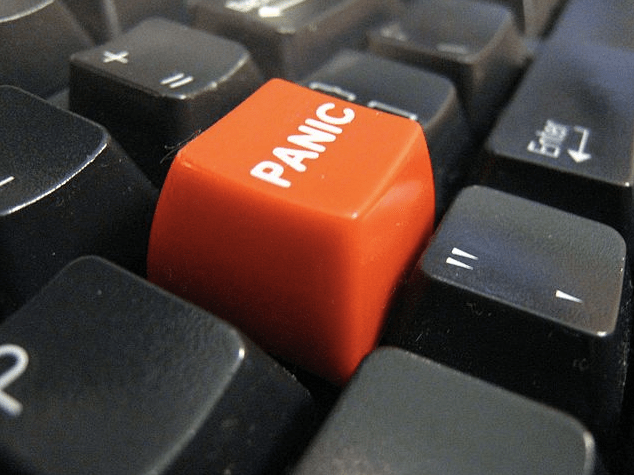
Feel like pressing the panic button?
Photo from Wikimedia Commons CC BY-SA-2.0

If you follow the stock market, you might be familiar with something called the Volatility Index. Sometimes called the “fear index,” it gauges the market’s anxiety level.

When investors are fearful and markets are in turmoil, the volatility index spikes higher. Now happens to be one of those times, thanks to fears over the impact of the coronavirus.

It made me wonder, do our hearts have a “volatility index” of their own?

And if they do, what can we do to keep our emotions on an even keel, when our circumstances might give us every reason to panic? How can we find peace even in the midst of turmoil?

Read more