5 Messages Christians Send When They Compromise

A little compromise never hurt anyone, did it?

I don’t mean the kind of beneficial compromising we do to make a relationship more harmonious or a business arrangement go more smoothly.

I’m getting at the negative type of compromising that often seeps into our Christian walk.

For instance, we might skimp on practices like Bible reading, praying, or even attending church if there are things we’d rather spend our time on.

At work, we might “go along to get along,” putting up with ethical practices that aren’t congruent with our Christian beliefs.

At school, we might keep quiet about issues we don’t agree with because we’d sooner not rock the boat.

In relationships with non-Christians, we might adopt behaviours that are at odds with our faith just to fit in.

Ring any bells?

We might think that these types of compromises are harmless, but our behaviours are actually sending messages, inadvertent though they may be.

Read more

What Birds Can Teach Us About Prayer

It’s good to keep in touch with those you love, isn’t it?

Even birds know this.

Birds will engage in what are called “contact calls” with their mate or others in their flock. Unlike a bird’s song, a call is usually shorter and quieter. The purpose of contact calls is to maintain a continuous connection and to keep track of where each bird is located.

The Northern Cardinal, for instance, makes a brief metallic “chip” sound to keep tabs on its mate’s location when they’re both foraging for food. The mate will respond with the same call as reassurance that they’re nearby and that all is well.

We humans engage in the same type of behaviour. We’ll often make a short phone call or send a quick text to a loved one to keep track of how they’re doing and to reassure them that we’re all right.

I think our Creator would appreciate getting a “contact call” from us on a regular basis, too.

We have the privilege of doing so through the medium of prayer.

For many of us, however, we only engage in prayer when we’re in a crisis.

Read more

Sing While You Fly!

Birds, like humans, have different quirks.

Some birds like to have everything “just so” before they sing.

The time of day has to be just right, they have to be perched at the top of just the right tree, or they have to be within earshot of a desirable mate.

They would never think of singing if the conditions weren’t to their liking, or if they were busy doing something else at the time, like flying.

Other birds aren’t quite so picky.

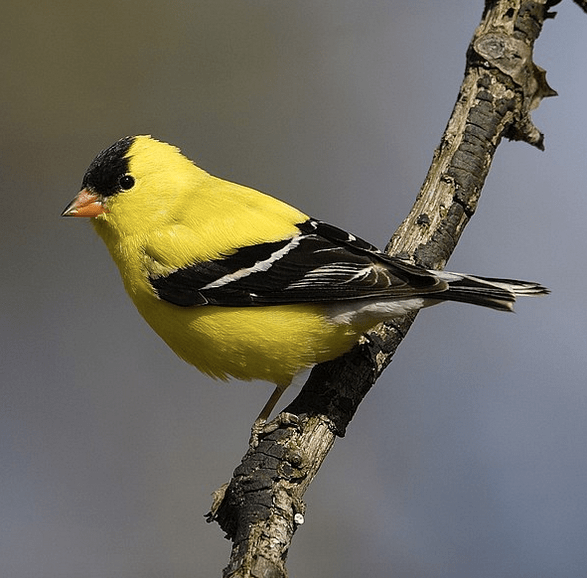
Take the American goldfinch, for example.

This handsome little songbird has some unusual traits. One of them is that his flight pattern resembles a roller-coaster instead of a level path.

Another is that the goldfinch is perfectly happy singing while he’s flying.

He doesn’t wait until just the right circumstances fall into place—this yellow fellow sings while he goes about his daily business.

Perhaps we can take a page from the goldfinch’s book?

Read more

Prayers Live On, Like Lilacs

This is a special time of year in my part of Canada: the lilacs are speaking!

Lilac flowers don’t use words, of course. They announce their presence through their beautiful fragrance and delicate purple colour.

But there’s another way lilac shrubs can talk to us. Their very location can give us clues to the history of a place.

“…the story of early Canada can be read in the lilacs clustered where log cabins once stood, at the edge of abandoned fields—flowers marking time in centuries.” (from “A New Leaf,” by Merilyn Simonds)

Settlers to the northern parts of North America would often plant lilac shrubs on either side of the front door to their farmhouse. Generations or even centuries later, the building has long since been torn down, but the lilacs live on.

If you see a pair of huge lilac bushes in a field or empty lot, you can be pretty sure they used to flank someone’s front door. The house is gone, the family has moved away, but the fragrance of the lilacs they planted still fills the air.

This reminds me a bit of how prayers can live on, long after the person who prayed them is gone.

Read more

A Special Kind of Faith

Tulip bulbs at a flower market
Photo from Pxhere, Public Domain

They say that planting seeds is an act of faith.

I think that’s true: you put seeds in the ground in spring, hoping most will germinate and grow into a plant. If you’re lucky, you might see hints of growth in a few days, but often it can be weeks before a little green head pokes its way out of the soil.

If planting seeds takes faith, then I think it takes a special act of faith to plant bulbs in the fall.

In the fall, you know the days are getting shorter and colder. The leaves are dropping from the trees, and tender plants are beginning to die from early frosts. You know that snow will soon blanket the garden to the depth of a couple feet.

You’re heading into a barren season.

The precious tulip, daffodil, or hyacinth bulbs that you’ve just planted will disappear from your view for many months. You’ll have no indication that they’re all right, let alone any guarantee that they’ll eventually bloom. They may fall prey to rabbits, squirrels or deer. Who knows what will happen to them?

And yet you still go ahead and plant fall bulbs, trusting that they’ll survive the frigid winter and bloom later in spring.

Some things in our lives take special faith to trust for, too, don’t they?

Read more

Get With God’s Program!

Photo by Jill Wellington on Pixabay

I don’t seem to have much luck getting birds to cooperate with me.

Years ago, I bought a Victorian-style birdhouse, and painted it light blue with white trim. I nailed it to a tree where I could see it when sitting at my kitchen table. I imagined the delight I’d have watching birds move in and raise their young there. I couldn’t wait for my new feathered neighbours!

But the birds refused to move in.

Year after year, the pretty birdhouse sat empty. I was so disappointed. What ingrates those birds were! And after all the trouble I’d gone to for them!

The problem was, I’d put the birdhouse where I wanted it, with no thought to their needs.

The birdhouse was pretty, certainly, but its placement didn’t suit the birds one bit. Being nailed to a tree made it too accessible to predators like squirrels or racoons. The birds didn’t feel safe nesting there.

I thought the problem was with the birds, but it was with me. I’d done it all on my terms and expected them to get with the program.

Don’t we sometimes do the same with God?

We want to do things on our terms, in our own way, and expect God to get with our program. I’m afraid it doesn’t work that way.

Read more

What Is Your “Burning Bush”?

Image by Leonora Enking via Flickr CC BY-SA 2.0

You’ve got to love a plant that turns pink in the autumn.

I’m referring to the Euonymus alatus shrub, whose leaves change from green to a vivid, hot pink in the fall.

One of its nicknames is “burning bush,” because in autumn the shrub looks like it’s on fire. It must have reminded people of the burning bush Moses encountered in Exodus 3, through which God spoke to him.

I think God uses many different ways to speak to us today, each a “burning bush” tailored to our unique personalities.

Probably the primary way that God communicates to us is through Scripture. We read or hear a verse that seems to speak directly into our situation. By reading the words of Jesus, we “hear” God’s heart. We may also receive a word from the Holy Spirit or sense God’s guidance through prayer.

There are many instances in the Bible of God giving someone a message through dreams or visions. He may relay information in a dramatic fashion via an audible voice, or the more subtle “still, small voice.”

Other times God may use another person to convey something to you: a Christian speaker or author, or a family member or friend who’s a believer. God may also speak to you through the lyrics of a song or hymn.

He might be sending a message to you through your circumstances, especially via some difficult situation. Or, you may encounter a coincidence that seems like a “sign,” and you think God may be trying to tell you something.

With me, I feel that God occasionally “speaks” to me through nature.

Read more

God With Us

I’m so pleased to share with you another guest post by my friend Veronica Gerber. I know you’ll be blessed by her wisdom!


What’s in a name?

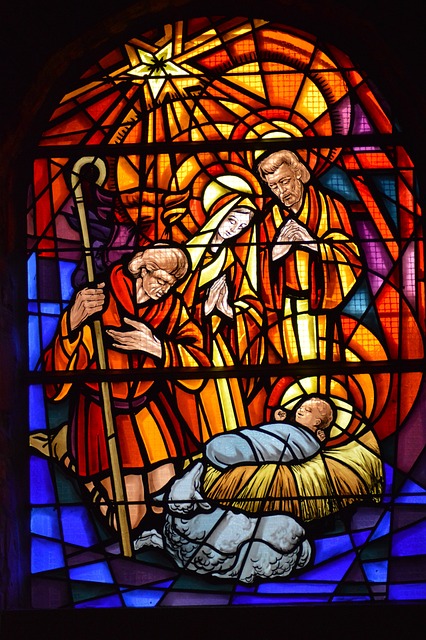
So it’s Christmas time again … when we remember Jesus’ birth:

“For unto us a child is born, to us a son is given,
and the government will be on his shoulders.
And he will be called Wonderful, Counsellor,
Mighty God, Everlasting Father, Prince of Peace.” (Isaiah 9:6)

Do you have a favourite way of addressing God or thinking of Jesus?

I’m quite partial to Emmanuel which means “God with us” … ever alongside those who have eyes to see and ears to hear. It’s all too easy to lose sight, so to speak, of Jesus being with us in the day-to-day, especially during the hustle and bustle of Christmas, wouldn’t you say?

“Behold, a virgin shall be with child, and shall bring forth a son, and they shall call his name Emmanuel, which being interpreted is God with us.” (Matthew 1:23)

C.S. Lewis has written about God’s plan, “The whole thing narrows and narrows, until at last it comes down to a little point, small as the point of a spear—a Jewish girl at her prayers.”

Today as I read the accounts of Jesus’ birth I tremble to think of the fate of the world resting on the responses of two rural teenagers long ago. How many times did Mary review the angel’s words? How many times did Joseph second-guess his own encounter with an angel—“Was it just a dream?”—as he endured the hot shame of living among villagers who could plainly see the changing shape of his fiancée?

Mary, the virgin, whose parenthood was unplanned, had a commendable response to the angel. She heard the angel out, pondered the repercussions, and nonetheless replied:

“I am the Lord’s servant.
May it be to me as you have said.”

Often a work of God comes with two edges, great joy and great pain … as is the joy and travail of giving birth. In Mary’s matter-of-fact response, she embraced both. She was the first person to accept Jesus on his own terms, regardless of the personal cost. An ordinary beginning, an extraordinary journey.

It makes me wonder what work of God hinges on me at my prayers? And on you and your prayers?

Read more

Let the Son Outshine Your Problems

Image by Pezibear from Pixabay

The moon did a disappearing act on me recently.

As I sat eating breakfast, I could see the moon shining brightly through the window. It handily outshone the streetlights, which were still on at that pre-dawn hour.

But slowly, the moon grew dimmer and fainter, although it was still high in the sky.

What had happened to its luminosity?

Had the moon changed in some way?

No, the sun had simply come up!

The sun’s growing brilliance filled the morning sky, causing the moon to appear paler than before. Eventually, I could barely see the moon at all, even though it hadn’t set behind the horizon yet.

This puts me in mind of how we sometimes view our problems.

In the darkness of our difficulties, we often focus on what’s causing us pain. The source of our problems gets our attention, out-competing other factors in our lives.

But if we let the light of Jesus shine on our situation, the truth of His unending love for us can outshine the temporary nature of our problems. Our challenges appear dimmer in the light of His forgiveness, His care for us, and His promise of eternal life.

Read more

Your Internal Voice Recognition Software

Adele live in concert, Glasgow, 2016. Wikimedia Commons CC BY-2.0

Sometimes your eyes may fool you, but your ears know the truth.

A group of Adele impersonators found this out back in 2015.

They had gathered for a contest to choose who could best imitate the British singer Adele. The competition was filmed as a supposed BBC TV special, hosted by Graham Norton.

There was a catch, however. It wasn’t really a contest, but rather a set-up.

Unbeknownst to the other participants, the real Adele had gone undercover and had entered the competition as well. A movie effects specialist had disguised the superstar’s appearance with a fake nose and chin so that people wouldn’t recognize her. She introduced herself as “Jenny,” a nanny.

One by one, the contestants performed a song. Each had done her make-up to look like the real Adele. And some did a passable impression of her vocally, too.

Then, “Jenny” began to sing.

Once she opened her mouth and sang in her trademark style, the other “Adeles” were riveted. They got emotional as goosebumps ran up their arms. It soon dawned on them that it was actually their idol singing, not some anonymous nanny (watch the video of their reactions here).

There was no mistaking who it was anymore, even if she was in disguise.

Simply put, they knew her voice.

Did you know that, if you’re a believer, you have a similar ability within you? You have an internal “voice recognition software” that enables you to recognize Jesus’ voice.

Read more