Reap What Jesus Sowed

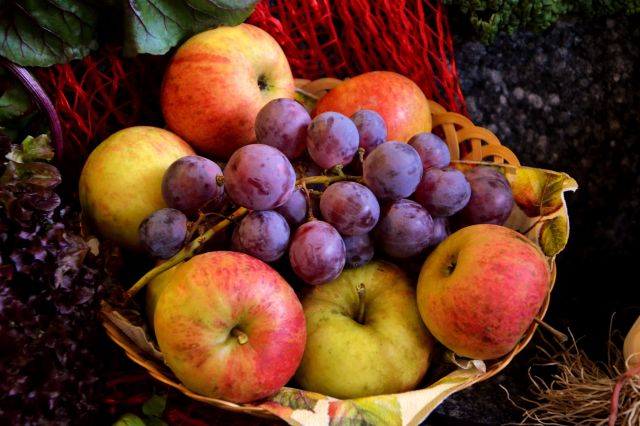
If you’re a gardener, you know the joy of harvesting fruits or vegetables that you’ve grown yourself.

You get to savour the fresh, delicious taste of home-grown produce. You’re quite literally enjoying the fruits of your labour.

Is there anything more satisfying?

How about reaping the benefits of what someone else has grown?

Perhaps you have a neighbour who gives you the excess from their own vegetable garden?

Or better yet, maybe you were as fortunate as a friend of mine. She and her family moved away from the big city a few years ago and bought a house in the suburbs, which sat on a large lot.

The previous owners of the house were botanists, so they had packed the property with beautiful and unusual perennials and shrubs. They’d also planted a number of fruit trees.

My friend and her family moved in mid-year, and didn’t need to do a lick of work in the mini-orchard in their new backyard. All they had to do was sit back and enjoy it, harvesting the fruit from trees that someone else had planted.

This reminds me of a verse from the Old Testament. Moses was telling the children of Israel that God would one day bring them into the Promised Land. Here’s how he described it:

“… a land with great and splendid cities that you did not build, with houses full of every good thing with which you did not fill them, with wells that you did not dig, and with vineyards and olive groves that you did not plant...” (Deuteronomy 6:10-12)

To me, this is a picture of what Christ has done for us.

In the old law-based covenant you reaped what you sowed, but in the new grace-based covenant we reap what Christ has sown.

Read more

Give It Time

Antique clock photo by Wallpaper Flare

Do you get the feeling that society is becoming too impatient?

We seem to expect instant results these days: immediate responses to our texts or emails, same-day delivery for things we order, or instantaneous loading of videos or web pages. In fact, a study showed that a YouTube video that loads slowly will start losing viewers after two seconds.

The problem is that sometimes our impatience with technology gets applied to people, too. We expect people to change quickly, and if they don’t, we lose patience with them and give up on them.

This reminds me of the tale of the handkerchief tree.

Called the dove tree in its native China, it became known to Western visitors in the late 1800s, who were entranced by it. The handkerchief tree features stunning white bracts surrounding its flowers, which resemble doves, ghosts or fluttering handkerchiefs, hence its name in the West.

European botanists in China collected the seeds and brought them back home, keen to grow such a gorgeous tree. One gardener planted the seeds, but was disappointed to find after a year that they hadn’t sprouted into seedlings. Figuring that the seeds must be no good, he discarded them by dumping them onto his compost pile, then forgot about them.

To his surprise, two years later he saw a bunch of seedlings on the compost pile. They were from the handkerchief tree. They had sprouted after all!

What he didn’t know was that seeds of the handkerchief tree have what’s called a “double dormancy”: they require two years to germinate, unlike most seeds which will sprout within the first year.

He had written them off too soon.

Don’t we do the same with people sometimes?

Read more

Give It Time

Handkerchief Tree photo from Wikimedia Commons CC BY-SA 3.0

Do you get the feeling that society is becoming too impatient?

We seem to expect instant results these days: immediate responses to our texts or emails, same-day delivery for things we order, instantaneous loading of videos or web pages. In fact, a study showed that a YouTube video that loads slowly will start losing viewers after two seconds.

The problem is that sometimes our impatience with technology gets applied to people, too. We expect people to change quickly, and if they don’t, we lose patience with them and give up on them.

This reminds me of the tale of the handkerchief tree.

Called the dove tree in its native China, it became known to Western visitors in the late 1800s, who were entranced by it. The handkerchief tree features stunning white bracts surrounding its flowers, which resemble doves, ghosts or fluttering handkerchiefs, hence its name in the West.

European botanists in China collected the seeds and brought them back home, keen to grow such a gorgeous tree. One gardener planted the seeds, but was disappointed to find after a year that they hadn’t sprouted into seedlings. Figuring that the seeds must be no good, he discarded them by dumping them onto his compost pile, then forgot about them.

To his surprise, two years later he saw a bunch of seedlings on the compost pile. They were from the handkerchief tree. They had sprouted after all!

What he didn’t know was that seeds of the handkerchief tree have what’s called a “double dormancy”: they require two years to germinate, unlike most seeds which will sprout within the first year.

He had written them off too soon.

Don’t we do the same with people sometimes?

Read more