Golden at the Broken Places

Bowl repaired using Kintsugi method by artist Ruthann Hurwitz.
Wikimedia Commons CC BY-SA-4.0

We all shudder at the sound of something breaking, don’t we? We can’t help but wince when we hear glass or crockery shattering into pieces on the floor.

Why do we have that involuntary reaction? Because we know that the object probably can’t be repaired: it’s likely to be damaged irreparably, and must be thrown away.

We’re wincing at the sound of loss.

But what if there were a way to not only put the pieces back together, but to make the object more beautiful than it was before, despite the breaks?

The Japanese long ago invented a way of doing just that, and have even made an art form of it. It’s called “Kintsugi,” which means “golden joinery.”

The process involves mending the cracks in pottery with gold lacquer. Instead of trying to hide the damaged areas, they are instead highlighted with something precious. The end result is a restored piece of pottery that is beautiful at the broken places.

But what happens if it’s not a piece of pottery that is broken, but a life? How can a shattered heart be put back together?

Long ago, God also devised a way to put the pieces of a broken life back together again. God doesn’t throw away broken people; they still have value to Him. He puts them back together again with the gold lacquer of His Son’s love and redemptive power.

Read more

The Mystery of the Larch Tree

It’s easy to categorize trees, isn’t it?

Deciduous trees lose their leaves in the autumn. Coniferous trees bear cones and keep their needles throughout the year. It’s simple to tell them apart.

Case closed, right?

But what about the larch tree? It bears cones and has needles like a conifer, but the needles drop off each autumn like a deciduous tree.

So which is it, coniferous or deciduous?

The answer to this mystery is that it’s both at once. The larch tree is actually a “deciduous conifer.”

Larches fall into a special third category of tree. It’s a member of the pine family, and yet its wood is harder than pine wood; it’s more like the hardwood of deciduous trees. It has needles like a conifer, but they turn a golden yellow each autumn and drop off, like the leaves of a deciduous tree.

Larches are a rare combination of deciduous and coniferous, unique trees with characteristics of both.

You could say that larches are two things at the same time.

In the same way, you could say that Jesus was two things at once. Just as the larch is one tree with two natures, Jesus was one being with dual natures: both God and human.

Read more

Explaining Rituals

Image by Terren in Virginia via Flickr, CC BY 2.0

While I was raking up fallen leaves in the yard recently, a passerby stopped to talk.

This lady was from India, and was curious about why Canadians raked up leaves each fall. Was it some cultural tradition of ours, she asked, a ritual that we enjoyed doing?

I smiled at her mistaken assumption, but explained that if we didn’t rake up the leaves, the lawn underneath would die. With a blanket of leaves blocking the sun and air, the grass would be smothered.

We’re certainly not raking up dozens of bags of leaves because it’s fun!

Our conversation got me thinking about rituals, and how we sometimes need to explain them to puzzled outsiders.

Why do kids dress up in outlandish costumes on Halloween and go door to door asking for candy?

Why do we decorate a tree in our homes at Christmas?

And why do Christians have bread and wine at Communion? Is it because they get hungry and need a snack partway through a church service?

Like Lucy in the old sitcom, we have some explaining to do…

Read more

Turning the Bitter Sweet

Image by Steve Buissinne from Pixabay

“Go suck a lemon!”

Have you ever heard anyone say that?

It means they’re annoyed with you and want you to experience something unpleasant. Lemon juice is so sour that it makes your mouth pucker.

But if lemon juice is so bitter, why are lemon desserts so yummy?

It’s thanks to the addition of a sweetener.

I like lemon-based desserts much better than orange-flavoured ones. It seems to me that the combination of sour and sweet is what makes lemon desserts so satisfying (see below for Lemon Poppyseed Cake recipe).

They say when life hands you lemons, make lemonade.

No, when life hands you lemons, turn it over to God.

He can transform your unwelcome experiences into something good, and make the bitter waters of your life sweeter than any lemonade.

Read more

The Slippery Slope

Image by Hermann Kollinger from Pixabay

As in many northern climes, a favourite pastime of Canadian children in winter is tobogganing.

I did my share of barrelling down snowy slopes on a sled when I was a kid.

Even though we lived in a big city, we had nature nearby. A ravine adjoined our neighbourhood, featuring steep hills bordering a river valley.

These hills were perfect for tobogganing.

The trick was to follow the paths through the snow that others had already made. Trying to forge a path through newly fallen snow yourself was hard going, but if you positioned your sled on ready-made routes, you could really pick up some speed.

The highest hill in the ravine was nicknamed “The Killer” by the kids. When the snow was tamped down by dozens of tobogganing runs it became icy, and you’d find yourself going faster than you expected.

You could build up so much momentum sliding down this hill that you could end up plunging into the freezing cold river.

It was a slippery slope, quite literally.

And dangerous.

Sometimes in life we find ourselves on slippery slopes, don’t we?

If we’re not careful, we might blindly follow the path of others into sin. It might seem fun at first, and we might not notice that we’re accelerating.

Eventually, though, we may lose control and not be able to stop in time. We can unexpectedly end up in dangerous places.

Make no mistake, sin is a killer.

It kills relationships, reputations, trust, and future options.

Most importantly, it kills our connection with God.

Read more

The Ultimate Love Story

Image by lillaby from Pixabay

Valentine’s Day is just around the corner!

On this beloved day of the calendar, we celebrate our love for that special someone in our lives. Many of us will be giving (or receiving) boxes of chocolates and bouquets of roses as an expression of that love.

But sometimes those roses have thorns, don’t they?

The truth is, love sometimes hurts. It can cost us something.

We think of Valentine’s Day as simply about romantic love, but the history behind this day shows us that true love is often about sacrifice.

This was certainly the case for Saint Valentine of Rome, for whom Valentine’s Day is named.

This third-century priest was known for his evangelistic work and for aiding persecuted Christians. He was martyred for his faith on February 14 in AD 269, executed by order of Emperor Claudius for refusing to deny Christ.

Saint Valentine patterned for us a life focussed on loving others; he refused to deny the Source of that love, even if it cost him his life.

Christ modelled that sort of sacrificial love, too.

He would let nothing stop His purpose of showing love to others by securing for them a way to spend eternity with Him, even if it cost Him His life.

And it did.

Read more

Thirteen By Any Other Name…Is Still Thirteen

I recently realized that I wasn’t living in the house that I thought I was.

Last summer I moved into a house bearing the number 15. I love everything about it: the house itself, the neighbours, and the area’s community spirit.

It wasn’t until some months later that I realized that I didn’t actually live at #15: I live at #13. The house next door is #11, and opposite my house is #12. Counting from the bottom of the street, mine is the thirteenth house.

So why didn’t the city call it #13 when it was assigning street numbers to the houses?

In many countries, the number 13 has unlucky connotations. Why? One reason is that there were thirteen present at the Last Supper, including Judas, who would betray Jesus.

Some people are superstitious about this number, and try to avoid its “bad luck” by keeping away from anything labelled 13. There’s even a word for the fear of the number thirteen: triskaidekaphobia.

The result is that many companies and cities fudge their numbering to avoid 13. This is why many hotels and tall buildings seem to lack a thirteenth floor: the elevator buttons skip from floor 12 to 14.

The thirteenth floor continues to exist, as does the thirteenth house on a street: we haven’t erased them. But we just call them by other names. We simply pretend that they’re actually the fourteenth floor or the fifteenth house. Everyone goes along with this fiction because it means we don’t have to face reality. We’re deluding ourselves, of course, but it seems we prefer to live in denial.

We do the same with sin, don’t we?

We call it by other names so we don’t have to face up to the reality of what it really is.

Read more

Easter: Jesus’ Finest Hour

Image by Gerd Altmann from Pixabay

What makes something your “finest hour”?

To answer that question, we first have to reach back to June 16, 1940, when that phrase was made famous in a speech by British Prime Minister Winston Churchill.

World War Two had begun the previous year. France, Poland, Norway, Denmark, Belgium and the Netherlands had all fallen under the jackboots of the Nazis. It was a dark time, and the only thing standing between Hitler and control of the rest of Europe was the island nation of Britain.

In this context, Churchill prepared his people for the immense sacrifices that would be asked of them in the coming battles. He told them that the survival of their nation and way of life lay at stake. He let them know the consequences both of success and of failure in the task ahead of them.

He concluded his speech with one of the great rallying cries in history:

“Let us therefore brace ourselves to our duties, and so bear ourselves that, if the British Empire and its Commonwealth last for a thousand years, men will still say, ‘This was their finest hour.’ ”

Churchill was telling the British people that their finest hour would not be a time of ease or comfort. Rather, it would encompass pain, sacrifice, duty, and selflessness.

The same holds true for us.

And the same held true for Jesus in His finest hour.

Read more

The Banana Paradox

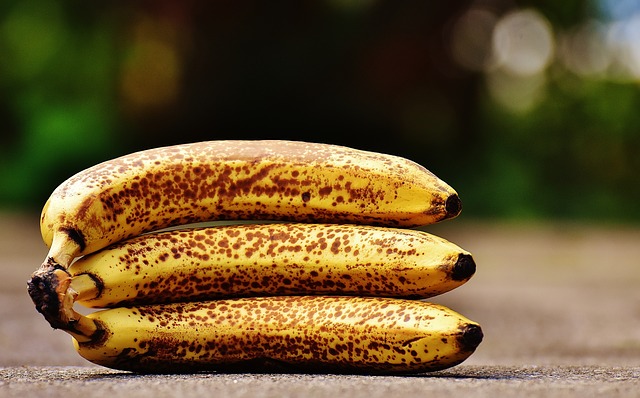
Image by Alexas_Fotos from Pixabay

Who doesn’t like banana cake?

Even people who won’t eat bananas seem to like banana cake or bread. It seems to be one of those desserts that is universally liked. In fact, each year we celebrate National Banana Bread Day on February 23rd.

And what kind of bananas do you use to make a banana cake? Only the most uniformly yellow, firm, spot-free, perfect ones, right?

Wrong.

Counterintuitively, banana cake or bread is made using mushy, overripe, spotted, or even brownish-black bananas. The kind that no grocery store would even think of trying to sell. The kind that look sort of yucky, to be honest. The kind no one wants to eat. The kind that was used as an insult in the Christmas song about Mr. Grinch: “You’re a bad banana with a greasy black peel!”

Whenever we had those sorts of bananas in the kitchen when I was little, my Dad would say to my Mom, “Honey, why don’t you throw those things out? They look awful!”

My mother would interpose her body protectively between my Dad and the bananas and say, “No, no! I’m saving them for a banana cake.”

You see, Mom understood the banana paradox. She knew that the mushiest bananas make the best cake. She could see beyond the decaying exterior to what the banana could become.

She saw what my Dad couldn’t see: their potential.

In the same way, God can see beyond our faults and failures to what we can become. God sees the potential in people who have been written off by others, who seem to have disqualified themselves from ever achieving anything great for the Kingdom. God can still use those of us who feel our record is too spotty, that we have too many black marks against us.

Read more

Winter, the Great Leveller

Photo by Mark Evans on Flickr, CC BY-ND-2.0

If you live in a cold climate, as I do, you’ll have noticed that winter has a way levelling us out.

It shows us we’re all in the same boat.

Let me explain:

No matter how rich or poor you are, you’re going to have to deal with snow one way or another. If you live in a cold climate, there’s no escaping this fact.

Whether you drive a snazzy, expensive car or a modest runabout, winter has a way of making all vehicles look rather crappy. No matter how much you paid for your car, road salt and slush will cover it with an ugly grey-brown film.

Image by pasja1000 from Pixabay

And despite searching high and low for the most fashionable winter parka, you’ll still end up looking like an Arctic explorer, indistinguishable from everyone else.

Winter has a way of humbling us.

I think sin has the same sort of levelling effect.

Whatever walk of life we come from, we’re all going to have to deal with our sins somehow. There’s no escaping it.

No matter how wealthy or poor we are, when sin sticks to us, it makes all of us look rather stained. Whether a pauper or a prince, the muck of sin covers us all.

And even if we try to gussy up our image and paper over our sins, it simply doesn’t work. We’re fooling ourselves if we think we’re any better or different than anyone else.

When it comes to sin, we’re all in the same boat.

Read more