Trinitometry 101

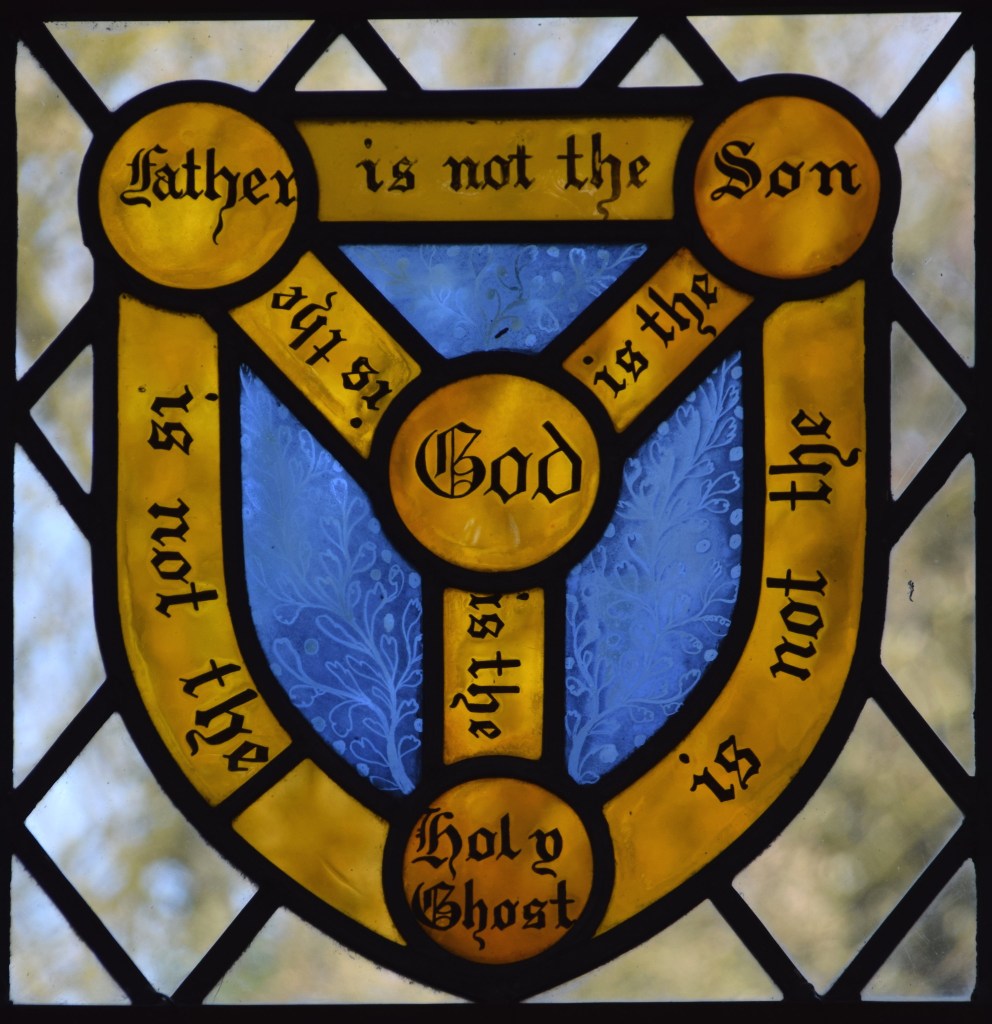
The Shield of the Trinity, a traditional way of depicting that the three Persons of the Trinity are different and yet are co-equally God.

No, there’s not a typo in the title. I didn’t mean to write “Trigonometry.”

So don’t fear that we’ll be discussing math in this post!

I’m referring instead to the Trinity, a concept that can leave some people scratching their heads.

Do Christians worship three gods?

How does the “three-in-one” idea even work?

Over the centuries people have come up with different analogies to explain the idea that God exists in three distinct Persons: the Father, the Son, and the Holy Spirit.

St. Patrick famously employed a shamrock as a visual metaphor to explain the Trinity to the Irish. He used the shamrock’s three leaves growing from a single stem to illustrate how the three Persons of the Trinity are distinct yet one.

But here we risk leaving the impression that each member is only one third of God, instead of each being 100% God. So the luck of the Irish fails us in finding the perfect analogy in a shamrock.

Some compare the Trinity to an egg, which also has three parts. The shell, the white, and the yolk together make up one egg. But this analogy has its flaws, too, and leaves the concept rather scrambled.

Read more

What’s in a Name?

Photo by Jill Wellington on Pixabay

As a gardener, I must admit that I prefer using the common or folk names for flowers.

These sometimes ancient names are often whimsical and enchanting. Who wouldn’t love calling flowers by such names as cherry pie plant, lady’s slipper, love-in-a-mist, baby blue eyes, bachelor’s button, quaker ladies, whirling butterflies, johnny-jump-up, busy lizzie, or candytuft? It makes the heart sing to use endearing names like these.

The scientific or botanical names for flowers, on the other hand, can seem daunting. They’re usually derived from Latin, and while they can give a more accurate description of what a plant’s nature is, they can sound a bit intimidating to my ears.

In fact, some botanical names actually sound like a disease:

“Don’t tell anyone, but I’ve got Scabiosa again.”

“That’s nothing! You should see my sister’s Myosotis: it’s rampant.”

“You don’t say! But did you hear about Kelly? She’s got Nepeta nervosa.”

“No! Is she seeing a psychiatrist for that?”

(In case you’re wondering, Scabiosa is the botanical name for the pincushion flower; you might know Myosotis better as the little blue forget-me-not; and Nepeta nervosa is a type of catmint.)

I’m so glad that we have the opportunity to use informal names for the flowers we cherish.

In the same way, believers have been given the great privilege of using a remarkably intimate name for God: “Abba Father.”

Read more

Date Night With God

Image by StockSnap from Pixabay

If you’re married, do you have a “date night” with your spouse?

Some people set aside time each week when they get together with their spouse, just the two of them, and do something special.

Life is so busy these days that we sometimes have to actually schedule time to spend with our spouse. We have to juggle work, raising children, community involvements, caring for aging parents, hobbies, and so on.

There are so many demands on our time that we often have difficulty making sure we’re giving enough attention to the person most important to us.

And besides, we know that our spouse is aware of our love for them. So we let things slide and don’t make the relationship a priority.

In this way, however, the bond between you starts to suffer. Without regular conversations and one-on-one time, a distance can start to grow in the relationship.

It’s the same with our relationship with God: we’re so busy with family and work commitments that we sometimes fail to fit Him in to our schedules.

Read more