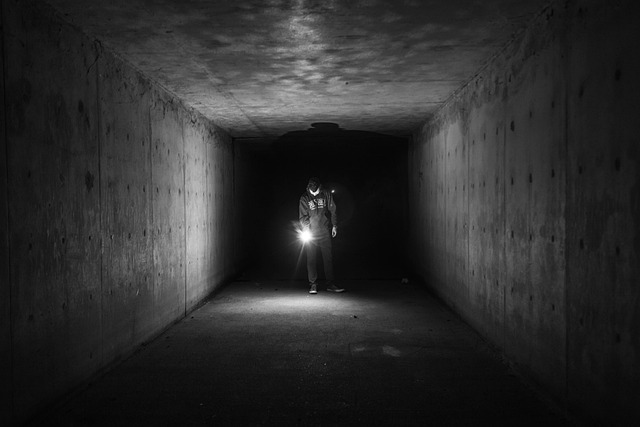
If you’re fumbling around in the darkness, what should you do?
Turn on a light, of course.
But there are places on earth where this truism can have unexpected effects.
The “midnight zone” of oceans is one of them.
This zone, ranging from about 3,000 to 13,000 feet below the water’s surface, is in constant darkness. The sun’s rays simply cannot penetrate this far down.
The only light at this extreme depth comes from the bioluminescence of various sea creatures themselves.
Scientists who want to study the sea life in this region are faced with a problem. Normally, if you want to examine a dark area, you’d simply shine a light into it. Indeed, the submersibles scientists use for underwater research have headlights for this express purpose.
But casting a light on the creatures in the midnight zone freaks them out. They’re not used to bright light, and assume it’s some sort of enemy.
Startled swordfish will attempt kamikaze runs at a submersible’s lights. Other creatures are blinded or are plunged into terror by the blazing illumination: they either freeze or flee.
Scientists soon realized that their submersibles’ lights were simply creating a no-go zone around the vessel, hampering their research. So they switched to using a red light, a colour which most of the undersea creatures can’t see.
Sometimes light can have a contradictory effect, can’t it?
As believers we see this when we introduce the light of Christ to others.
Read more
 The Faith Cafe