Who Loves You?

Photo from Pxhere

How many times today has someone told you that they love you?

If you have a loving family, you’ll probably hear them express their love for you frequently.

But what if your family ties are a bit strained? What if you don’t have many close relationships at all, and consider yourself to be fairly alone in the world?

Then you probably don’t hear the words “I love you” nearly enough.

There’s a remedy for that:

Open a Bible.

The unfailing love of God is a soundtrack that reverberates through the Scriptures.

It’s easy to find verses in the New Testament that exemplify God’s love:

“But God demonstrates his own love for us in this: While we were still sinners, Christ died for us.” (Romans 5:8)
“This is real love—not that we loved God, but that he loved us and sent his Son as a sacrifice to take away our sins.” (1 John 4:10)
And of course: “For God so loved the world that he gave his one and only Son, that whoever believes in him shall not perish but have eternal life.” (John 3:16)

But what about the Old Testament?

Read more

The Game is Rigged

In life, it’s easy to conclude that you’re getting the short end of the stick.

On social media, everyone seems to be having a better life than you are.

At the grocery store, each year you pay a bit more for the same item.

In the parking lot, the other guy inevitably gets the spot you were waiting for.

At the casino, the house always wins.

Even your bathroom scale seems to be part of the conspiracy against you: surely it’s rounding up?

But with God, this isn’t true. The game is rigged in your favour!

How so?

When we think of the scales of justice and mercy, we assume they’re evenly balanced. But God actually has his finger on the scale, so to speak. For those who believe in His Son, it’s tilted heavily toward mercy.

“The Lord isn't slow about keeping his promises, as some people think he is. In fact, God is patient, because he wants everyone to turn from sin and no one to be lost.” (2 Peter 3:9)

God longs to be merciful (Isaiah 30:18). But at the same time He must judge sin.

How does He reconcile these two seemingly contradictory impulses?

At the Cross.

Read more

Faith Wasn’t Built In A Day

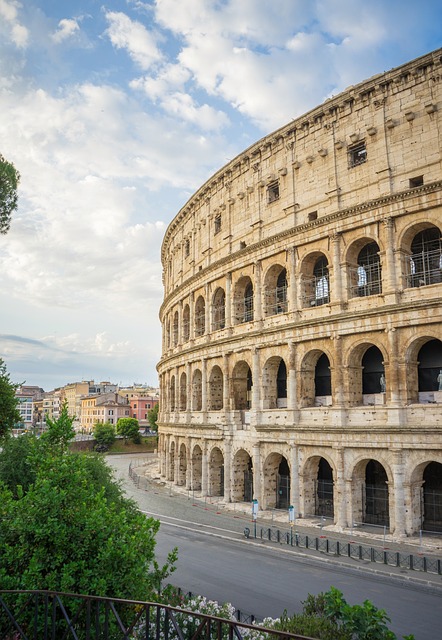
Image of Rome’s Colosseum by Leonhard Niederwimmer from Pixabay

They say Rome wasn’t built in a day.

I think we can say the same about our faith.

We see hints of this in Scripture:

“The apostles said to the Lord, ‘Increase our faith!’ ” (Luke 17:5)

“The father instantly cried out, ‘I do believe, but help me overcome my unbelief!’ ” (Mark 9:24)

Steadfast trust in God’s promises and character is something that is gradually established in us, brick by brick, year by year.

Take Abraham, for example. This hero of the Old Testament is held out in the book of Hebrews as a paragon of faith.

But he didn’t start out that way. In fact, his record in the faith department was a bit spotty for a while. God had to build up his faith over time…

Read more

Lest We Forget

View from D-Day Landing Craft, June 6, 1944

Each year we mark November 11th as Remembrance Day in Canada (Veterans Day in the US).

On this special day, we remember the servicemen and -women who lost their lives to ensure the freedom we cherish so deeply today.

The numbers are staggering: it’s estimated that over 400,000 U.S. military personnel lost their lives during World War II. The US National D-Day Memorial Foundation estimates that over 4,000 Allied servicemen lost their lives on June 6, 1944 (D-Day) alone.

The fatalities during World War I are equally appalling, with close to 60,000 Canadians having lost their lives in service. The best estimate of war historians is that over 140,000 Allied soldiers lost their lives during the hellish Battle of the Somme alone in 1916 (including my great-uncle Pte. Robert John Tisdale, still in his teens).

The numbers who lost their lives in the Korean War, the Gulf War, Afghanistan, and others only adds to the toll of war’s terrible cost.

But wait a minute…every sentence I just wrote contained a mistake. Did you spot it?

Read more

How to Win at Chess

Image by Jan Vašek from Pixabay

Let’s assume you’ve challenged the all-time, undefeated World Chess Champion to a game.

You were confident in your chess skills, and figured that you had a fair chance of winning. The challenge seemed like a good idea at the time.

As the game progresses, however, you realize you’re vastly outmatched. You severely overestimated your abilities. The champion is on course to trounce you easily.

Worse still, you’d made a rash and cocky wager. You bet everything you had that you’d win: your house, your car, all your possessions.

Now you have a horrible sinking feeling, certain that you’re about to lose everything you own.

But then the chess champion does something unexpected.

He comes over to your side of the table, picks up one of your pieces, and makes a move for you.

Then he goes back to his side of the table and makes his own move.

This pattern repeats several times. Eventually you realize what he’s doing: he’s making very shrewd moves on your behalf, employing a strategy you’d never have thought of.

It slowly dawns on you that he’s opening up a path to victory for you.

The chess champion is actually helping you win! He’s doing for you what you had no possibility of doing for yourself.

After he’s won the game for you, the champion gives you a hearty handshake and a wink. All you can do is humbly thank him with profound gratitude. If it weren’t for his gracious actions, you’d have lost everything.

What’s the spiritual lesson for us here?

To ultimately “win” at life, you need God to be on both sides of the equation.

Read more

The Language of Flowers and the Language of God

Say it with flowers!
Wikimedia Commons, CC BY-SA-2.0

Flowers speak. Not just through their fragrance or their beauty, but with secret codes, too.

Perhaps you’ve heard of the “language of flowers” that was popular during Victorian times?

This enchanting symbolic language enabled suitors to send coded messages to their paramours, ones that couldn’t be spoken aloud. The message depended on the particular flowers and colours chosen for the bouquet. An entire conversation could be carried out solely through flowers, with no words employed at all.

We all know that red roses symbolize true love, and we’d rightly guess that the forget-me-not begs that the giver be remembered. But did you know the following flower meanings?

Red carnation: My heart aches for you
Hyacinth: Your loveliness charms me
Canterbury bell: Your letter received
Yellow rose: Jealousy
Butterfly weed: Let me go
Weeping willow: Sadness

The Victorian language of flowers is a cryptic tongue. Most people only see the surface of the flower and not the symbolic meaning hidden within it.

God has His own “language of flowers,” but it actually encompasses all of creation. God is continually speaking to us through nature:

“For ever since the world was created, people have seen the earth and sky. Through everything God made, they can clearly see his invisible qualities—his eternal power and divine nature. So they have no excuse for not knowing God.” (Romans 1:20)
“The heavens proclaim the glory of God. The skies display his craftsmanship.” (Psalm 19:1)

If we listened in to what nature was saying about its Creator, what messages would be revealed?

Read more

The Throne of Grace

Image by Ralph from Pixabay

What does your favourite chair look like?

Is it a ratty recliner held together with pieces of duct tape, like the one used by Marty Crane on the TV sitcom “Frasier”?

Or is it more regal and imposing, dominating the room like a throne?

I think many of us rather like the idea of having a throne like the ones monarchs throughout history sat on.

The seat of the Chinese emperors was known as the Dragon Throne. The Mughal emperors of India had the Peacock Throne.

Korean monarchs sat on the Phoenix Throne, and Japanese emperors on the Chrysanthemum Throne.

The Shahs of Persia sat on a royal throne known as the Marble Throne, while Swedish monarchs were crowned on the Silver Throne.

Both the emperors of Vietnam and the Pharaoh Tutankhamen were enthroned on a Golden Throne.

And of course fantasy novelist George R. R. Martin has given us the Iron Throne, the seat of the monarch in the fictional Seven Kingdoms of Westeros. It was said to have been made of the swords of defeated enemies.

But there’s a throne made of something infinitely more precious than any of the above…

The Throne of Grace.

Read more

What Love Looks Like

The incomparable Taj Mahal, India

The Taj Mahal, in Agra, India, is considered to be one of the world’s most beautiful buildings, and rightly so.

Built from white marble, it was commissioned in 1631 by Shah Jahan as a memorial to his favourite wife, Mumtaz Mahal, who died that year giving birth to their fourteenth child.

For many in India and around the world, the Taj Mahal is an iconic symbol of love. Every stone and jewel used in its construction speaks of the tremendous affection the Shah had for his wife, and his grief at her passing. To many people, the Taj Mahal is the embodiment of love.

What does love look like to you?

Read more

The Stand-In

Daniel Radcliffe as Harry Potter.
Photo by longplay on Flickr.

If you’re a Harry Potter fan, this post might have special resonance for you.

While much media attention has focussed on the astonishing success of the Harry Potter juggernaut over the years, perhaps less attention has been paid to the stories of the unsung heroes behind the scenes who have worked so hard to create the films in the franchise.

A recent documentary, “David Holmes: The Boy Who Lived,” sheds light on the poignant story of one of these individuals.

David Holmes was chosen early on to be the stunt double for Daniel Radcliffe, who played Harry Potter in the films. Starting with the very first film, and for the next ten years, David and Daniel worked closely together and developed a strong bond.

David’s exceptional talents as a gymnast enabled him to perform breathtaking stunts. As a stand-in for Daniel, David’s skills were brought into play whenever a stunt was deemed too dangerous for the lead actor himself.

All went well, until the filming of the next-to-last Harry Potter movie in 2009.

While filming a scene for “Harry Potter and the Deathly Harrows, Part One,” a tragic accident left David paralyzed with a spinal injury, turning his world upside down.

The documentary is an inspiring account of David’s story and of the bond that still exists between the two men. It also depicts the reverberations the accident had on Daniel’s life, and how he navigated the complex mix of guilt and admiration brought on by seeing the great cost his friend bore for taking his place.

And therein lies the lesson we can learn from this as believers.

We, too, have someone who stood in our place and paid a terrible price for doing so.

Read more

Explaining Rituals

Image by Terren in Virginia via Flickr, CC BY 2.0

While I was raking up fallen leaves in the yard recently, a passerby stopped to talk.

This lady was from India, and was curious about why Canadians raked up leaves each fall. Was it some cultural tradition of ours, she asked, a ritual that we enjoyed doing?

I smiled at her mistaken assumption, but explained that if we didn’t rake up the leaves, the lawn underneath would die. With a blanket of leaves blocking the sun and air, the grass would be smothered.

We’re certainly not raking up dozens of bags of leaves because it’s fun!

Our conversation got me thinking about rituals, and how we sometimes need to explain them to puzzled outsiders.

Why do kids dress up in outlandish costumes on Halloween and go door to door asking for candy?

Why do we decorate a tree in our homes at Christmas?

And why do Christians have bread and wine at Communion? Is it because they get hungry and need a snack partway through a church service?

Like Lucy in the old sitcom, we have some explaining to do…

Read more