Cats and Dogs

Image by Chiriac Ciprian from Pixabay

When two people couldn’t be more different, we say they’re like night and day, or chalk and cheese.

Comparing people who are unalike to cats and dogs can also be apt. There are several notable differences between these species of our furry friends:

They say dog is man’s best friend. If so, then a cat is man’s strange, aloof roommate.

Owners train their dogs. Cats train their owners.

Dogs don’t mind it when you dress them in silly clothing. Cats give you murderous looks if you so much as attempt to put a hat on them.

Dogs look at their owners and think: “These people feed, shelter and love me: they must be gods!”

Cats look at their owners and think: “These people feed, shelter and love me: I must be a god!”

But perhaps cats and dogs have more in common than we might think.

They both come running when they hear the can opener. They both know who in the family has the most comfortable lap. And they both show their love by licking you and shedding their fur on you.

There are two people in the Bible, who, at first glance, couldn’t seem to be more different: Simeon and the thief on the cross. Both of their stories are found in the Book of Luke.

Read more
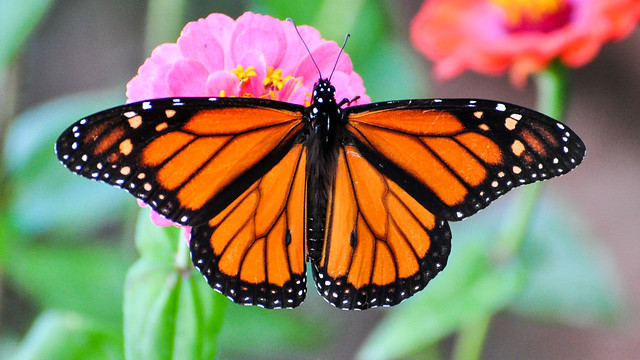

The Promise of Return

Photo of Monarch butterfly by Peter Miller on Flickr CC BY-NC-ND-2.0

One of the greatest natural events on Earth is now underway: the migration of the monarch butterfly.

Each fall, millions of these colourful insects set off from their summer breeding grounds in the northeastern U.S. and Canada for a gruelling journey. They travel thousands of miles across North America all the way to Mexico, where they’ll spend the winter.

Many people believe that the monarch butterflies that leave in the fall are the same ones that arrive back in the spring, but this isn’t so. Individual butterflies don’t make the entire round-trip journey. The ones that migrate from the northeastern part of North America in fall will never return.

Rather, their great-great-grandchildren are the ones who will arrive the following spring, as successive generations keep making their way north. The entire annual migration cycle of the monarch takes about four generations.

Perhaps I’m being fanciful, but I can imagine monarch butterflies telling their children of the awesome journey they’ll be undertaking. They may say that they’ll only be able to go part of the way with them, but to keep the faith and keep going.

Maybe they encourage their children to tell successive generations to keep believing in the promise of return. Because eventually, their descendants will see the promise fulfilled.

Aren’t we in a similar situation as believers?

We’re living in a time when we’re awaiting the fulfillment of a promise, the promise of Christ’s return. We’re not sure exactly when Christ will come back to Earth, but He has promised that He will.

Read more

Easter Eggs at Christmas

Image by Annette from Pixabay

At Christmas, do your thoughts turn to Easter eggs?

Probably not, unless you’re an avid player of video games or a fan of certain movie franchises.

In the cinematic and computer worlds, an “Easter egg” is a secret message, image, or feature hidden in software, games, or films.

With video games, an Easter egg might be an unpublished feature or hidden property of the game that is normally hidden from the public eye. It can only be accessed by certain button combinations that are not common knowledge.

Easter eggs inserted by filmmakers in their works might involve a jokey detail or an obscure reference to a previous movie by the same auteur. Only the most alert audience members catch them.

For instance, famed film director Alfred Hitchcock had a penchant for appearing in cameo roles in his own movies. In 39 of the 52 films he directed, he left “Easter eggs” consisting of himself in blink-and-you-miss-it bit parts.

Are there any “Easter eggs” to be found hidden in the Christmas story in the Bible?

Actually, there are.

If you read the Scriptures closely, you’ll find that there are foreshadowings of Easter sprinkled throughout the accounts of Christ’s miraculous birth.

Read more

No Matter Your Age, There’s a Miracle For You!

Stained glass window depicting Gabriel and Mary. Image by Dorothee Quennesson on Pixabay

When we think of the Christmas story, we often focus on the birth of Jesus as the only miraculous event that occurred.

And indeed it was an awesome miracle: the virgin birth of a baby who would become the Saviour of the world.

But there was another miraculous birth that happened around the same time, described only in the gospel of Luke.

The angel Gabriel told Mary she would conceive without having had relations with her betrothed, Joseph. The Holy Spirit would come upon her, and she would give birth to a son, who was to be called Jesus.

This was no doubt astounding news to Mary. But the angel didn’t stop there: he had another amazing news flash.

Read more

The Promise of Return

Monarch Butterfly
Photo by Peter Miller on Flickr CC BY-NC-ND-2.0

One of the greatest natural events on Earth is now underway: the migration of the monarch butterfly.

Each fall, millions of these colourful insects set off from their summer breeding grounds in the northeastern U.S. and Canada for a gruelling journey. They travel thousands of miles across North America all the way to Mexico, where they’ll spend the winter.

Many people believe that the monarch butterflies which leave in the fall are the same ones which arrive back in the spring, but this isn’t so. Individual butterflies don’t make the entire round-trip journey. The ones which migrate from the northeastern part of North America in fall will never return.

Rather, their great-great-grandchildren are the ones who will arrive the following spring, as successive generations keep making their way north. The entire annual migration cycle of the monarch takes about four generations.

Perhaps I’m being fanciful, but I can imagine monarch butterflies telling their children of the awesome journey they’ll be undertaking. They may say that they’ll only be able to go part of the way with them, but to keep the faith and keep going.

Maybe they encourage their children to tell successive generations to keep believing in the promise of return. Because eventually, their descendants will see the promise fulfilled.

Aren’t we in a similar situation as believers?

Read more