With God, You Get the Flower First!

Eastern Redbud Tree

Sometimes nature can be a bit unpredictable—things happen in an order we wouldn’t expect.

Normally, plants put forth leaves long before they produce flowers.

But some trees and shrubs flip the script, so to speak.

With certain plants, the normal sequence is reversed: the flowers come first, before the leaves have developed.

A good example is the beautiful redbud tree. It puts forth gorgeous pink flowers on its bare branches in early spring, when none of its leaves are yet in sight.

The forsythia shrub bears its bright yellow flowers in advance of its leaves, and the lovely magnolia presents its pink or white blooms before the green foliage appears. Some maples and oaks also exhibit this flower-first behaviour, although with less showy blossoms.

All of these plants give us a treat in springtime when we’re starved for colour. We get the flower first without having to wait for the leaves.

Why do some plants reverse the normal order of things?

Some trees are wind-pollinated, so put forth flowers before their bulky leaves get in the way. The same goes for flowers that need extra sunlight. Other plants produce a mass of conspicuous flowers first, unobscured by leaves, to better attract the attention of pollinating insects.

Did you know that God also flipped the script and gave us the flower first, so to speak?

Read more

When Nature Sings, Sing Along!

Image of crocuses by Annette Meyer from Pixabay

No matter where you live, spring is a time of joy.

In my part of the world, shy white snowdrops are the first flowers to bloom in spring.

Crocuses, slightly bolder in colour with their yellows or purples, are the next to make an appearance.

The tulips take their time, first poking the tips of their leaves above the ground like a periscope, as if checking to see whether it’s safe to emerge. They then burst forth in bright, vivid colours, their blooms held aloft on tall stems like upright trumpets.

“The flowers are springing up, the season of singing birds has come, and the cooing of turtledoves fills the air.” (Song of Solomon 2:12)

After a long, colourless winter, it makes my heart sing to see the arrival of spring.

But do the flowers and trees themselves sing? And if they do, what is their song telling us?

Author Linda Brooks, in her 2018 book, “Orchestra In My Garden,” seems to share my sentiments about the spring season:

”Once the snow disappears and my garden starts to emerge from its slumber, I cannot jump up fast enough to catch the first light, to lose (and find) myself among kindred spirits and bend my ear to their voices. No, I am not deluded. I do understand that plants are not human and cannot speak, but no one can convince me that they do not sing.”

She’s right: plants do sing. But she’s perhaps missed who they’re singing to.

They sing to God.

Read more

Spring Is On Its Way!

Public domain from PXfuel

The shortest day of the year in the northern hemisphere is the winter solstice, which occurred last year on December 21st. From that day on, the days begin to lengthen and the sun’s position in the sky begins to rise from our perspective.

But if the days are now getting longer and we’re getting more sunlight, why does it keep getting colder and snowier here in January and February?

Where is spring?

There are two reasons for this temperature lag: one having to do with the tilt of the earth, the other with how slowly the earth heats up and cools down in response to the sun’s energy.

Think of a rock near a bonfire. When the fire is first lit, the rock will stay cool for a while. It takes time for it to heat up, even though it’s being exposed to a roaring fire. The rock will eventually absorb the fire’s heat, though, and will retain that heat for a while even after the fire is put out.

Similarly, even though the days are now lengthening, it takes time for the earth to warm up, resulting in colder temperatures in the early months of the year. The earth is also slow to release accumulated heat energy from the sun after the summer solstice in June. This gives us hotter July and August days in the northern hemisphere, even as the days are getting shorter.

In the same way, sometimes we pray about something but don’t see any immediate results. There seems to be an inexplicable “lag” in receiving answers to our prayers. We don’t see any evidence that things are changing; in fact, our situation might seem to get worse.

What’s going on? Where is our “spring”?

I think we need to understand that God can answer our prayers in several ways.

Read more

Welcome to Your Spring!

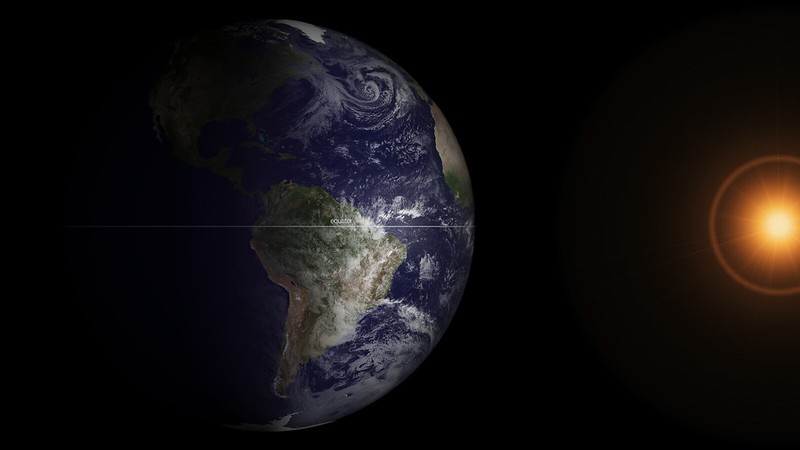
Satellite captures moment of spring equinox. Image by NASA Goddard Space Flight Center via Flickr CC BY-2.0

Welcome to Spring!

If you live in the Northern Hemisphere, today marks the vernal equinox, the first day of astronomical spring. (For those Down Under, this day heralds the arrival of autumn.)

The return of spring signals longer days with more sunlight and warmer temperatures. Even though it may take a while to see blooming flowers (especially in Canada!), the spring equinox is a reminder that brighter days are ahead.

But what exactly is an equinox?

We have two of them each year, in spring and fall. Each one marks the day when the sun is directly above the Earth’s equator (from our perspective), and night and day are of equal length.

The sun’s path then crosses the celestial equator (an imaginary line or circle in the sky directly above the Earth’s equator), and heads north or south, depending on the time of year.

At the spring equinox, the sun is rising into the Northern Hemisphere: it’s our turn for renewal.

But no matter where you live on the planet or what time of year it is, you can experience a new season of rebirth in your life.

Your new beginning comes when the Son rises in your life.

Read more

Your “Spring” Is On Its Way!

Image by Jill Wellington from Pixabay

A beautiful red cardinal has been singing heartily outside my window the past week, as though it’s already spring.

My hibiscus houseplant has broken its winter dormancy and is putting forth flower buds.

But there’s still snow on the ground, and there’s bound to be more snow coming. This is Canada, after all, and it’s only March. It’s still cold enough outside to need a winter coat.

Doesn’t seem like spring to me.

Do the cardinal and the hibiscus know something I don’t?

In fact, they do. They sense the lengthening of the day and the increased hours of sunlight, things that have escaped my notice.

They know that spring is on its way, even if I can’t see it coming just yet.

In the same way, God knows a thing or two that we don’t.

He knows when a turnaround in our situation on its way, even if we can’t see any evidence of a change in the offing.

He knows that our “spring” is coming.

Read more

The Seeds of Your Comeback Are Already Forming

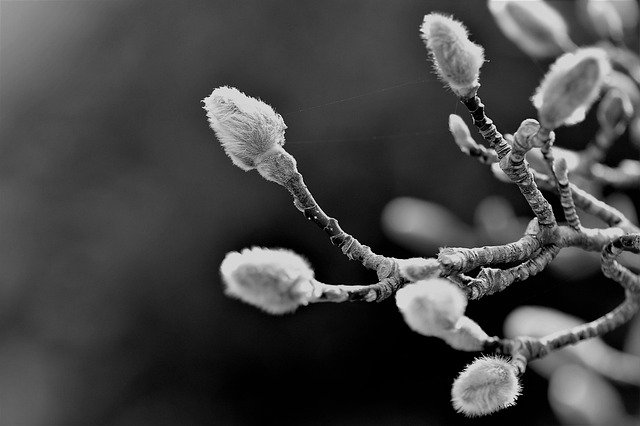
Magnolia Buds in Winter. Photo by Pitsch on Pixabay

It can be hard to hold on to hope when winter is coming, can’t it?

The trees and shrubs seem barren of any evidence that life will ever reemerge. It can be rather depressing.

But if you look closely at certain plants during winter, you’ll see something exciting:

Flower buds!

Yes, some plants, such as magnolias, actually set their flower buds for next year during the previous growing season. You can see these buds on the branches all winter long.

In the case of magnolias, the buds are encased in a hairy protective scale to insulate them from the cold, almost like a silvery fur coat. When the time is right the next spring, the flowers are all ready to burst open into glorious bloom.

Isn’t it encouraging to know that the promise of next year’s flowers is already there during the bleak winter?

In the same way, the seeds of your comeback are forming deep within you.

Read more

A Special Kind of Faith

Tulip bulbs at a flower market
Photo from Pxhere, Public Domain

They say that planting seeds is an act of faith.

I think that’s true: you put seeds in the ground in spring, hoping most will germinate and grow into a plant. If you’re lucky, you might see hints of growth in a few days, but often it can be weeks before a little green head pokes its way out of the soil.

If planting seeds takes faith, then I think it takes a special kind of faith to plant bulbs in the fall.

In the fall, you know the days are getting shorter and colder. The leaves are dropping from the trees, and tender plants are beginning to die from early frosts. You know that snow will soon blanket the garden to the depth of a couple feet. You’re heading into a barren season.

The precious tulip, daffodil or hyacinth bulbs that you’ve just planted will disappear from your view for many months. You’ll have no indication that they’re all right, let alone any guarantee that they’ll eventually bloom. They may fall prey to rabbits, squirrels or deer. Who knows what will happen to them?

And yet you still go ahead and plant fall bulbs, trusting that they’ll survive the frigid winter and bloom later in spring.

Some things in our lives take special faith to trust for, too, don’t they?

Read more

Orchestra In Your Garden

Snowdrops, one of the harbingers of spring

Finally! At long last we’re starting to see signs of spring here in Toronto.

There’s still a bit of snow on the ground, but the tiny snowdrops in my garden are already shyly blooming. The tulips are just starting to poke the tips of their leaves above the ground like a periscope, as if checking to see whether it’s safe to emerge.

“The flowers are springing up, the season of singing birds has come, and the cooing of turtledoves fills the air.” (Song of Solomon 2:12 NLT)

After a long winter, it makes my heart sing to see the beginnings of spring.

But do the flowers and trees themselves sing? And if they do, what is their song telling us?

Read more

Spring Is On Its Way

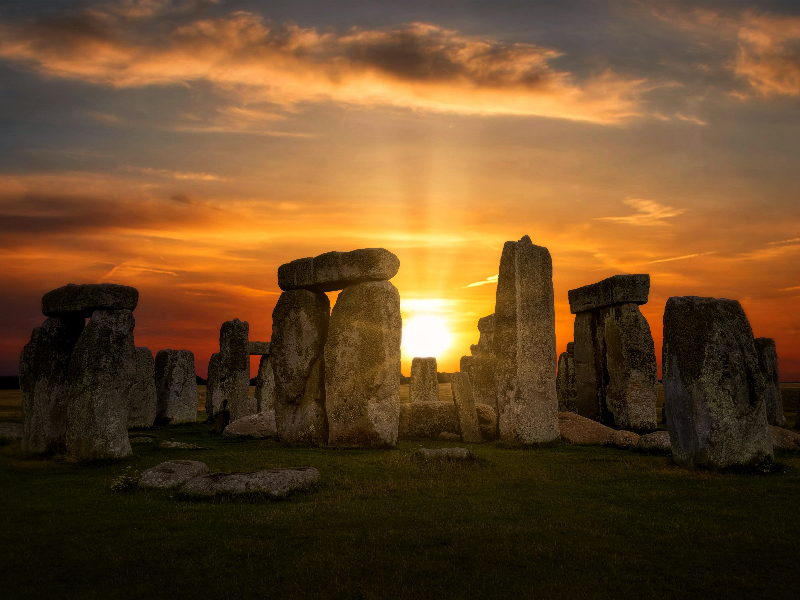
Stonehenge, site of solstice celebrations for millennia
Public Domain photo

The shortest day of the year in the northern hemisphere is the winter solstice, which occurred last year on December 21st. From that day on, the days begin to lengthen and the sun’s position in the sky begins to rise from our perspective.

But if the days are now getting longer and we’re getting more sunlight, why does it keep getting colder and snowier here in January and February?

Where is spring?

Read more