How to Win at Chess

Image by Jan Vašek from Pixabay

Let’s assume you’ve challenged the all-time, undefeated World Chess Champion to a game.

You were confident in your chess skills, and figured that you had a fair chance of winning. The challenge seemed like a good idea at the time.

As the game progresses, however, you realize you’re vastly outmatched. You severely overestimated your abilities. The champion is on course to trounce you easily.

Worse still, you’d made a rash and cocky wager. You bet everything you had that you’d win: your house, your car, all your possessions.

Now you have a horrible sinking feeling, certain that you’re about to lose everything you own.

But then the chess champion does something unexpected.

He comes over to your side of the table, picks up one of your pieces, and makes a move for you.

Then he goes back to his side of the table and makes his own move.

This pattern repeats several times. Eventually you realize what he’s doing: he’s making very shrewd moves on your behalf, employing a strategy you’d never have thought of.

It slowly dawns on you that he’s opening up a path to victory for you.

The chess champion is actually helping you win! He’s doing for you what you had no possibility of doing for yourself.

After he’s won the game for you, the champion gives you a hearty handshake and a wink. All you can do is humbly thank him with profound gratitude. If it weren’t for his gracious actions, you’d have lost everything.

What’s the spiritual lesson for us here?

To ultimately “win” at life, you need God to be on both sides of the equation.

Read more
The Cleanest Place in the World

What is the cleanest place on Earth?

If you guessed a room where semiconductors are made, you’d probably be right.

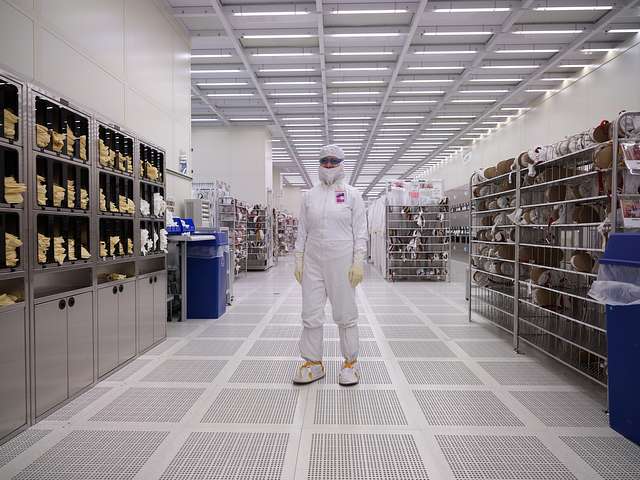
A microchip factory has to be exceptionally clean to avoid introducing contamination into the chip-making process. In fact, the air in their “cleanrooms” is filtered to be vastly cleaner than that of a sterile hospital operating room.

Anything that sheds particles must be avoided in a microchip cleanroom. Contaminants include human hair, dead skin cells, makeup, bacteria, and even micro-dust from pencils or paper.

So semiconductor workers must wear head-to-toe “bunny suits,” protective glasses, booties, hoods, face masks, and two pairs of gloves. These suits may include self-contained HEPA filter packs, because even human breath contains contaminants.

Let’s assume that I arrived one morning at a microchip factory as a new employee.

Let’s say I told the supervisor that I’d cleaned myself diligently in the shower that morning, washed my hair twice, gargled with Listerine, scrubbed my hands with bleach, and put on brand-new clothes. I was certain that I was clean enough to enter the factory.

The supervisor would say, “Hold your horses, Lori. You still have to put on a protective covering before you can come into the cleanroom.”

I might argue, “But I’m already cleaner than 95% of other people. I don’t need a covering. Let me in!”

My boss would say, “I’m sorry, but you’re not as clean as you think you are. We have very high standards here. You have to suit up first.”

Isn’t that sort of what entering Heaven is like?

Read more