The Key to Stronger Faith

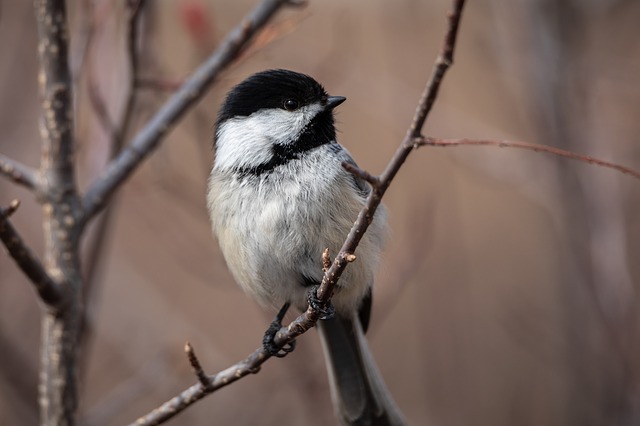
Chickadee Photo by Larry Doucet on Pixabay

A chickadee may have a bird-brain, but it can actually be pretty smart.

Especially if it lives in a harsh climate.

What does climate have to do with bird intelligence? As it turns out, more than you’d expect.

Biologists have discovered that chickadees living in the mountains or in northern latitudes, where the weather is more severe, were smarter than their peers living more comfortably down below.

Chickadees from harsher habitats had superior spatial memories and problem-solving abilities than those living in gentler climes. They were better at finding stored caches of food and at figuring out how to access a worm treat that scientists had cleverly tucked into a glass tube.

The harsh environment made their brains work a bit harder.

Is there a lesson for humans in the example of the chickadees?

Yes, but it isn’t to move to a more wintry climate (take it from a Canadian who’s done her share of shovelling snow—it hasn’t made me smarter!).

The takeaway here is that there can be unseen benefits to the challenges we face.

Read more

God Is Always At Work

On Labour Day, we get a welcome day off. But even so, our minds aren’t very far from matters concerning work.

Here’s a question about work that people often bring up:

Why is it that when traffic is diverted around “Men At Work” signs on the road, we often don’t see anyone doing any actual work?

Sometimes the construction zone is deserted, and work on the project seems to be at a standstill. And yet vehicles are still forced to circumvent the area.

At other times there might be a few workers milling about and talking, or peering down an open maintenance hole. But again, lanes are blocked off and traffic is being slowed down for seemingly very little reason.

We naturally find this very annoying. The disruptions and delays would be easier to handle if we could actually see some work getting done, some real progress being made.

Sometimes we show the same impatience with God, don’t we?

We have prayers that we want Him to answer, and things in our lives that we want Him to change. But we get frustrated when nothing seems to be happening.

Read more

Master of Deception

Peacock butterfly on a flower. Image from Pixabay

If you’re out for a walk in nature, you may not realize how much you’re being tricked.

You may think you’ve got an accurate picture of the natural world around you, but in many cases, you’re being fooled.

That’s because some creatures are masters of deception.

Stick insects camouflage themselves by mimicking the shape and colour of twigs on a tree. Moths may blend in so well with the bark pattern of the tree they’re resting on that you’d never know they’re there.

The killdeer bird fakes having a broken wing to make a predator think she will be an easy meal, thereby luring it away from the vulnerable chicks in her nest before she flies away.

Even beautiful butterflies get in on the act of trickery. Some species have markings on their wings that look like huge eyes. The eyespots may discourage a predator from attacking by making it think the insect is in fact a much larger animal.

These false eyes may serve another purpose: to encourage an attacker to aim for the wrong target. The markings deflect an attack away from the butterfly’s head or body to parts less vital for survival, such as its wing margins. By using this deception, the butterfly outwits its enemies and is able to fly away with a torn wing at worst, but otherwise relatively unscathed.

Butterflies aren’t the only creatures to use misdirection in this way:

Satan does, too, and we need to be wise to his tactics. We may not realize how much he’s tricking us.

Read more

How To Become A Loaf Of Bread

Imagine that you’re a ball of bread dough (for some of us whose figures are a bit “doughy,” this isn’t much of a stretch).

You’ve had your ingredients mixed together nicely, and you’ve been resting for a while after all that effort. You feel good: you’ve even risen higher. It won’t be long now until you become a beautiful loaf of bread.

But wait! What’s that coming toward you? It’s a fist! Someone is actually punching you! You feel yourself deflate, and lose a lot of your volume. Then you’re lifted out of the warm bowl you were in and slapped onto a counter. Ouch! That hurt! The hands are now kneading and pummelling you. You wish they could be a bit more gentle.

Finally, it stops. Thank goodness! That was excruciating! You’re now resting back in your bowl in a warm spot, with a tea towel over you to protect you from drafts and from drying out. You can relax now. At least all that pain is over with.

Or is it? Some time later, here come the hands again. They lift the tea towel and begin punching you down anew, just when you’d risen to your previous height. Not again! You’ve got to be kidding! Wasn’t once enough? Once more, you’re kneaded and prodded, stretched and pressed down hard. What good could this possibly be doing you?

When all the pummelling is finished, you’re shaped and placed into a loaf pan. At least it’s cozy here, and the hands have disappeared for a while. You can rest again. Surely nothing worse will happen to you.

But then suddenly you’re thrust into a searing oven. Yikes, that’s hot! You feel your insides begin to transform, and your surface start to turn brown.

You’re becoming a loaf of bread after all.

But why all the trouble and pain? Was it really necessary?

Yes, because that’s what gave you a finer texture.

Read more

Shift Your Perspective

Mallard duck. Image by Ralphs_Fotos from Pixabay

Among the most spectacular aspects of nature for me are its colours.

I’m continually wowed by the vivid colours found in nature, such as the brilliant red plumage of the Northern cardinal.

The cardinal’s red feathers, which come courtesy of pigments, look the same when viewed from any angle. But there’s another source of colour in nature that is even more mesmerizing:

Iridescence.

With iridescence, the hue of something changes when seen from different angles. You’ve probably experienced this shimmery optical phenomenon yourself when looking at certain insects, butterflies, birds, or even soap bubbles.

A good example of iridescence is the head of the mallard, a common duck found in the northern hemisphere. Its head appears to be a bright emerald green at first, but if you shift your angle of observation, it can appear green-gold, blue, or indigo.

It all depends on your perspective.

Maybe there’s a little lesson here for us.

If we shift our perspective about our own situations, we can see beauty that we didn’t know was there.

Read more

God Is Always At Work

Why is it that when traffic is diverted around “Men At Work” signs on the road, we often don’t see anyone doing any actual work?

Sometimes the construction zone is deserted, and work on the project seems to be at a standstill. And yet vehicles are still forced to circumvent the area.

At other times there might be a few workers milling about and talking, or peering down an open maintenance hole. But again, lanes are blocked off and traffic is being slowed down for seemingly very little reason.

We naturally find this very annoying. The disruptions and delays would be easier to handle if we could actually see some work getting done, some real progress being made.

Sometimes we show the same impatience with God, don’t we?

We have prayers that we want Him to answer, and circumstances in our lives that we want Him to change. But we get frustrated when nothing seems to be happening.

Read more

The Key to Stronger Faith

Chickadee Photo by Larry Doucet on Pixabay

A chickadee may have a bird-brain, but it can actually be pretty smart.

Especially if it lives in a harsh climate.

What does climate have to do with bird intelligence? As it turns out, more than you’d expect.

Biologists have discovered that chickadees living in the mountains or in northern latitudes, where the weather is more severe, were smarter than their peers living more comfortably down below.

Chickadees from harsher habitats had superior spatial memories and problem-solving abilities than those living in gentler climes. They were better at finding stored caches of food and at figuring out how to access a worm treat that scientists had cleverly tucked into a glass tube.

The harsh environment makes their brains work a bit harder.

Is there a lesson for humans in the example of the chickadees?

Yes, but it isn’t to move to a more wintry climate (take it from a Canadian who’s done her share of shovelling snow—it hasn’t made me smarter!).

The takeaway here is that there can be unseen benefits to the challenges we face.

Read more