Your Spiritual Resumé

If you had to write a resumé for God’s consideration, what would you list on it?

You’d probably assume that you should list all the good, noble, and praiseworthy things you’ve done.

Your perfect church attendance, your faithful donations to Christian charities, and your decades of volunteering at the soup kitchen would certainly top the list on your spiritual resumé.

You’d also want to throw in your kindness to others, your endless good deeds, and the fact that people consider you a saint.

It probably wouldn’t hurt to mention your lack of even so much as a parking ticket on your driving record.

All this would surely carry weight with God, wouldn’t it? Your impressive list of virtuous accomplishments would undoubtedly factor into in His decision as to whether He would accept you or not.

Or would it?

Read more

The Game is Rigged

In life, it’s easy to conclude that you’re getting the short end of the stick.

On social media, everyone seems to be having a better life than you are.

At the grocery store, each year you pay a bit more for the same item.

In the parking lot, the other guy inevitably gets the spot you were waiting for.

At the casino, the house always wins.

Even your bathroom scale seems to be part of the conspiracy against you: surely it’s rounding up?

But with God, this isn’t true. The game is rigged in your favour!

How so?

When we think of the scales of justice and mercy, we assume they’re evenly balanced. But God actually has his finger on the scale, so to speak. For those who believe in His Son, it’s tilted heavily toward mercy.

“The Lord isn't slow about keeping his promises, as some people think he is. In fact, God is patient, because he wants everyone to turn from sin and no one to be lost.” (2 Peter 3:9)

God longs to be merciful (Isaiah 30:18). But at the same time He must judge sin.

How does He reconcile these two seemingly contradictory impulses?

At the Cross.

Read more

Faith Wasn’t Built In A Day

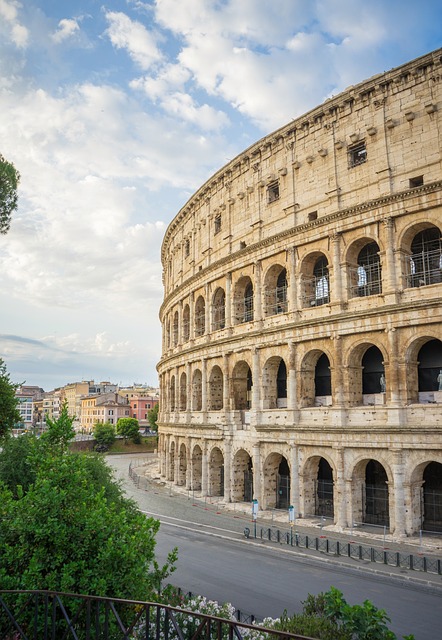
Image of Rome’s Colosseum by Leonhard Niederwimmer from Pixabay

They say Rome wasn’t built in a day.

I think we can say the same about our faith.

We see hints of this in Scripture:

“The apostles said to the Lord, ‘Increase our faith!’ ” (Luke 17:5)

“The father instantly cried out, ‘I do believe, but help me overcome my unbelief!’ ” (Mark 9:24)

Steadfast trust in God’s promises and character is something that is gradually established in us, brick by brick, year by year.

Take Abraham, for example. This hero of the Old Testament is held out in the book of Hebrews as a paragon of faith.

But he didn’t start out that way. In fact, his record in the faith department was a bit spotty for a while. God had to build up his faith over time…

Read more

A Special Kind of Faith

Tulip bulbs at a flower market
Photo from Pxhere, Public Domain

They say that planting seeds is an act of faith.

I think that’s true: you put seeds in the ground in spring, hoping most will germinate and grow into a plant. If you’re lucky, you might see hints of growth in a few days, but often it can be weeks before a little green head pokes its way out of the soil.

If planting seeds takes faith, then I think it takes a special act of faith to plant bulbs in the fall.

In the fall, you know the days are getting shorter and colder. The leaves are dropping from the trees, and tender plants are beginning to die from early frosts. You know that snow will soon blanket the garden to the depth of a couple feet.

You’re heading into a barren season.

The precious tulip, daffodil, or hyacinth bulbs that you’ve just planted will disappear from your view for many months. You’ll have no indication that they’re all right, let alone any guarantee that they’ll eventually bloom. They may fall prey to rabbits, squirrels or deer. Who knows what will happen to them?

And yet you still go ahead and plant fall bulbs, trusting that they’ll survive the frigid winter and bloom later in spring.

Some things in our lives take special faith to trust for, too, don’t they?

Read more

Lost In Translation

Sign on toilet door in Chengdu airport, China
Photo by Anne Roberts on Flickr, CC BY-NC-SA-2.0

There’s a real art to translation: zeroing in on just the right words to convey the nuance of what the original author intended.

Done well, a translated work can be a masterpiece in its own right.

Oftentimes, though, a translation can turn out to be a farce, as in the following examples:

A menu item in Chinese for a roasted gluten dish was translated into English as “Sixi Roasted Husband.” (The perfect dish for wives who’ve finally had enough of their mates?)

A hot and spicy chicken dish on another Chinese menu became “Chicken Rude and Unreasonable” in English. (No wonder the chicken met his end—he had it coming!)

Or this Google Translate zinger: “It’s been the goat in the budget, because His raining badly, so quite short, he is on the bucket month out.” (Not sure what this meant in the original Danish, but I hope the goat was able to figure it out.)

Then there’s the sign for a hair salon in China whose English name is “Could Not Connect To Translator Service.” (A bit of a give-away that they didn’t bother hiring a real live translator?)

Sometimes, we have a different understanding or “translation” of what God actually meant in certain Bible verses.

For example, in times of difficulty, we cling to verses such as Romans 8:28:

“And we know that all things work together for good to those who love God, to those who are the called according to his purpose.”

However, it can often be hard to see what good could possibly come from our difficult situations. We might be going through health challenges, injustice, hardship or loneliness. Where is the good in any of that?

But maybe we have a limited understanding of what “good” means. Perhaps we and God have different “translations” of what this looks like in our lives.

Read more

Get With God’s Program!

Photo by Jill Wellington on Pixabay

I don’t seem to have much luck getting birds to cooperate with me.

Years ago, I bought a Victorian-style birdhouse, and painted it light blue with white trim. I nailed it to a tree where I could see it when sitting at my kitchen table. I imagined the delight I’d have watching birds move in and raise their young there. I couldn’t wait for my new feathered neighbours!

But the birds refused to move in.

Year after year, the pretty birdhouse sat empty. I was so disappointed. What ingrates those birds were! And after all the trouble I’d gone to for them!

The problem was, I’d put the birdhouse where I wanted it, with no thought to their needs.

The birdhouse was pretty, certainly, but its placement didn’t suit the birds one bit. Being nailed to a tree made it too accessible to predators like squirrels or racoons. The birds didn’t feel safe nesting there.

I thought the problem was with the birds, but it was with me. I’d done it all on my terms and expected them to get with the program.

Don’t we sometimes do the same with God?

We want to do things on our terms, in our own way, and expect God to get with our program. I’m afraid it doesn’t work that way.

Read more

Amplify the Signal

Image from Pixabay.

Does your dog or cat come running when it hears the can opener?

Does your husband?

I guess we all tune in to sounds that are important to us, don’t we?

Parents are able to zero in on the specific cry of their child at a playground. They’re able to filter out the sounds of other children to focus on their own.

If you drop some coins on the floor, everyone’s head swivels toward the sound. Our ears strain out the other ambient noises in the environment and prick up at the sound of money tinkling.

Obviously, our family and money are things that are important to us.

But what about the messages that God is trying to send us?

Do we tune in to those with as much attention?

Or are there so many distractions in our lives that we’re unable to focus on the character of God and His love for us?

Maybe we need to adjust the signal-to-noise ratio in our lives.

Read more

Turning the Bitter Sweet

Image by Steve Buissinne from Pixabay

“Go suck a lemon!”

Have you ever heard anyone say that?

It means they’re annoyed with you and want you to experience something unpleasant. Lemon juice is so sour that it makes your mouth pucker.

But if lemon juice is so bitter, why are lemon desserts so yummy?

It’s thanks to the addition of a sweetener.

I like lemon-based desserts much better than orange-flavoured ones. It seems to me that the combination of sour and sweet is what makes lemon desserts so satisfying (see below for Lemon Poppyseed Cake recipe).

They say when life hands you lemons, make lemonade.

No, when life hands you lemons, turn it over to God.

He can transform your unwelcome experiences into something good, and make the bitter waters of your life sweeter than any lemonade.

Read more

God’s Complaint Department

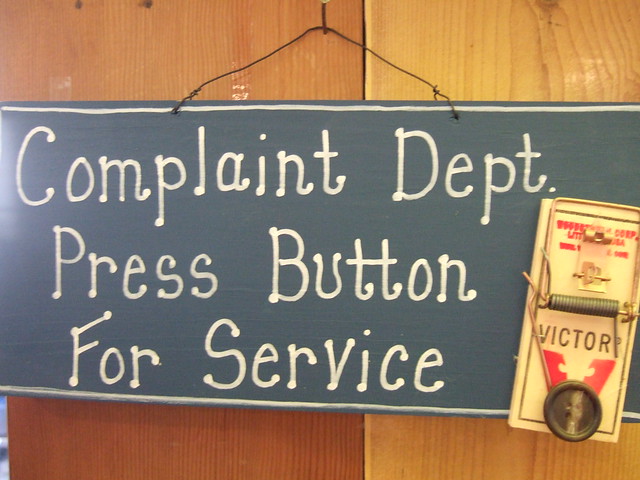
Image by Life As Art on Flickr. CC BY NC-ND-2.0

The people who staff the complaint department at various businesses must have the patience of Job.

They have to deal with endless customer gripes, like the actual ones listed below.

Computer and electronics help lines have to deal with head-scratchers like these ones:

“The foot pedal for my computer doesn’t work.” (It was the mouse. The customer apparently thought computers worked like sewing machines.)
“My digital camera couldn’t fit everyone I wanted in the photo.” (Perhaps he should just take a step back instead of demanding a refund?)

Restaurant managers have to put up with grievances such as:

“My steak is too steaky tasting.”
“There’s stale chicken in my salad.” (It was a crouton.)

But perhaps hotels and travel agencies have to deal with the most mind-boggling complaints of all:

“There was no sign telling you that you shouldn't get in a hot air balloon if you're afraid of heights.”
“It rained. We didn't know it ever rained in Spain.” (Mainly on the plain?)
“Stonehenge was just a bunch of rocks in a field.”
“The beach was too sandy.”
“Our hotel room had no ocean view.” (It was in the middle of London.)

I guess the customer isn’t always right!

Sometimes God has to put up with a lot of complaints as well. We ask Him:

Read more

Keep Your Eyes On The Son

Image by mbll from Pixabay

Why don’t trees freeze to death in winter?

After all, if you or I stood outside naked for several months in sub-zero temperatures, we’d soon be turned into frosty statues.

Trees can’t burrow into the ground and hibernate like bears, and they can’t fly south like migratory birds. They’re fixed in place, at the mercy of the elements.

And yet they somehow survive through the cold depths of winter. Why don’t they turn to ice, since, like other living things, they’re made mostly of water?

Their trick is something called “hardening.”

In autumn, trees in cold climates undergo a change whereby water flows out of their cells. The concentrated sugars, proteins, and acids left behind act as a potent antifreeze. The water now in the spaces between the cells is so pure that ice crystals can’t form. This ultra-pure water can be cooled to -40 degrees F and still remain an ice-free liquid.

Pretty cool, isn’t it?

But what is it that triggers the hardening?

Ah, this is where we can learn a lesson from the trees.

Read more