When the Underdog Becomes Top Dog

Image by Neel Shakilov from Pixabay

Don’t you love it when an underdog turns the tables?

We’ve all cheered at movies in which the little guy triumphs over impossible odds and wins the day.

Part of what makes these stories attractive is the confidence the underdog displays in the face of adverse circumstances. He or she often thinks that it’s the other guy who’s at a disadvantage.

I’m reminded of a classic headline from a British newspaper, possibly from the early 1930s (and possibly apocryphal). The English Channel was blanketed with thick fog, making ship travel dangerous. The witty headline read:

“Fog in Channel: Continent Isolated.”

What makes this funny is that surely it was the island of Great Britain that was isolated by the dense fog, not Continental Europe!

You’ve got to admire this type of self-assurance.

I think this the type of attitude God wants us to display, but to focus it on faith and trust in Him. He wants us to believe that with Him on our side, the one who comes against is the one who’s isolated and on the ropes.

Consider the story of David and Goliath in the Bible…

Read more

Fooled You, Satan!

Image by Marco Verch on Flickr

What is the best April Fool’s prank in history?

Many believe that a BBC TV hoax from over 60 years ago takes the cake.

In 1957 the news show Panorama reported that, thanks to a mild winter in Switzerland, the dreaded spaghetti weevil had been eradicated. As a result, Swiss farmers had enjoyed a bumper crop of spaghetti. The programme showed farmers carefully plucking strands of spaghetti from trees.

Scores of viewers fell for the prank, calling the BBC and asking how they could grow a spaghetti tree themselves. They were advised to “place a spring of spaghetti in a tin of tomato sauce and hope for the best.”

There must be something in the water at the BBC, because in 1980 their pranksters were at it again. On April Fool’s Day they announced that Big Ben, London’s iconic clock tower, would become digital and henceforth be known as Digital Dave. This “news” produced a flood of irate calls to the station.

Other European countries are no slouches at April Fool’s pranks either.

In 1969 the Netherlands’ public broadcaster announced that government inspectors would be roving the streets armed with remote scanners, detecting people who had not paid their TV/radio tax. It was suggested that the only way to stymie the scanners was to wrap the TV or radio in aluminum foil. The next day, all the supermarkets were sold out of foil, and suddenly a flood of TV/radio taxes were being paid.

These probably rate as some of the best wide-scale practical jokes ever.

But with Easter Monday falling on April Fool’s Day this year, it got me thinking of an ever greater example of someone being outwitted.

Read more

Turning Minuses into Plusses

Image by Tumisu from Pixabay

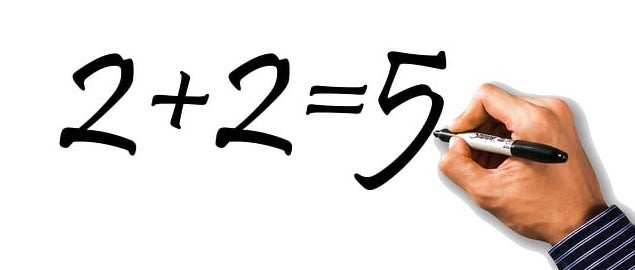
In math, as in sports, mistakes count as permanent marks against your score.

These setbacks are always a lag on your performance, and you struggle to overcome them.

But in God’s marking system, our mistakes and failures are viewed differently: minuses aren’t permanent, and can even be turned into plusses.

First of all, God provides forgiveness for our sins through the atonement bought by His Son on the Cross. Our sins are wiped off the record, and we’re given a fresh start.

Secondly, God can even use our mistakes to further His purposes. He can bring good out of the messy parts of our lives.

Examples from the Old and New Testaments show us how:

Read more

The Missing Epitaph

Image by Neil Chappell on Pixabay

What would you like written on your tombstone?

Maybe you’ve already given some thought as to what your epitaph should be. Perhaps you’d like a mention of your accomplishments or family ties.

You might even hope that something humorous be inscribed on your gravestone, as in the following examples:

“I told you I was sick.” (Written on the gravestone of William H. Hahn, Jr., of Princeton, New Jersey.)

“Here lies Lester Moore, Four slugs from a 44, No Les, No more.” (An actual epitaph in the Boothill Graveyard in Tombstone, Arizona.)

“There goes the neighborhood.” (Epitaph of self-deprecating comedian Rodney Dangerfield.)

“Here lies the body of Jonathan Blake. Stepped on the gas instead of the brake.” (On the tombstone of an accident victim in Unionville, Pennsylvania.)

“Here lies John Yeast. Pardon me for not rising.” (This cheeky epitaph is on a grave in Ruidoso, New Mexico.)

What was written on Christ’s tombstone? Any guesses?

Absolutely nothing.

Why?

Because He didn’t stay in the tomb for very long and isn’t there now.

Jesus was only a temporary resident in the dark chamber in which He lay.

Unlike John Yeast, Jesus did rise.

Read more

Your Heavenly Pinch Hitter

Image by Keith Johnston from Pixabay

Do you ever feel a bit shaky when you’re “up at bat” in life?

Sometimes we face daunting challenges, and don’t feel we’re capable of facing them on our own. We feel like we need a bit of help, someone who can take over for us when we’re at our weakest.

Someone like a pinch hitter.

In baseball, a pinch hitter acts as substitute who bats for a teammate. The pinch hitter might step in because the original player is injured, or when the one next up at bat is a less effective hitter, such as when a pitcher is worn out after six or seven innings pitching.

The manager might decide that the substitute has a better chance of helping their team to score, or may send in the pinch hitter to execute a specific play. In many cases, the pinch hitter will be called upon at a critical moment in the game.

Sounds like a handy person to have around, doesn’t it?

Did you know that believers have a heavenly “pinch hitter”?

This teammate who comes to your aid is the Holy Spirit Himself.

Read more

Ultimate Victory Is Coming

Pont de la Concorde, Paris. Image by David Mark from Pixabay

If you’ve ever been to Paris, you’ll know that many of its bridges have a story to tell.

The Pont de la Concorde is no exception.

This stone-arch bridge across the River Seine connects the Place de la Concorde with the National Assembly.

Construction of the bridge started during the late 1700s and continued even during the turmoil of the French Revolution. It was completed in 1791.

Interestingly, some of the stones used for the Pont de la Concorde were sourced from the rubble of the demolished Bastille prison. The bridge’s architect, Rudolph Perronet, said this was “so that the people could forever trample the old fortress.”

Today you can traverse this bridge and trample under your own feet the stones from the once-feared stronghold which imprisoned so many.

It’s a satisfying feeling to show your contempt for something vile by actually stomping on it, isn’t it?

Scripture tells us that Jesus will do something similar:

Read more

Everyone Loves a Winner

Image by 7721622 from Pixabay

A funny thing happens in a city when one of its sports teams reaches the playoffs or finals.

Suddenly, everyone becomes a fan.

This is especially true if that team has suffered a trophy or title drought for a considerable length of time, perhaps decades.

The team’s fortunes become a topic of conversation everywhere in town. People talk about their team’s success while at work, in stores, or on transit. They speak with authority about the merits of certain players, or even about specific shots in particular games.

On any given day, people in town know exactly where their team stands, and how many games they need to win to achieve the championship title for that year.

My hometown of Toronto experienced this in 2019 when the Raptors won their first NBA title in the franchise’s history. Their victory was celebrated with a massive parade downtown, attended by millions.

I had friends who gushed about the Raptors’ success, then grinned sheepishly and admitted, “And I don’t even like basketball!”

Everyone loves a winner, don’t they?

But what happens when your team doesn’t produce the victory everyone is hoping for?

Jesus could tell us a thing or two about that.

Read more

Have “Large Pot” Faith!

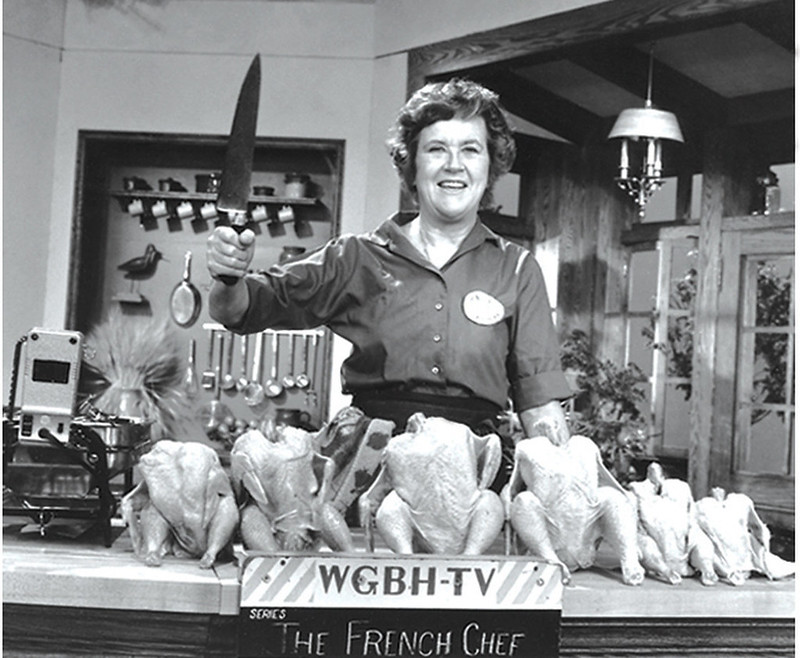
I’ll bet many of you grew up watching the televised cooking shows of Julia Child, “The French Chef.” If not, you’re probably familiar with her name.

Credited with popularizing French cuisine for an American audience, this six-foot, two-inch dynamo was always a hoot to watch. You not only learned a great deal about cooking from Julia, but you were also entertained with zingers like these:

“A party without a cake is just a meeting.”

“I think every woman should have a blowtorch.”

“Cooking is like love—it should be entered into with abandon or not at all.”

“I just hate health food!”

But the Julia Child quotation that has stayed with me is this:

“Always start out with a larger pot than what you think you need.”

Why does this phrase resonate with me? Because with faith, as with cooking, the size of our “container” can be a limiting factor.

Read more