Who Floats Your Boat?

Image by Bernd from Pixabay

Today we have a special treat—a guest post by my dear friend Veronica Gerber. Be encouraged by her insights into the story of Jesus stilling the storm!


“That day when evening came, he said to his disciples, ‘Let us go over to the other side.’ Leaving the crowd behind, they took him along, just as he was, in the boat. There were also other boats with him. A furious squall came up, and the waves broke over the boat, so that it was nearly swamped. Jesus was in the stern, sleeping on a cushion. The disciples woke him and said to him, ‘Teacher, don’t you care if we drown?’
“He got up, rebuked the wind and said to the waves, ‘Quiet! Be still!’ Then the wind died down and it was completely calm.
“He said to his disciples, ‘Why are you so afraid? Do you still have no faith?’
“They were terrified and asked each other, ‘Who is this? Even the wind and the waves obey him!’” (Mark 4:35-41)

In this true-life adventure story that Mark recounts for us, Jesus is roused by the cries of his disciples and dramatically calms the storm.

Are you also in a storm? Perhaps you are a believer and so Jesus is already living in your heart—in your boat so to speak—but you feel as if he’s asleep?

Read more
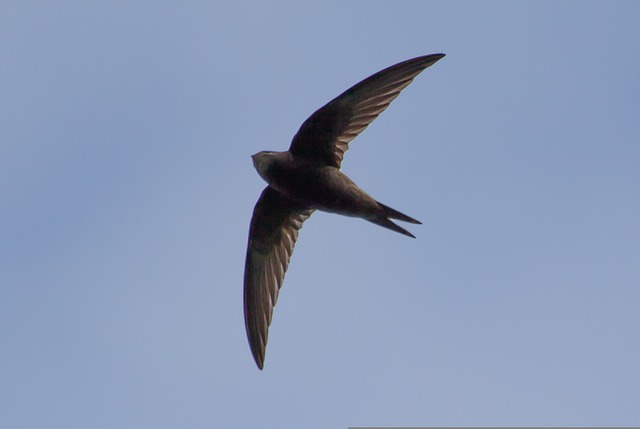
You Were Meant to Soar

Image of European swift by Kev from Pixabay

What is the ultimate flying machine?

The Concorde? A high-tech fighter jet?

I’d suggest to you that the holder of this title belongs to the common swift.

The swift holds the record for the fastest confirmed level flight of any bird: 111.5 km/h (69.3 mph). (Birds like falcons can fly faster, but only when diving down through the air to catch prey.)

Swifts also spend most of their lives on the wing, landing only to nest. Some individuals can spend up to ten months in continuous flight. In a single year a common swift can cover at least 200,000 km. No other bird spends as much of its life in the sky.

They are truly astonishing creatures.

A funny thing about swifts, though: they don’t do very well on the ground.

Their small, weak legs, which are placed far back on their bodies, are really only good for clinging to vertical surfaces like cliffs. They never voluntarily settle on the ground, where they’d be vulnerable to predation. Although swifts are capable of taking flight from level ground, they prefer to “fall” into the air from a high point.

Simply put, swifts were meant to soar.

And so were you.

But oftentimes there are things inhibiting our flight…

Read more

God Knows How To Get The Word Out

Image of milkweed pod and seeds by HeungSoon from Pixabay

Plants are ingenious things.

They have numerous ways of dispersing their seeds to grow new plants, methods that go far beyond simply dropping a seed to the ground from the mother plant above.

Some plants sport wings on their seeds (called samaras) to enable the wind to carry them farther away from the mother tree than regular seeds could go. The maple tree uses this method of seed dispersal: once released from the tree, its seeds spin through the air like helicopters to find a new home.

Other seeds, like that of the milkweed, drift on the wind using their own downy parachutes. Dandelions do the same (much to the chagrin of those trying to maintain a dandelion-free lawn!).

Some seeds come wrapped in tasty packages, like that of the raspberry. Animals or birds eat the berry, then excrete the seed later on (along with some “fertilizer”).

The burdock plant takes another tack: its seeds have sticky hooks that attach to an animal’s fur as it passes by. The seed essentially “hitchhikes” to begin life in another location.

Another intriguing method of seed dispersal is used by the jewelweed plant. Its seed pod “explodes” when touched, flinging the seeds far and wide. It’s no coincidence that jewelweed also goes by the name “touch-me-not.”

I guess we can’t put nature in a box when it comes to seed dispersal. It uses a variety of creative ways to achieve its goal of propagating new plants.

We can’t put limits on God either.

He uses many different ways to plant the seed of the Word of God in people’s hearts.

Read more