Fill Up Your Storehouse

Image by Alexa from Pixabay

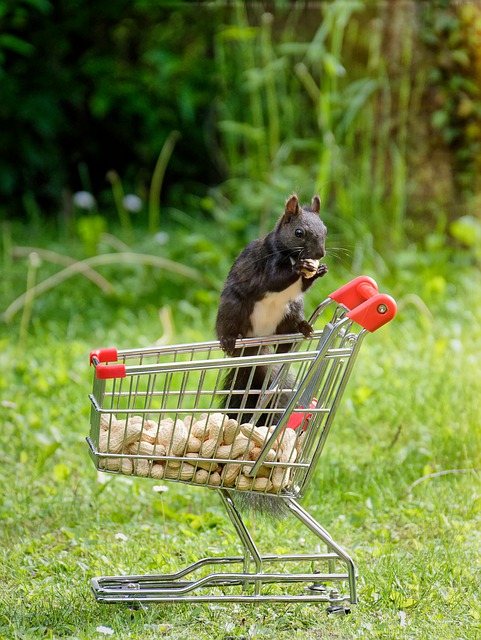
This is a busy (and nutty) time of year for squirrels.

The little critters are hard at work storing up nuts and seeds for the hard winter ahead.

Depending on the species, they may either store their nuts in one spot (a stash), or hide them by burying them in multiple locations (known as “scatter-hoarding”). They’ve even been known to shamelessly steal nuts from the stashes of other squirrels.

The jury is out on whether squirrels actually remember where they’ve hidden all those nuts. Some studies suggest they can recall the location of thousands of buried nuts. Other research implies that squirrels fail to recover a good number of their treasures, which allows the nuts and acorns to grow into trees.

One thing is for certain: these little guys are single-minded about gathering up nuts before winter, often using unconventional places to store them.

Like cars.

Just ask Bill Fischer of Fargo, North Dakota. For the past eight years, a red squirrel has been using Bill’s pickup truck to store walnuts. Each year, the poor man has to remove thousands of walnuts from every crevice of his truck, including the engine compartment and bumpers.

The critter set a new record several years ago, stashing 348 pounds of nuts in Bill’s vehicle. And this was all the work of one tiny squirrel.

These crafty little animals might exasperate us, but we can learn something from them:

They make sure they’ve “squirrelled away” provision for hard times to come.

I think we should do something similar:

Store up the Word of God in your heart, because you never know when you might need a certain verse to sustain you in a tough situation.

Read more
The Promise of Return

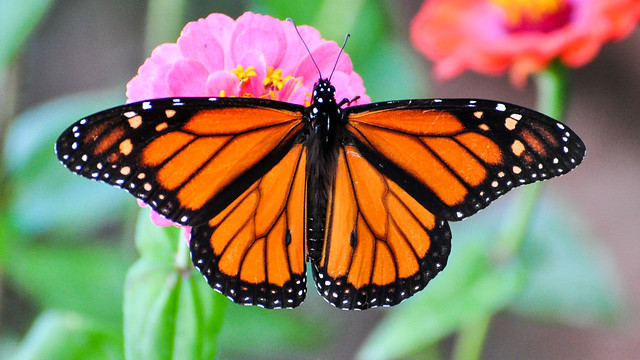
Photo of Monarch butterfly by Peter Miller on Flickr CC BY-NC-ND-2.0

One of the greatest natural events on Earth is now underway: the migration of the monarch butterfly.

Each fall, millions of these colourful insects set off from their summer breeding grounds in the northeastern U.S. and Canada for a gruelling journey. They travel thousands of miles across North America all the way to Mexico, where they’ll spend the winter.

Many people believe that the monarch butterflies that leave in the fall are the same ones that arrive back in the spring, but this isn’t so. Individual butterflies don’t make the entire round-trip journey. The ones that migrate from the northeastern part of North America in fall will never return.

Rather, their great-great-grandchildren are the ones who will arrive the following spring, as successive generations keep making their way north. The entire annual migration cycle of the monarch takes about four generations.

Perhaps I’m being fanciful, but I can imagine monarch butterflies telling their children of the awesome journey they’ll be undertaking. They may say that they’ll only be able to go part of the way with them, but to keep the faith and keep going.

Maybe they encourage their children to tell successive generations to keep believing in the promise of return. Because eventually, their descendants will see the promise fulfilled.

Aren’t we in a similar situation as believers?

We’re living in a time when we’re awaiting the fulfillment of a promise, the promise of Christ’s return. We’re not sure exactly when Christ will come back to Earth, but He has promised that He will.

Read more

God Will Provide

Image by tlparadis from Pixabay

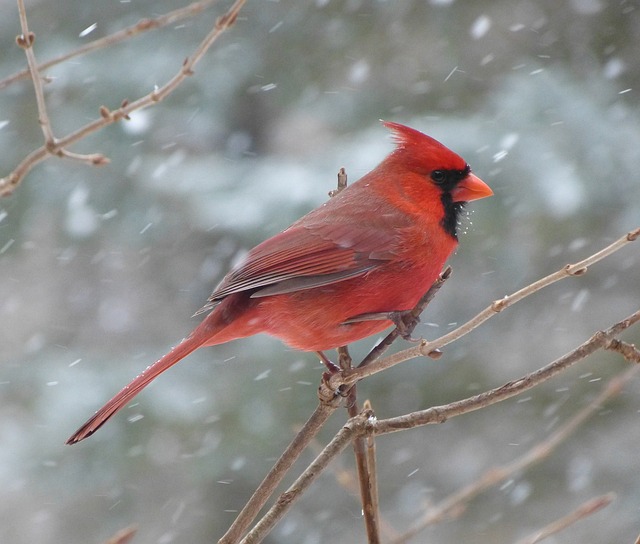
If you live in eastern North America, you might be lucky enough to have seen a gorgeous bird called the northern cardinal.

The male is especially distinctive, with his breathtaking red plumage and black “mask” on his face.

Up here in Canada, the cardinal is at the northernmost part of its range. We’re especially fortunate that, unlike many songbirds, cardinals don’t migrate south for the winter. We get to enjoy their presence year-round.

But what on earth do the cardinals eat here, when parts of Canada might be covered in several feet of snow?

Read more

Spring Is On Its Way!

Public domain from PXfuel

The shortest day of the year in the northern hemisphere is the winter solstice, which occurred last year on December 21st. From that day on, the days begin to lengthen and the sun’s position in the sky begins to rise from our perspective.

But if the days are now getting longer and we’re getting more sunlight, why does it keep getting colder and snowier here in January and February?

Where is spring?

There are two reasons for this temperature lag: one having to do with the tilt of the earth, the other with how slowly the earth heats up and cools down in response to the sun’s energy.

Think of a rock near a bonfire. When the fire is first lit, the rock will stay cool for a while. It takes time for it to heat up, even though it’s being exposed to a roaring fire. The rock will eventually absorb the fire’s heat, though, and will retain that heat for a while even after the fire is put out.

Similarly, even though the days are now lengthening, it takes time for the earth to warm up, resulting in colder temperatures in the early months of the year. The earth is also slow to release accumulated heat energy from the sun after the summer solstice in June. This gives us hotter July and August days in the northern hemisphere, even as the days are getting shorter.

In the same way, sometimes we pray about something but don’t see any immediate results. There seems to be an inexplicable “lag” in receiving answers to our prayers. We don’t see any evidence that things are changing; in fact, our situation might seem to get worse.

What’s going on? Where is our “spring”?

I think we need to understand that God can answer our prayers in several ways.

Read more

Keep Your Eyes On The Son

Image by mbll from Pixabay

Why don’t trees freeze to death in winter?

After all, if you or I stood outside naked for several months in sub-zero temperatures, we’d soon be turned into frosty statues.

Trees can’t burrow into the ground and hibernate like bears, and they can’t fly south like migratory birds. They’re fixed in place, at the mercy of the elements.

And yet they somehow survive through the cold depths of winter. Why don’t they turn to ice, since, like other living things, they’re made mostly of water?

Their trick is something called “hardening.”

In autumn, trees in cold climates undergo a change whereby water flows out of their cells. The concentrated sugars, proteins, and acids left behind act as a potent antifreeze. The water now in the spaces between the cells is so pure that ice crystals can’t form. This ultra-pure water can be cooled to -40 degrees F and still remain an ice-free liquid.

Pretty cool, isn’t it?

But what is it that triggers the hardening?

Ah, this is where we can learn a lesson from the trees.

Read more

The Blessings Of Barren Seasons

Image by Henning Sørby from Pixabay

Looking out the window here at The Faith Cafe, you see that the trees in the park display a stark beauty.

Stripped of their leaves in winter, they stand amid the snow looking rather barren and forlorn.

But a funny thing happens when a tree has lost its leaves: you can see things that you didn’t know were there before.

Going for a walk in your neighbourhood in winter, you might see that the bare trees are now revealing things that had been concealed by summer’s foliage. You might be surprised to see a bird’s nest the size of a teacup nestled in the bare branches; you’d passed beneath it dozens of times without knowing it was right above you.

Or you might see a larger nest, called a drey, which was built by squirrels. You’d had no idea that the squirrels had been raising a family there in their hidden home, perhaps in a tree just feet from your own house.

With the trees denuded of leaves, you might spot a kite or balloon that had been caught in the branches months before. Only winter could reveal this lost object. Maybe it belonged to your child: “So that’s where it went!” you think.

Or you realize that there are dead branches in some of the trees around your house that need removing. You can only see the problem now that the dense foliage has been stripped away.

So it is with us, too.

Sometimes there are things we can only see when we hit a barren season in our lives, brought on by a loss, a breakup, a setback, or a disappointment. Sometimes it’s only when something has been stripped away from us that other things are revealed.

Read more

If We Could See Our Words

Photo of a lion on a cold day by Tambako the Jaguar on Flickr CC BY-ND-2.0

If you live in a warm climate, there are a few things you’re missing out on.

One of them is the ability to see your own breath.

(You’re also missing out on high heating bills in winter, backaches from shovelling snow, and frostbitten fingers, but I think you can do without those things!)

Why can we sometimes see our breath in cold climates?

With the combination of cold outdoor temperatures and the right humidity, your breath condenses as it is exhaled. It then appears as a misty cloud being emitted from your mouth.

It got me thinking: wouldn’t it be helpful if we could see our own words, too, and not just our breath?

By that I mean, if only we could see in physical form how our words affect others, we’d think twice about what we say.

If words came out of our mouth visibly shaped like the weapons they often are, we’d probably be horrified. If we saw what appeared to be daggers or fists hurtling toward the other person, we’d want to take back what we’d just said.

Read more

Winter, the Great Leveller

Photo by Mark Evans on Flickr, CC BY-ND-2.0

If you live in a cold climate, as I do, you’ll have noticed that winter has a way levelling us out.

It shows us we’re all in the same boat.

Let me explain:

No matter how rich or poor you are, you’re going to have to deal with snow one way or another. If you live in a cold climate, there’s no escaping this fact.

Whether you drive a snazzy, expensive car or a modest runabout, winter has a way of making all vehicles look rather crappy. No matter how much you paid for your car, road salt and slush will cover it with an ugly grey-brown film.

Image by pasja1000 from Pixabay

And despite searching high and low for the most fashionable winter parka, you’ll still end up looking like an Arctic explorer, indistinguishable from everyone else.

Winter has a way of humbling us.

I think sin has the same sort of levelling effect.

Whatever walk of life we come from, we’re all going to have to deal with our sins somehow. There’s no escaping it.

No matter how wealthy or poor we are, when sin sticks to us, it makes all of us look rather stained. Whether a pauper or a prince, the muck of sin covers us all.

And even if we try to gussy up our image and paper over our sins, it simply doesn’t work. We’re fooling ourselves if we think we’re any better or different than anyone else.

When it comes to sin, we’re all in the same boat.

Read more

How To Be The Best Dressed Person At Any Gathering

Image by Andrew Vargas on Flickr CC BY-2.0

If you live in a cold climate, you’ll know that getting dressed to go outside in winter can be quite an operation.

This is particularly true if you have children. Getting your little one bundled up warmly enough to brave the frigid temperatures outside can take a great deal of time.

First, you have to make sure they have warm underclothes and socks on. Then, you might dress them in layers of several tops, and select pants made of warm, thick material.

Once you’ve put their winter coat or snowsuit on them, you’re not done yet. There’s still their boots, hat, scarf, and mittens to don.

And then what inevitably happens when you’ve finally wrestled a recalcitrant child into all their winter gear, and are poised to leave the house?

Your little darling suddenly announces that they have to go to the bathroom!

Dressing in layers takes a lot more time and effort, but it’s essential to ensure that we’re kept warm and protected in winter.

Similarly, Scripture tells us to dress in spiritual “layers” as well.

Read more

Fill Up Your Storehouse

This is a busy (and nutty) time of year for squirrels.

The little critters are hard at work storing up nuts and seeds for the hard winter ahead.

Depending on the species, they may either store their nuts in one spot (a stash), or hide them by burying them in multiple locations (known as “scatter-hoarding”). They’ve even been known to shamelessly steal nuts from the stashes of other squirrels.

The jury is out on whether squirrels actually remember where they’ve hidden all those nuts. Some studies suggest they can recall the location of thousands of buried nuts. Other research implies that squirrels fail to recover a good number of their treasures, which allows the nuts and acorns to grow into trees.

One thing is for certain: these little guys are single-minded about gathering up nuts before winter, often using unconventional places to store them.

Like cars.

Just ask Bill Fischer of Fargo, North Dakota. For the past eight years, a red squirrel has been using Bill’s pickup truck to store walnuts. Each year, the poor man has to remove thousands of walnuts from every crevice of his truck, including the engine compartment and bumpers.

This month, the critter set a new record, stashing 348 pounds of nuts in Bill’s vehicle. And this was all the work of one tiny squirrel.

These crafty little animals might exasperate us, but we can learn something from them:

They make sure they’ve “squirrelled away” provision for hard times to come.

I think we should do something similar:

Store up the Word of God in your heart, because you never know when you might need a certain verse to sustain you in a tough situation.

Read more