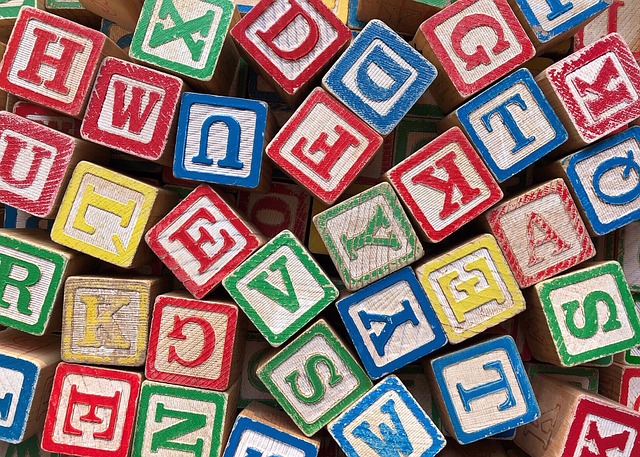
I’ll bet you can!
I’m sure most of us immediately deciphered the title of this post as “Can You Read This?”
But how was your brain able to make sense of the jumbled letters so quickly?
Researchers believe that our brains use context to make predictions about what’s to come. Take an example like:
“Yuo cna porbalby raed tihs esaliy desptie teh msispeillgns.”
This is readable because as our brains decipher each word, they also predict which words would logically come next in order to make a coherent sentence. When faced with a word we can’t quite unscramble, our brains fill in the gaps based on subsequent words.
This even works with words that have NUMB3RS 1NST3AD 0F L3773RS. The numbers’ similar appearance to letters trumps their normal meaning.
Jumbled words are easiest to read when the first and last letters of the word remain the same, and only the letters between them are transposed. But when the middle letters are scrambled more confusingly, your brain has a harder time trying to process all the letters simultaneously. Try deciphering this:
“Big ccunoil tax ineesacrs tihs yaer hvae seezueqd the inmcoes of mnay pneosenirs.”
That was a bit more difficult, wan’t it?
But what about when it’s our lives that are a-jumble? When things happen to us that don’t seem to fit a meaningful pattern?
How do we make sense of the bewildering hardships and crises that often beset believers?
It’s often helpful to look at examples from Scripture. A favourite of mine is the story of Joseph in the Old Testament.
Things started out promisingly for young Joseph. He was favoured by his father over his brothers, and was given dreams from God predicting that he would one day be in a place of high honour and leadership.
But then things started to unravel in his life.

His jealous brothers sold him into slavery, and he was carted off to a foreign land. Things went from bad to worse when he was falsely accused and thrown in jail in Egypt. He languished there, seemingly forgotten, for years.
I’m sure none of this made sense to Joseph. How on earth could he decipher what was happening to him?
Suddenly, however, the tide turned in Joseph’s life. He was sprung from prison and made prime minister of Egypt. His expertise saved millions of lives from famine, including those of his family back home.
The first and last “letters” of Joseph’s life helped make sense of the bewildering middle parts. God had a plan for him the whole time, even though it wasn’t readable for many years.
We, too, will face trials and tribulations that leave us asking “Why?” We’ll encounter challenges that don’t seem to fit into a coherent whole. At times our lives will be in such turmoil that we can’t possibly predict what’s coming next.
But it’s important to remember that the last page of your story hasn’t been written. The last letter of the word isn’t in place yet. Some things in our lives won’t make sense to us until we’re looking back at them in the rear-view mirror.
“And I am sure of this, that he who began a good work in you will bring it to completion at the day of Jesus Christ.” (Philippians 1:6)

“The LORD will fulfill his purpose for me; your steadfast love, O LORD, endures forever.” (Psalm 138:8)
In the same way that some numbers can be read as letters, overturning their normal meaning, God can overpower the status of negative events and turn them into something positive.
“And we know that in all things God works for the good of those who love him, who have been called according to his purpose.” (Romans 8:28)
When our lives don’t make sense, we need to trust that God has an end-goal in mind that will be for our good and His glory.
No matter how “unreadable” your life seems right now, remember this:
Jseus lvoes yuo!
© 2023 Lori J. Cartmell. All rights reserved.
 The Faith Cafe