We’re Here To Help

Image by An SiYu from Pixabay

Not far from The Faith Cafe, there’s a big-box home-improvement store. I had occasion to go there, and noticed the smiling greeter at the entrance.

He had a name-tag sticker on his apron that read, “Frank: Front End.”

I was both puzzled and amused.

Did the store managers figure that customers needed guidance determining which was the front end of Frank?

If I peered around to see Frank’s backside, would I see another sticker that read, “Frank: Rear End”?

Or maybe Frank needed a sticker on his apron to tell him which way to put it on, so he wouldn’t wear it back-to-front?

I giggled my way through the store until I finally realized that perhaps the sticker meant that Frank was responsible for covering the front end of the store. I felt a little sheepish at my mistake, but reasoned that the sticker could have been a little less confusing.

At another similar store I visited, the greeter had a name tag that read: “I’m George. I’m here to help.” That was much clearer. No mistaking what the employee was there for.

Then I thought, isn’t that what we believers are here on earth to do, too?

Read more

Mustard Seed Faith

What are the smallest seeds on earth?

You might guess mustard seeds. Close, but not quite.

How about poppy seeds?

They’re very tiny. You’ll find out how extremely tiny they are if you accidentally spill them on the floor. You’ll discover that you can’t pick them all up by hand: it’s hopeless. You have to bring out your vacuum. (Don’t ask me how I found this out!)

Actually, the tiniest seeds on earth are said to be those of certain orchids from the tropical rainforest. Each of these dust-like seeds weighs only one 35 millionth of an ounce. They’re smaller than a grain of salt.

At the opposite end of the spectrum, the prize for the largest seed on earth probably goes to the Coco-de-Mer palm tree of the Seychelles Islands. One of its seeds can weigh up to 45 pounds.

Mustard seeds are a bit larger than poppy seeds, but they’re still exceptionally tiny compared to most seeds.

They’re so small that Jesus used them as an example in one of His teachings. Surprisingly, He said that if we have faith the size of a mustard seed, we could see great things accomplished.

How is this possible?

Because when we have even a small amount of pure faith, God uses it as a force multiplier. Our tiny contribution somehow provides the spark for God’s power to show up in a big way.

Read more

The Banana Paradox

Image by Alexas_Fotos from Pixabay

Who doesn’t like banana cake?

Even people who won’t eat bananas seem to like banana cake or bread. It seems to be one of those desserts that is universally liked. In fact, each year we celebrate National Banana Bread Day on February 23rd.

And what kind of bananas do you use to make a banana cake? Only the most uniformly yellow, firm, spot-free, perfect ones, right?

Wrong.

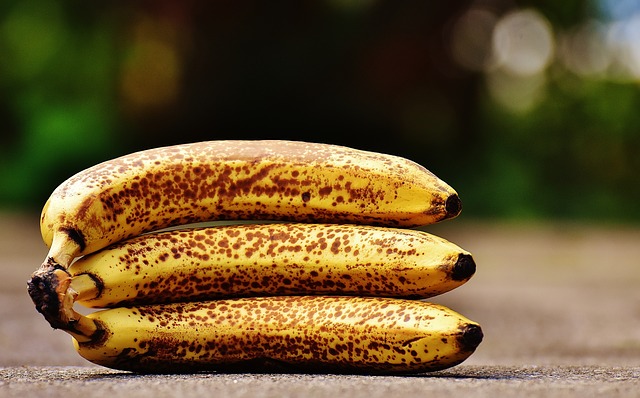
Counterintuitively, banana cake or bread is made using mushy, overripe, spotted, or even brownish-black bananas. The kind that no grocery store would even think of trying to sell. The kind that look sort of yucky, to be honest. The kind no one wants to eat. The kind that was used as an insult in the Christmas song about Mr. Grinch: “You’re a bad banana with a greasy black peel!”

Whenever we had those sorts of bananas in the kitchen when I was little, my Dad would say to my Mom, “Honey, why don’t you throw those things out? They look awful!”

My mother would interpose her body protectively between my Dad and the bananas and say, “No, no! I’m saving them for a banana cake.”

You see, Mom understood the banana paradox. She knew that the mushiest bananas make the best cake. She could see beyond the decaying exterior to what the banana could become.

She saw what my Dad couldn’t see: their potential.

In the same way, God can see beyond our faults and failures to what we can become. God sees the potential in people who have been written off by others, who seem to have disqualified themselves from ever achieving anything great for the Kingdom. God can still use those of us who feel our record is too spotty, that we have too many black marks against us.

Read more

How To Become A Loaf Of Bread

Imagine that you’re a ball of bread dough (for some of us whose figures are a bit “doughy,” this isn’t much of a stretch).

You’ve had your ingredients mixed together nicely, and you’ve been resting for a while after all that effort. You feel good: you’ve even risen higher. It won’t be long now until you become a beautiful loaf of bread.

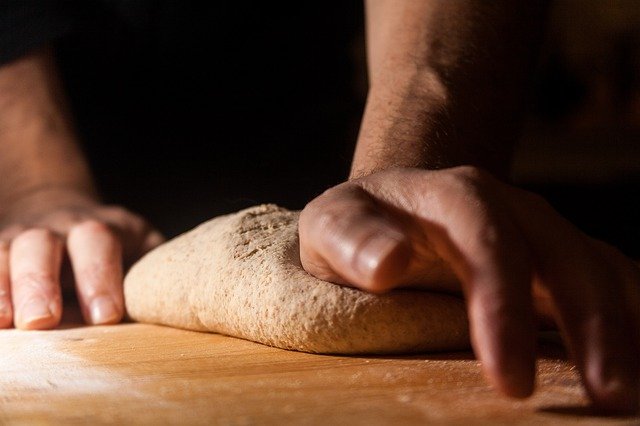
But wait! What’s that coming toward you? It’s a fist! Someone is actually punching you! You feel yourself deflate, and lose a lot of your volume. Then you’re lifted out of the warm bowl you were in and slapped onto a counter. Ouch! That hurt! The hands are now kneading and pummelling you. You wish they could be a bit more gentle.

Finally, it stops. Thank goodness! That was excruciating! You’re now resting back in your bowl in a warm spot, with a tea towel over you to protect you from drafts and from drying out. You can relax now. At least all that pain is over with.

Or is it? Some time later, here come the hands again. They lift the tea towel and begin punching you down anew, just when you’d risen to your previous height. Not again! You’ve got to be kidding! Wasn’t once enough? Once more, you’re kneaded and prodded, stretched and pressed down hard. What good could this possibly be doing you?

When all the pummelling is finished, you’re shaped and placed into a loaf pan. At least it’s cozy here, and the hands have disappeared for a while. You can rest again. Surely nothing worse will happen to you.

But then suddenly you’re thrust into a searing oven. Yikes, that’s hot! You feel your insides begin to transform, and your surface start to turn brown.

You’re becoming a loaf of bread after all.

But why all the trouble and pain? Was it really necessary?

Yes, because that’s what gave you a finer texture.

Read more

Freshly Baked Mercies

Isn’t it nice to eat something that’s freshly made?

There’s nothing quite like bread that was baked just hours ago, slathered with butter. French people know this: they go to the market each day to buy freshly baked baguettes or croissants.

Others like freshly squeezed orange juice in the mornings, or freshly brewed coffee.

A favourite treat of mine (at any time of the day) is freshly made brownies, still warm from the oven.

No one really likes leftovers (although leftover brownies are still pretty good!). But we love it when someone give us something that they baked fresh just for us.

God knows this, too.

That’s why He offers us fresh mercies every day, newly baked.

Read more

The Blessings Of Barren Seasons

Image by Henning Sørby from Pixabay

Looking out the window here at The Faith Cafe, you see that the trees in the park display a stark beauty.

Stripped of their leaves in winter, they stand amid the snow looking rather barren and forlorn.

But a funny thing happens when a tree has lost its leaves: you can see things that you didn’t know were there before.

Going for a walk in your neighbourhood in winter, you might see that the bare trees are now revealing things that had been concealed by summer’s foliage. You might be surprised to see a bird’s nest the size of a teacup nestled in the bare branches; you’d passed beneath it dozens of times without knowing it was right above you.

Or you might see a larger nest, called a drey, which was built by squirrels. You’d had no idea that the squirrels had been raising a family there in their hidden home, perhaps in a tree just feet from your own house.

With the trees denuded of leaves, you might spot a kite or balloon that had been caught in the branches months before. Only winter could reveal this lost object. Maybe it belonged to your child: “So that’s where it went!” you think.

Or you realize that there are dead branches in some of the trees around your house that need removing. You can only see the problem now that the dense foliage has been stripped away.

So it is with us, too.

Sometimes there are things we can only see when we hit a barren season in our lives, brought on by a loss, a breakup, a setback, or a disappointment. Sometimes it’s only when something has been stripped away from us that other things are revealed.

Read more

Of Lions And Lambs

Image by David Mark from Pixabay

Do you have some weather sayings or proverbs in your area?

Maybe you’ve heard ones like “April showers bring May flowers,” or “Clear moon, frost soon.”

Perhaps you know this weather proverb: “Red sky at night, sailor’s delight. Red sky in morning, sailors take warning.”

Here in the northern hemisphere, we say “March comes in like a lion but goes out like a lamb.”

This saying might have started out referring to the stars. The beginning of March sees the constellation Leo (the lion) rising in the east. The end of the month features the constellation Aries (the ram or lamb) setting in the west.

Over time, the saying shifted to have more of a weather connotation. The start of March is often cold and stormy, fierce like a lion. By the end of the month, the weather has turned more calm and gentle, almost lamb-like.

This weather proverb doesn’t always hold true, of course; sometimes March starts out like a lamb but ends like a ferocious lion!

There is, however, a Biblical promise about these two animals that you can bank on:

Jesus came to earth first as a lamb, but will return as a lion.

Read more

One Hundred Words for Snow (and for God)

Image by Maurizio Ceol, Wikimedia Commons, CC BY 3.0

They say that the Eskimo and Inuit peoples have over 100 words for snow.

Is this actually true, or is it just a cliché?

There has been heated debate on whether the Eskimos really do have that many distinct words for snow. I consulted Giles Whittell’s 2019 book “Snow: A Scientific and Cultural Exploration” for information.

Whittell refers to a recent contribution to the question by the Smithsonian Arctic Studies Center. They determined that in Canada’s Nunavik region, the Inuit there have 53 distinct words for snow; in the Central Siberian Yupik dialect they counted 40.

Among the words listed in the Yupik dictionary are:

“kanevvluk” = fine snow
“navcaq” = snow formation about to collapse
“qanisqineq” = snow floating on water
“utvak” = snow carved in a block, as for an igloo

Clearly, those living in the extreme north do have far more words to describe snow than those who makes their homes farther south.

As Whittell says, “…people learn to describe in greatest detail what matters most to them.”

I suppose that the number of words a culture has to describe something tells us a great deal about the importance they place on it.

Read more

Let the Son Outshine Your Problems

Image by Pezibear from Pixabay

The moon did a disappearing act on me recently.

As I sat eating breakfast, I could see the moon shining brightly through the window. It handily outshone the streetlights, which were still on at that pre-dawn hour.

But slowly, the moon grew dimmer and fainter, although it was still high in the sky.

What had happened to its luminosity?

Had the moon changed in some way?

No, the sun had simply come up!

The sun’s growing brilliance filled the morning sky, causing the moon to appear paler than before. Eventually, I could barely see the moon at all, even though it hadn’t set behind the horizon yet.

This puts me in mind of how we sometimes view our problems.

In the darkness of our difficulties, we often focus on what’s causing us pain. The source of our problems gets our attention, out-competing other factors in our lives.

But if we let the light of Jesus shine on our situation, the truth of His unending love for us can outshine the temporary nature of our problems. Our challenges appear dimmer in the light of His forgiveness, His care for us, and His promise of eternal life.

Read more

Supercharge Your Prayers

Fertilized vs. unfertilized rows of maize. Wikimedia Commons, Public Domain

If you’re a gardener, you might sometimes look at your plants and decide that they’re missing something.

They need more “oomph.”

That’s where fertilizer comes in.

It can supercharge your flowers and vegetable plants by providing them with nutrients, such as nitrogen, that might be lacking in the soil.

With the addition of fertilizer, your plants can grow to their full potential and become as fruitful as they were meant to be.

Similarly, our prayers sometimes need more oomph, too.

But how do we give them that? How do we go about supercharging our prayers?

Read more