Spring Is On Its Way!

Public domain from PXfuel

The shortest day of the year in the northern hemisphere is the winter solstice, which occurred last year on December 21st. From that day on, the days begin to lengthen and the sun’s position in the sky begins to rise from our perspective.

But if the days are now getting longer and we’re getting more sunlight, why does it keep getting colder and snowier here in January and February?

Where is spring?

There are two reasons for this temperature lag: one having to do with the tilt of the earth, the other with how slowly the earth heats up and cools down in response to the sun’s energy.

Think of a rock near a bonfire. When the fire is first lit, the rock will stay cool for a while. It takes time for it to heat up, even though it’s being exposed to a roaring fire. The rock will eventually absorb the fire’s heat, though, and will retain that heat for a while even after the fire is put out.

Similarly, even though the days are now lengthening, it takes time for the earth to warm up, resulting in colder temperatures in the early months of the year. The earth is also slow to release accumulated heat energy from the sun after the summer solstice in June. This gives us hotter July and August days in the northern hemisphere, even as the days are getting shorter.

In the same way, sometimes we pray about something but don’t see any immediate results. There seems to be an inexplicable “lag” in receiving answers to our prayers. We don’t see any evidence that things are changing; in fact, our situation might seem to get worse.

What’s going on? Where is our “spring”?

I think we need to understand that God can answer our prayers in several ways.

Read more

Who Floats Your Boat?

Image by Bernd from Pixabay

Today we have a special treat—a guest post by my dear friend Veronica Gerber. Be encouraged by her insights into the story of Jesus stilling the storm!


“That day when evening came, he said to his disciples, ‘Let us go over to the other side.’ Leaving the crowd behind, they took him along, just as he was, in the boat. There were also other boats with him. A furious squall came up, and the waves broke over the boat, so that it was nearly swamped. Jesus was in the stern, sleeping on a cushion. The disciples woke him and said to him, ‘Teacher, don’t you care if we drown?’
“He got up, rebuked the wind and said to the waves, ‘Quiet! Be still!’ Then the wind died down and it was completely calm.
“He said to his disciples, ‘Why are you so afraid? Do you still have no faith?’
“They were terrified and asked each other, ‘Who is this? Even the wind and the waves obey him!’” (Mark 4:35-41)

In this true-life adventure story that Mark recounts for us, Jesus is roused by the cries of his disciples and dramatically calms the storm.

Are you also in a storm? Perhaps you are a believer and so Jesus is already living in your heart—in your boat so to speak—but you feel as if he’s asleep?

Read more

Life on Mars

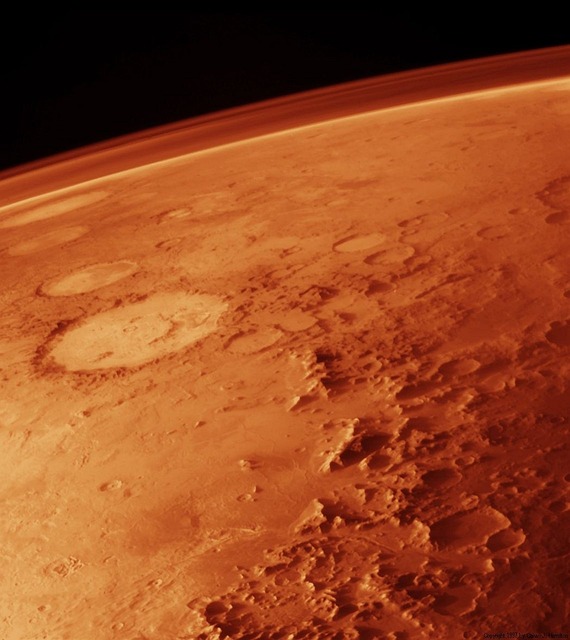
Image of Mars by WikiImages from Pixabay

Is there life on Mars?

For generations, we earthlings have conjectured about the possible existence of alien life on the planet next door to us.

I’m afraid this blog can neither confirm nor deny the presence of little green men on Mars.

Scientists do tell us, however, that water once flowed on its surface.

That’s right: the Red Planet was once blue, like Earth.

So why is Mars known today as a dusty, dry, barren place, whereas Earth still has abundant supplies of water?

The key lies in Earth’s magnetic field.

A planet’s magnetic field acts as a shield, protecting its atmosphere from being blown into space by radiation from its star.

Mars once had a magnetic field of its own. But is was both farther from the Sun and smaller than Earth to begin with. Scientists theorize that over time, its molten iron core cooled, and with it the dynamo powering its magnetic field.

As Mars’ magnetic field weakened, the Sun’s solar wind slowly stripped away its atmosphere. The water which once flowed on its surface dried up, until there was nothing left but some empty channels to hint at the rivers which once coursed through them.

Simply put, Mars let its fire burn out.

I think we can learn an important lesson from our planetary neighbour.

We shouldn’t let our fire for God fizzle out.

Read more

Islands of Hope

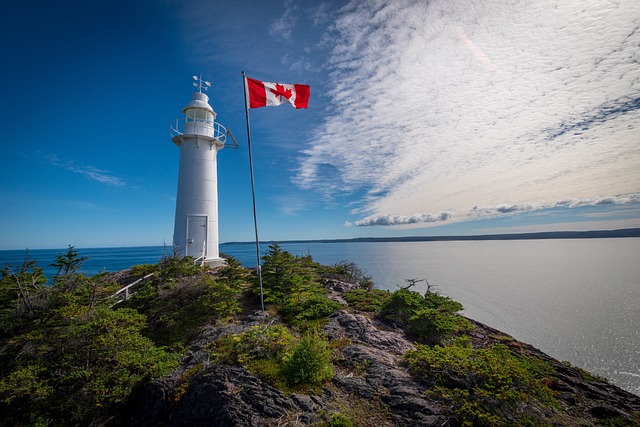
Image of lighthouse on the coast of Newfoundland by Felix Dilly from Pixabay

Transoceanic plane travel has always been fraught with potential problems.

Fuel could run low or a plane could develop mechanic problems mid-flight. The pilots would need a place to set down, pronto.

But in the middle of the ocean, where is there to land?

That’s where islands come in.

There are some handy places to land even in the vast expanse of the oceans.

In the Pacific, islands such as Midway, Wake, and Hawaii are available. The Atlantic offers Iceland, the Azores, and Bermuda, among others.

Not least is Newfoundland, an island off the eastern coast of Canada. For decades its Gander airport was used as a refuelling stop for planes making the hop across the Atlantic. It’s also an emergency landing spot for aircraft in trouble.

Gander is perhaps best known for its role in accepting 38 diverted planes that had to set down during the terrorist attacks in the U.S. on 9/11, twenty-two years ago today. Over six thousand passengers were generously hosted by the surrounding communities until U.S. airspace was reopened, a story commemorated in the hit musical, “Come From Away.”

Gander was truly an island of hope during that time.

I think we can all be islands of hope for others.

Read more

Bring Out the Big Guns

Image of Tsar Cannon, Moscow, by Tatyana Kazakova from Pixabay

Have you ever had a day when you simply needed chocolate?

Maybe you faced some problems, and needed a pick-me-up. Or you were dealing with a heartbreak and needed a balm for your ragged emotions.

And you knew that milk chocolate just wouldn’t cut it, let alone white chocolate.

It required the stronger stuff. You needed to bring out the big guns to help you cope with your challenges:

Dark chocolate.

Only the intense flavour and strength of chocolate with over 80% cocoa solids would do the trick. Nothing else would suffice.

Sometimes we reach a similar point in our spiritual lives, too.

The Christian life isn’t all a bed of roses. Oftentimes we face desperate circumstances, and we may find ourselves crying in a heap on the floor.

Read more

Amplify the Signal

Image from Pixabay.

Does your dog or cat come running when it hears the can opener?

Does your husband?

I guess we all tune in to sounds that are important to us, don’t we?

Parents are able to zero in on the specific cry of their child at a playground. They’re able to filter out the sounds of other children to focus on their own.

If you drop some coins on the floor, everyone’s head swivels toward the sound. Our ears strain out the other ambient noises in the environment and prick up at the sound of money tinkling.

Obviously, our family and money are things that are important to us.

But what about the messages that God is trying to send us?

Do we tune in to those with as much attention?

Or are there so many distractions in our lives that we’re unable to focus on the character of God and His love for us?

Maybe we need to adjust the signal-to-noise ratio in our lives.

Read more

Break Your Four-Minute Mile

Marathoner Eliud Kipchoge
Photo by Denis Barthel on Wikimedia Commons CC BY-SA 4.0 International

A few years ago in Vienna, Kenyan Olympic champion Eluid Kipchoge made history.

He became the first person to run a marathon in under two hours, a feat that had long seemed impossible.

After running the 26.2 mile course in one hour, 59 minutes and 40 seconds, Kipchoge drew comparisons to Sir Roger Bannister. Bannister was the Briton who in 1954 became the first person to run one mile in under four minutes, an achievement also once thought to be unattainable.

Kipchoge said something very significant after his race: “I expect more people all over the world to run under two hours after today.”

Why did he say that?

Because Kipchoge knew that a funny thing had happened after Bannister’s victory: other people began breaking the four-minute mile as well.

They suddenly saw that it was possible, and were inspired to believe that if Bannister could do it, so could they. The barrier he broke for people was just as much a mental one as a physical one.

Do you have a “four-minute mile” in your life? Are there things you would like to achieve, but you feel they’re impossible?

Take courage, because God specializes in breaking barriers!

Read more

Keep Your Eyes On The Son

Image by mbll from Pixabay

Why don’t trees freeze to death in winter?

After all, if you or I stood outside naked for several months in sub-zero temperatures, we’d soon be turned into frosty statues.

Trees can’t burrow into the ground and hibernate like bears, and they can’t fly south like migratory birds. They’re fixed in place, at the mercy of the elements.

And yet they somehow survive through the cold depths of winter. Why don’t they turn to ice, since, like other living things, they’re made mostly of water?

Their trick is something called “hardening.”

In autumn, trees in cold climates undergo a change whereby water flows out of their cells. The concentrated sugars, proteins, and acids left behind act as a potent antifreeze. The water now in the spaces between the cells is so pure that ice crystals can’t form. This ultra-pure water can be cooled to -40 degrees F and still remain an ice-free liquid.

Pretty cool, isn’t it?

But what is it that triggers the hardening?

Ah, this is where we can learn a lesson from the trees.

Read more

Get Ready For God To Act

Image by webvilla from Pixabay

When you read a cake or muffin recipe, it will usually instruct you to preheat your oven and get your baking pans prepared before describing how to make the dessert itself.

But why do it in this order? Why not make the batter first, and let it sit there in the bowl while you leisurely grease or line the baking pans and let the oven slowly heat up?

There’s a very good reason to have everything prepared before you start the actual baking, and it has to do with how leaveners behave.

As soon as a raising agent like baking soda comes into contact with the liquids in your cake batter, a chemical reaction starts to take place. Gases are generated, and bubbles begin forming. You want those bubbles to stay trapped inside the cake to give it loft and airiness.

If you let the batter sit there on the counter for too long, the gases would escape into the air. This would prevent your finished cake from being as light and fluffy as it could be. So as soon as the leavening agent is added and mixed in, put the batter into the prepared pan and get it into the heated oven as quickly as you can.

It’s the same way in life, isn’t it?

When God adds the circumstance or person that will be a catalyst to change your situation, things often begin moving very fast. If you’re not ready, it might catch you off guard. You may end up stumbling instead of stepping confidently into the new level God has in mind for you. You might not rise as high as you could have.

Read more

My Lifeguard Walks On Water

Image by Hermann Traub from Pixabay

For those of you who live near a large body of water, or who might be visiting one during the summer, what are some important things to remember when spending a day at the beach?

Remembering to apply sunscreen is definitely important. So is bringing snacks, a blanket to lie on, and perhaps an umbrella to sit under. Maybe a toy bucket and shovel for the kids to play with in the sand.

But isn’t there something more important than all of those?

How about remembering to pay attention to the lifeguard?

If you’re visiting a public beach by an ocean or large lake, there will probably be a lifeguard station there. Lifeguards will be in place at intervals on raised platforms above the sandy shoreline. If the lifeguard tells you the undertow makes it unsafe to swim in the water, obey his or her instructions.

There will also be rules set forth on signs along the beach. To have an enjoyable and safe day at the beach, it’s important to obey those rules. Stay within the boundaries of the supervised areas. Pay close attention to the warning flags.

The rules are there to protect you.

It’s the same with God, isn’t it? He has set forth rules for us in His Word, the Bible. He wants us to stay within His boundaries in the way we behave. He wants us to obey His instructions, because they’re for our good.

His rules are there to protect us.

Read more