Bring Out The Big Guns

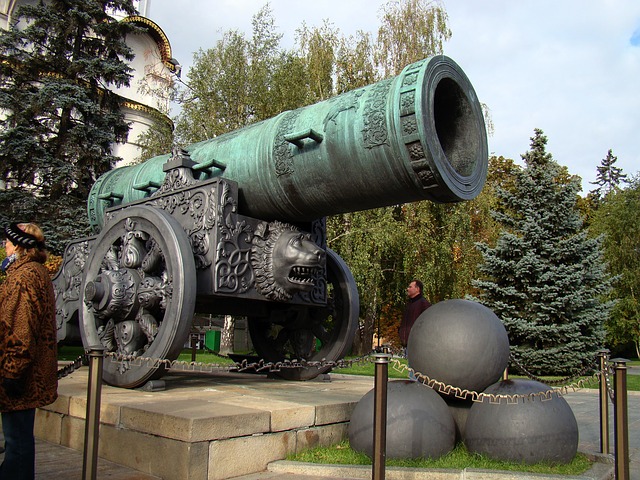
The Tsar Cannon, the Kremlin, Moscow.
Image by Tatyana Kazakova from Pixabay

Have you ever had a day when you simply needed chocolate?

Maybe you faced some problems, and needed a pick-me-up. Or you were dealing with a heartbreak and needed a balm for your ragged emotions.

And you knew that milk chocolate just wouldn’t cut it, let alone white chocolate.

It required the stronger stuff. You needed to bring out the big guns to help you cope with your challenges:

Dark chocolate.

Only the intense flavour and strength of chocolate with over 80% cocoa solids would do the trick. Nothing else would suffice.

Sometimes we reach a similar point in our spiritual lives, too.

The Christian life isn’t all a bed of roses. Oftentimes we face desperate circumstances, and we may find ourselves in a heap on the floor, crying our eyes out.

Maybe we’ve received a scary diagnosis from the doctor. We might have been let go from our job. Or our family might be in crisis: our marriage is in tatters or our children have gone astray.

We need help that is grounded in the gritty reality of what we’re facing. Sunny bromides like “Don’t worry, be happy” just won’t cut it.

We need to bring out the big guns.

We need the Psalms.

Read more

Don’t Let Fear Get The Better Of You

Image by mohamed Hassan from Pixabay

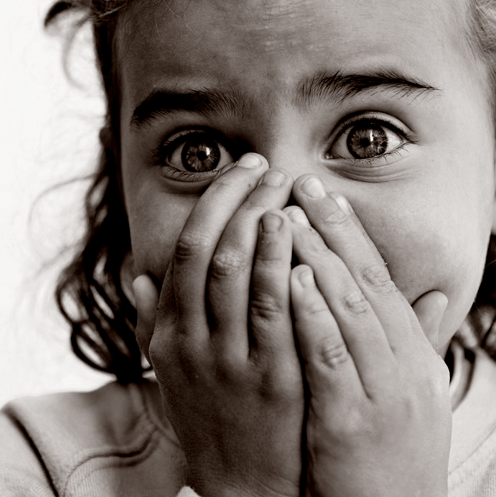
Do you have a fear of bugs?

Many of us do, and I don’t mind admitting that I’m one of them.

Finding a bug in the house instills terror in me. I’m convinced the bug is out to get me, lying in wait to murder me.

I’m tempted to have armed police arrive at my door to deal with the “intruder.” It takes all the self-control I can muster to refrain from dialling 911.

People tell me I’m being irrational. After all, humans are thousands of times bigger than bugs. Insects are probably more afraid of us than we are of them, right?

But I don’t see it that way, so I’m afraid to confront them.

I’ve fallen into the trap of letting my fear get out of proportion to the problem.

Many of us make this mistake. We let fear get the better of us, and it hobbles our responses to life’s challenges.

In ancient times, the children of Israel were no exception.

Read more

Nose Down, Full Throttle

Image by cocoparisienne from Pixabay

If you’re a pilot, there are a lot of things to worry about up in the skies.

Stalling your aircraft is one of them.

If your plane no longer has enough lift to keep you flying, it will falter and enter an aerodynamic stall. You need to take corrective action, and fast.

So how does a pilot get out of a stall?

Nose down, full throttle.

This means the pilot must push the nose of the plane downward and give the engines full power.

To a layperson, this course of action seems scary and counter-intuitive. Surely the last thing a pilot should be doing when they’re in trouble is aiming the plane toward the ground at full speed?

It may seem nerve-wracking, but it’s the only way to get out of a stall. Going nose down, full throttle will give the plane the needed airspeed to regain lift and get out of the stall. Then, the pilot can resume level flight and continue on the desired flight path.

In life, too, sometimes we need to do something that scares us a little in order to get out of trouble.

Like when we sin or make a mistake that we know would displease God.

Read more

Doomscrolling? Try Hopescrolling!

Image by Robin Higgins from Pixabay

Have you been prone to “doomscrolling” recently?

Doomscrolling is a new word that’s been coined to describe the habit of obsessively consuming a large quantity of negative online news.

The committee of the Australian Macquarie Dictionary even named “doomscrolling” their Word of the Year for 2020.

Humans have a natural tendency to pay more attention to bad news, but the doomscrolling trend has accelerated during the pandemic.

We compulsively check our news apps and social media feeds, endlessly scanning the latest ominous headlines. We feed ourselves a steady diet shocking or disheartening news about rising COVID-19 case numbers, hospital intensive care units filling up, businesses shutting down, political instability or even weather woes.

We can’t seem to help ourselves, even when we sense that doomscrolling is probably detrimental to our mental health. All this bad news saturating our minds can leave us depressed, anxious, angry or hopeless.

We need an antidote to the feeling of despair that doomscrolling can produce.

I’d like to propose that we adopt a new habit:

Hopescrolling!

Read more

You Can’t Go Wrong With These Ingredients!

Woman peering anxiously into oven. Image by press 👍 and ⭐ from Pixabay

When you’re trying out a new recipe for the first time, do you ever get apprehensive that it won’t work out?

I certainly do. That’s why I usually stick with one of my mother’s tried-and-true dessert recipes.

I worry that if I bake a dessert I’ve never attempted before, I’m bound to mess it up. I fear that I’ll disappoint the people I serve it to, and tongues will wag.

As I walk by, people will whisper, “There’s that woman who serves fallen soufflés!”

Or, “Isn’t she the one who bakes cookies that are as hard as hockey pucks?”

In the worst-case scenario of my imagination, my baking debacle will be so embarrassing that I’d have to leave town.

With some recipes, however, you really can’t go wrong, even if you’ve never tried them before.

Brownies, for instance.

Read more

God Will Go Ahead of You

Cow eyeing something suspiciously. Image by ArtTower from Pixabay

Do you ever get a bit anxious when faced with something completely new?

Like how to find a new job in an economy that’s unlike anything you’ve seen before? Or how to navigate a world that’s turned upside-down?

Many of us shrink from the prospect of entering uncharted territory.

And we’re not the only ones: even some animals balk when confronted with something unfamiliar.

Cows are notorious for disliking disruptions to their routines and environments. They’re particularly averse to new gates. Cows are made so nervous by new entrances and openings that they’ll stubbornly resist going through them.

This trait is so well known that it’s given rise to the phrase, “like a cow looking at a new gate.” It means to view something with bewilderment and confusion, as though to say, “Are you serious? I’m not going through that.

Do you feel this way when faced with the uncertainties that the new year may bring? Is fear of the unknown keeping you from stepping forward in faith to realize your dreams?

Fear has a way of paralyzing us, so that we stay stuck where we are instead of trying something new.

But we needn’t be afraid.

God will go through the gate ahead of us.

Read more

Fear Is Contagious, But So Is Faith

Photo by Victor Bezrukov
Wikimedia Commons CC BY-2.0

There are a lot of things in this world that are contagious. Certain viruses and diseases come to mind, as do laughter and yawning.

There have even been cases of contagious dancing, such as the “dance epidemic” of 1518 in Strasbourg.

But did you know that fear is also contagious?

A friend of mine was telling me how she organized a backyard sleepover in a tent for her daughter and some friends a few years ago. The children were assured that the parents would be with them in the tent all night long.

The kids were excited about this adventure, and all seemed to go well at first. Eventually, however, one little girl became afraid of the dark. It didn’t take long for another girl to become fearful as well. Pretty soon the whole thing had to be called off, despite the parents’ promises that they wouldn’t leave the children outside alone in the dark.

The other kids had “caught” the fearful attitude of the first child.

Scripture recognizes how destructive fear can be when it contaminates a whole group.

Read more

Good Fear Vs. Bad Fear

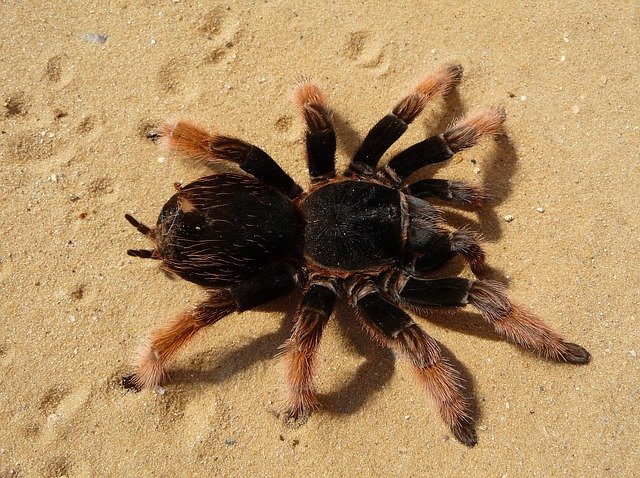
A tarantula, one of the most feared spiders
Photo by WikiImages on Pixabay

Has this pandemic made you fearful? Are you afraid that you or your loved ones might catch the COVID-19 virus? Are you nervous about even going out in public? Afraid that life will never be quite the same again?

For many of us, the coronavirus crisis has only added to our list of things to fear. As if we didn’t already have enough things to be afraid of!

There are fears common to many of us, such as fear of spiders or snakes, fear of public speaking or fear of falling.

Then there are the more unusual phobias, such as fear of clocks or clowns, balloons or buttons, and even beards. (Full marks to you if you know that triskaidekaphobia means fear of the number thirteen.)

There’s no end of things to be afraid of in this world. But is fear always bad?

No. God gave us the emotion of fear: it’s there to save us from danger.

But we need to differentiate between good fear and bad fear.

Read more

Beauty Out Of Brokenness

Sea glass on a rock
Photo by treenabelle on Pixabay

Once the worst of this pandemic is over, psychologists warn that many of us may suffer from post-traumatic stress for some time to come. Some of us will have lost a job, seen our business close down for good, suffered isolation and loneliness, or may have even lost a loved one during the COVID-19 crisis.

But is PTSD a given in these circumstances? Is there different outcome that can occur, an unexpected benefit that may arise out of these difficult times?

Psychologists say yes: there’s such a thing as post-traumatic growth. It’s been found in survivors of war, cancer, and natural disasters. Some people emerge from a crisis with increased spirituality, a greater sense of personal strength, new priorities and closer relationships with others. What could have broken them actually made them better.

This phenomenon reminds me a bit of “sea glass.” Sea glass, or beach glass, found washed up on shores, starts out as merely cast-aside pieces of broken glass. Perhaps they’ve been tossed overboard from a ship, or thrown into the sea from land along with other garbage.

These shards of glass endure years of being buffeted against the stones of the sea bottom. It seems like they’re being dashed about mercilessly by the relentless action of the waves. Surely no good could come of this?

But then, something almost magical emerges.

Read more

An Invisible Crisis

Empty streets of Milan, Italy during the pandemic
Photo by Alberto Trentanni on Flickr CC BY-NC-ND 2.0

There’s something strange about the crisis the world is undergoing right now: from the outside, things look surprisingly normal.

If you view the streets of your town during this pandemic, most things look the same as they did before. The buildings are intact, the streetlights come on at night like clockwork, and the spring flowers are blooming. This isn’t a crisis like a flood or earthquake, where the devastation is plain to see.

The COVID-19 crisis seems almost invisible, until you realize that something isn’t quite right when you look around: missing from the scene is the normal hum of human activity. The workplaces are shut, people aren’t in restaurants, and children aren’t in playgrounds. An eerie quiet pervades most areas.

It’s only when you look behind closed doors that you see the devastating impact of the pandemic. The high death toll in some nursing homes, the stressed out health care workers, and the loneliness of self-isolation.

When we have a crisis of our own, like depression or despair, we can look a bit like those intact buildings. Things look normal from the outside. When people look at us, there’s no evidence of the turmoil raging within.

Read more