The Storms of Jupiter

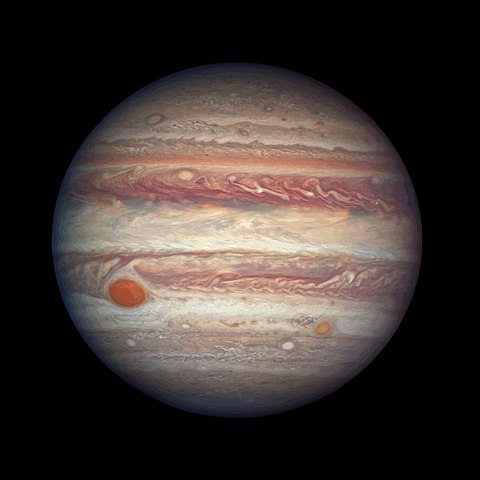
Image of Jupiter from NASA/ESA’s Hubble Space Telescope, via Wikimedia Commons CC 4.0

Can storms be beautiful?

Yes, if you’re far enough away from them!

The most distinctive feature of the planet Jupiter, its Great Red Spot, is actually a massive storm.

Astronomers have been observing this maelstrom continuously since 1878, but it’s likely that it had been raging for centuries before that. The size of this storm is so vast that it could swallow the entire earth.

From a safe distance away here on earth, the Great Red Spot’s colourful swirls are beautiful, like marbled ice cream or the end papers of antique books. Jupiter’s storms appear to us like abstract art; indeed, images of them have appeared on everything from posters and ties to bedsheets and yoga mats.

But up close, they’re violent tempests, howling hurricanes of ammonia and water. Because Jupiter is a gaseous planet, there is no solid ground to dissipate the energy of these swirling vortexes, as would happen on earth when a hurricane makes landfall. At its edges, the Red Spots’s wind speeds can reach 270-425 mph (430-680 km/h), over twice the speed of even the most monstrous hurricane here on earth.

Do you feel like you’re in a storm like that right now?

Perhaps you’ve been enduring heartache, unemployment, illness, or loneliness.

Maybe it seems like the tempest has been raging in your life for years. Nothing seems to slow it down. From a distance, people can’t see how destructive it is to you.

The good news is that God offers hope to those in the midst of the storms of life.

Read more

The Ultimate Love Story

Image by lillaby from Pixabay

Valentine’s Day is just around the corner!

On this beloved day of the calendar, we celebrate our love for that special someone in our lives. Many of us will be giving (or receiving) boxes of chocolates and bouquets of roses as an expression of that love.

But sometimes those roses have thorns, don’t they?

The truth is, love sometimes hurts. It can cost us something.

We think of Valentine’s Day as simply about romantic love, but the history behind this day shows us that true love is often about sacrifice.

This was certainly the case for Saint Valentine of Rome, for whom Valentine’s Day is named.

This third-century priest was known for his evangelistic work and for aiding persecuted Christians. He was martyred for his faith on February 14 in AD 269, executed by order of Emperor Claudius for refusing to deny Christ.

Saint Valentine patterned for us a life focussed on loving others; he refused to deny the Source of that love, even if it cost him his life.

Christ modelled that sort of sacrificial love, too.

He would let nothing stop His purpose of showing love to others by securing for them a way to spend eternity with Him, even if it cost Him His life.

And it did.

Read more

The Beauty of Redeemed Brokenness

Image of parrot tulip by Coanri/Rita via Flickr CC BY-NC-ND-2.0

What’s your favourite flower?

Even though I certainly love roses, the tulip holds a special place in my heart. It’s not as showy or fragrant as a rose, but it brings such joy in spring after a long winter.

Among the many types of tulips, I especially like the variegated ones (with multicoloured petals).

But did you know that the dramatic colour combinations of variegated tulips are caused by a virus?

Gardeners had long noticed that tulip petals occasionally “broke” into unusual patterns. But it wasn’t until the late 1500s that botanists realized that the beautiful mixed colouring arising spontaneously in some tulips was actually the result of a disease.

While the tulip-breaking virus causes lovely variegated colouring, it also weakens the tulip bulb, eventually leading to the death of its genetic line.

So how is it that we can still enjoy variegated tulips today? Why haven’t they all died out?

Fortunately, botanists centuries ago learned to graft healthy tulip bulbs onto the diseased or “broken” ones, preserving their lineage. Today, we can enjoy countless cultivars in a dizzying array of colours and patterns.

Doesn’t this remind you of what God does for us?

Read more

God Has You Surrounded!

Image courtesy of Stuart Miles at FreeDigitalPhotos.net

“We’ve got you surrounded!”

This is always a thrilling moment in an action movie: when the authorities announce to the bad guy that he has no way of escape.

Officers are blocking every exit. Will he surrender, or try to fight his way out? (You’ll have to watch the movie to find out!)

Did you know that God has you surrounded, too?

But in a good way!

Our loving Heavenly Father assures us that He has us covered. He is always with us and surrounds us with His love and care.

As we enter a new year, let’s keep in our minds the ways God has promised to be with us. That way, we can take on the challenges ahead of us knowing that God’s got our back, so to speak.

Read more

The Wrong Yardstick

Image by Ariel from Pixabay

Do you have a friend who’s a bit of a screw-up?

No? You’ve got to get one!

Friends who make a shambles of things are amazing, because they make you feel so competent by comparison.

Your friend Sue might misplace one of her children, regularly set off the smoke detector when cooking, or accidentally rear-end a police car.

You roll your eyes smugly and think, “At least I’m not as bad as she is!”

In the same way, we like to justify ourselves before God by comparing our sins to those of others.

We think, “At least I’m not a bank robber or a serial killer. I’m not as bad as others. On the whole, I figure I’m a pretty decent person. I don’t think I really qualify as a ‘sinner.’ ”

The problem with this is that we’re using the wrong yardstick.

Instead of measuring ourselves against other people, we should be seeing whether we pass muster according to God’s standards.

Read more

You Were Meant to Soar

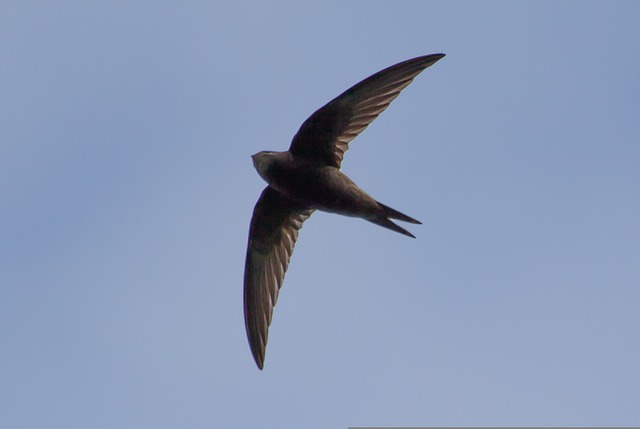
Image of European swift by Kev from Pixabay

What is the ultimate flying machine?

The Concorde? A high-tech fighter jet?

I’d suggest to you that the holder of this title belongs to the common swift.

The swift holds the record for the fastest confirmed level flight of any bird: 111.5 km/h (69.3 mph). (Birds like falcons can fly faster, but only when diving down through the air to catch prey.)

Swifts also spend most of their lives on the wing, landing only to nest. Some individuals can spend up to ten months in continuous flight. In a single year a common swift can cover at least 200,000 km. No other bird spends as much of its life in the sky.

They are truly astonishing creatures.

A funny thing about swifts, though: they don’t do very well on the ground.

Their small, weak legs, which are placed far back on their bodies, are really only good for clinging to vertical surfaces like cliffs. They never voluntarily settle on the ground, where they’d be vulnerable to predation. Although swifts are capable of taking flight from level ground, they prefer to “fall” into the air from a high point.

Simply put, swifts were meant to soar.

And so were you.

But oftentimes there are things inhibiting our flight…

Read more

Straight Out of Left Field

Image by Pexels from Pixabay

Have you ever had a time in your life when God did a work for you that came straight out of left field?

The blessing, provision or miracle he bestowed on you caught you off guard and astonished you. It was completely unexpected and surprising.

You never saw it coming.

God seems to like to work that way, doesn’t he?

Think of Moses in the Old Testament, when he was leading the children of Israel out of bondage in Egypt.

They found themselves in a jam: cornered at the Red Sea with the Egyptian army snapping at their heels.

Moses had faith that God would save them, but I wonder if he was racking his brains trying to figure out just how it would happen.

Maybe God would send a flotilla of boats from the other side to rescue them, Dunkirk-style? But no one knew they were coming, and at any rate, the only people on the other side were either enemies or strangers.

Maybe God would send an affable and reasonable Egyptian captain to negotiate with Moses? Not likely, since all of Egypt’s firstborn had just been killed. The Egyptians were in no mood to parley with their escaped slaves.

No matter what Moses came up with as a potential solution, he never could have expected the curveball that God threw:

God miraculously parted the waters of the Red Sea and allowed the Israelites to cross over on dry ground, then closed up the waters to drown their enemies. Moses surely didn’t see that one coming!

And that’s not the only curveball that God threw…

Read more

God Always Leaves a Light On For You

Image of Border Collie by Jacqueline Galand from Pixabay

When you come home late at night, isn’t it nice when a family member has left a light on for you?

It shows they care about you, and want you to be guided safely back inside.

I was reminded of this recently when I came across a fun fact about border collies, a highly intelligent breed of dog often used to herd sheep.

The border collie usually sports a prominent white tip on its tail. This characteristic colouration is known as the “Shepherd’s Lantern.”

The white tip of the collie’s tail stands out in the dim light of dusk, allowing the shepherd to be guided home from the pasture after a long day’s work.

That got me thinking:

Our Heavenly Father gives us a “lantern,” too.

God loves us and wants to make sure we’re guided home to him.

He does this in two ways:

Read more

Don’t Get Used To It

How would you feel if you won the lottery?

Pretty amazing, I’d imagine!

And the feelings of joy and gratitude at your good fortune would last for a long time, wouldn’t they?

Um, maybe not.

Researchers have discovered that positive feelings following a stroke of good luck soon subside and return to baseline. By the same token, people eventually adjust back to their baseline after some misfortune has befallen them.

This phenomenon is called “hedonic adaptation.” Whether your situation is good or bad, you get used to it.

I wonder if something like this happened to the children of Israel after being freed from slavery in Egypt.

Read more

God Sees You In Infrared

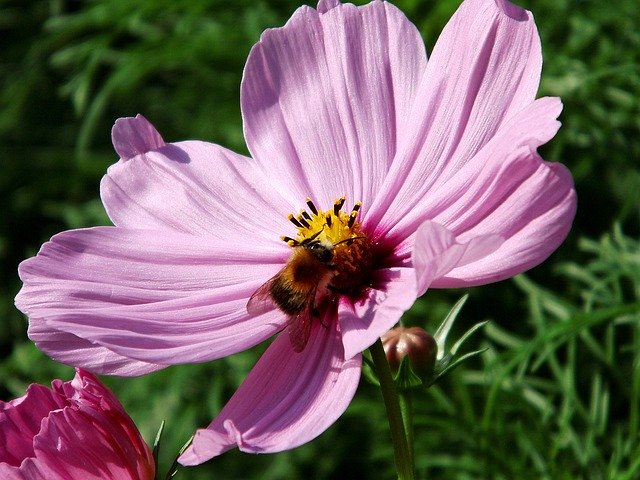
Photo by Veronica H. on Pixabay

Did you know that some birds and bees can see things that are completely invisible to us? They’re able to see in infrared, just beyond the wavelengths of the visible light spectrum that human eyes can detect.

What looks to us like a regular pink flower might resemble a helicopter landing pad to a bee. Where we see only the uniform expanse of one colour, the bee may see a target-shaped design involving different colours. The bee’s infrared vision allows it to home in on the most nectar-rich part of the flower.

The world looks completely different when you can see in infrared.

I sometimes think that God sees us in “infrared.” He can see things in us that are invisible to others, and even to ourselves.

Read more