Your Internal Voice Recognition Software

Adele live in concert, Glasgow, 2016. Wikimedia Commons CC BY-2.0

Sometimes your eyes may fool you, but your ears know the truth.

A group of Adele impersonators found this out back in 2015.

They had gathered for a contest to choose who could best imitate the British singer Adele. The competition was filmed as a supposed BBC TV special, hosted by Graham Norton.

There was a catch, however. It wasn’t really a contest, but rather a set-up.

Unbeknownst to the other participants, the real Adele had gone undercover and had entered the competition as well. A movie effects specialist had disguised the superstar’s appearance with a fake nose and chin so that people wouldn’t recognize her. She introduced herself as “Jenny,” a nanny.

One by one, the contestants performed a song. Each had done her make-up to look like the real Adele. And some did a passable impression of her vocally, too.

Then, “Jenny” began to sing.

Once she opened her mouth and sang in her trademark style, the other “Adeles” were riveted. They got emotional as goosebumps ran up their arms. It soon dawned on them that it was actually their idol singing, not some anonymous nanny (watch the video of their reactions here).

There was no mistaking who it was anymore, even if she was in disguise.

Simply put, they knew her voice.

Did you know that, if you’re a believer, you have a similar ability within you? You have an internal “voice recognition software” that enables you to recognize Jesus’ voice.

Read more

All in Good Time

They say cooking is an art, but baking is a science.

Part of what makes baking scientific is that it often calls for exact timing.

When you cook a roast or a turkey in the oven, the estimated cooking time can vary. The meat will be in the oven for several hours, and the recipe might give you as much as a half-hour window to start checking for doneness.

But when you’re baking cookies, the recipe will sometimes only give you a two-minute span to remove them from the oven. You have to be on your toes so you don’t miss this window, but at least you have a greater degree of certainty as to when the baking process will be over.

We humans crave certainty, don’t we? And that’s especially true when we’re going through difficult things in our personal lives.

Wouldn’t you love it if God told us exactly when our time of suffering would end?

Read more

The Way of Escape

Image of Jewelweed flower by jimaro morales from Pixabay

Sometimes Mother Nature can reach out and bite you.

If you’ve ever suffered the ill effects of a run-in with stinging nettles or poison ivy, you’ll know what I mean.

Both of these plants produce an unpleasant, itchy rash if your exposed skin comes in contact with them. If this happens when you’re out in the woods and nowhere near a pharmacy to buy rash cream, where do you find some relief?

From Mother Nature herself!

The wilderness might have stung you, but it also provides an effective solution.

Plants such as dock and jewelweed (also called touch-me-not) help relieve the sting from nettles and the itch from poison ivy. The sap of these “rescue” plants, when rubbed on the skin, provides a cooling, soothing effect. Native Americans have known this trick for millennia.

Conveniently, dock and jewelweed can usually be found growing in the same area as poison ivy and stinging nettles.

Coincidence? I’m not so sure.

I think God placed the “cures” near the harmful plants on purpose.

For one thing, He knew we’d need a ready remedy for skin woes when out in the bush.

Also, it illustrates a truth contained in the Bible:

When we are faced with temptation, God always provides a way of escape along with it.

Read more

God Will Never Give Up On You

Image of antique shop by Rudy and Peter Skitterians from Pixabay

One of the things I love about antiques is that they usually have a story to tell.

The type of wood and the style used to make a piece of furniture can tell you where and when it was made. Marks on the bottom of pottery give you a clue to its origins, and perhaps even the name of the artist who fashioned it. The condition of a piece tells you what sort of life it’s had.

But occasionally antiques tell us something a bit deeper than that.

For instance, I recently bought an antique oak side chair dating from the mid-1800s. It’s nothing impressive, simply the type of armless chair you might have at your dining room table.

The tale it tells is rather moving, however.

I can tell from the dozens of drilled holes around the perimeter of the seat frame that it once had a cane or rush seat. The material must have broken decades ago, because a plywood seat was later installed. Even this seat has been upholstered twice since.

One of the chair’s bottom rails broke at some point and is being held together with a tiny makeshift splint. Several of the back splats fractured as well, and were replaced with ones made from a different type of wood. There’s also evidence of repairs to wobbly joints over the decades.

What does all this tell me?

That someone never gave up on this little chair.

With all its woes and breakages, they could have simply thrown it out. But they loved it so much that they thought it was worth repairing, and they did so, over and over again.

Do you know that God feels the same way about you?

He’ll never give up on you!

Read more

Watch the Impossible Happen

Image by Josef Pichler from Pixabay

They say that it’s impossible for bumble bees to fly.

The theory goes that their weight and size are too great for their tiny wings to support, so according to the laws of aerodynamics they shouldn’t be able to get off the ground.

The only problem is, no one has told the bumble bees that.

They seem to have no difficulty in buzzing about in the air from flower to flower, collecting pollen and nectar to bring back to the hive.

So how do they do it, when physics would seem to suggest that they can’t?

For a long time, this was a mystery to us. Eventually we discovered that bumble bees actually don’t defy the laws of aviation: they simply fly in a different way than a plane or bird does.

We learned that the propeller-like way they beat their wings creates an invisible force above them, like a mini-tornado or -hurricane. This vortex actually sucks them upward, giving them lift in spite of their weight.

There was more going on than met the eye, which allowed the “impossible” to happen.

Likewise, when we believe in God, there is more going on in our lives than we’re aware of.

When God is working in your life, sometimes He will cause the impossible to happen, even when you can’t see how it could.

Read more

The Law of the Universe

Newton’s cradle, a device which illustrates conservation of momentum and conservation of energy. Image by 3D Animation Production Company from Pixabay

If you were paying attention during physics class in high school, you’ll know that there are certain laws that the natural world abides by.

The Law of Gravity, for instance. Legend has it that this principle was discovered by a young Isaac Newton when he was hit on the head by an apple which fell from the tree he was sitting under.

Or the Law of Inertia, which states that an object at rest or in motion will continue in that state unless acted upon by an external force. So when I’m sitting in my easy chair and don’t want to get up to do any housework, I’m not being lazy. I’m simply obeying the law of inertia.

I recently heard a wag rephrase Newton’s Third Law of Motion (“For every action there is an equal and opposite reaction”). He dubbed it the Law of Emotion: for every male action there is a female overreaction!

Then there’s the Law of Conservation of Energy, which says that energy can’t be created or destroyed, but can be altered from one form to another. For instance, our bodies transform the chemical energy in food into kinetic energy to help us move around.

I think sin has a principle attached to it which is similar to the Law of Conservation of Energy.

Sin can’t just disappear. It has to be dealt with in some way.

But it can be transformed.

As author Dorothy Sayers said, “There is only one real law—the law of the universe. It may be fulfilled either by way of judgement or by the way of grace, but it must be fulfilled one way or the other.”

Read more

Easier to Destroy Than Create

It’s a truism that it’s easier to destroy than to create.

I saw this in action recently in my own neighbourhood.

A two-storey house had been damaged internally by fire, although it looked salvageable from the outside. Nonetheless, the owners and insurers agreed that it should be demolished and a new house built in its stead.

I imagine the original house had taken months to build. It probably involved scores of people in its construction: contractors, carpenters, bricklayers, roofers, electricians, plumbers, and the like.

But it only took one man with one large backhoe a few hours to raze that building to the ground.

It was shocking how quickly the structure was destroyed. What could have lasted for decades was levelled in the space of a morning.

A cautionary tale, don’t you think?

If we’re not careful, we can see the same thing happen in our own lives.

Read more

We Must Experience Christ Firsthand

What’s your favourite floral fragrance?

If you said rose or lavender, you’re in luck.

These flowers are among those from which we can easily extract essential oils. These substances can then be used in products ranging from perfumes to scented soaps. If you love the smell of these flowers, you have all manner of ways to experience the scent. You can do so directly, by smelling the flower, or secondhand, as it were, through items made from their oils.

But some flowers don’t produce enough usable essential oils.

My favourite floral scent, lilac, is one of them.

Unfortunately for me, the aromatic compounds in lilacs are nearly impossible to acquire. Trying to extract the fragrance through steam distillation can end up destroying the scent profile. And the tiny amount of essential oils that may result are so expensive to produce that it’s not economically worthwhile to bother.

The end result is that you can’t buy true lilac essential oil. Perfumers may be able to mimic the scent of lilacs through synthesis, but the resulting fragrance hasn’t been distilled solely from the actual flower itself; it’s merely an approximation, a blend of other floral notes. No chemist can authentically capture the unique scent of the lilac.

If you want to experience the true fragrance of lilacs, there’s only one way to do it. You have to experience it “live,” by smelling an actual cluster of flowers.

Likewise, if we want to experience Jesus, it has to be “live.”

Read more

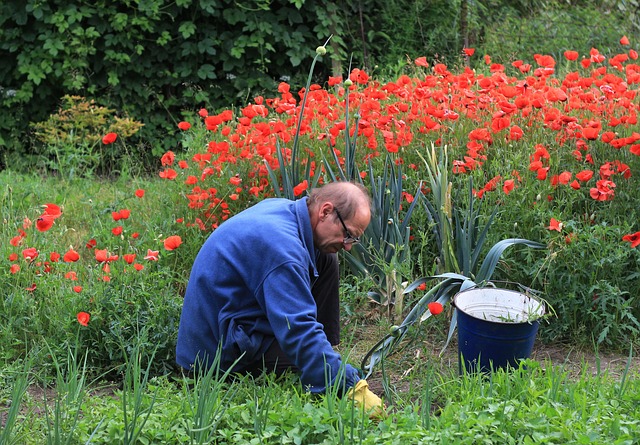
Weeding, Like Forgiving, Never Ends

Weeding the garden, like forgiving, is a task that’s never-ending.

We can’t simply say, “I weeded last week, so I’m done now. I won’t need to weed for the rest of the season.”

Every gardener know that the weeds will keep cropping up. The job of weeding is one that lasts for as long as you have a garden.

So it is with forgiving those who have offended or hurt us. Forgiving is not optional for believers: we are to forgive others as God has forgiven us.

But sometimes we think that it’s a “one-and-done” effort. We grudgingly forgive someone once, and assume we’re done with it.

Inevitably, though, we learn that it doesn’t work that way. The next week, we might ruminate about what they did to us and get mad all over again. We find there’s still a root of bitterness in our heart, and we have to forgive them once more.

Like weeding, the duty to forgive is ongoing. It may require more “rinse and repeat” cycles than you might imagine.

Read more

Allow God to Prune You

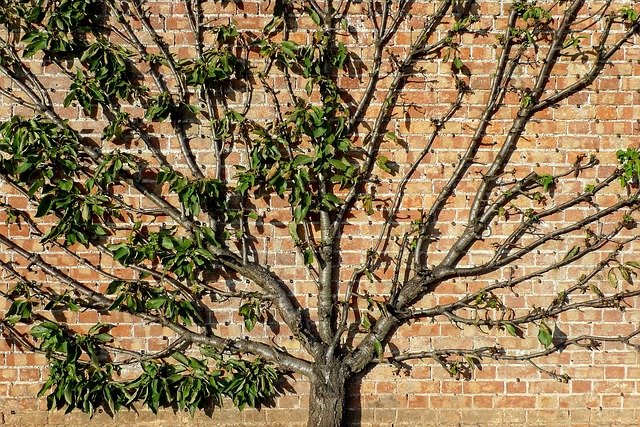
Fruit tree espaliered against wall. Image by Andrew Martin from Pixabay

If I were a young apple tree, I probably wouldn’t like being pruned very much.

If I saw the gardener heading my way with secateurs or pruning shears, I’d probably flinch. I would hope that he would just give me a little trim, and leave most of my luxuriant growth intact.

But the gardener invariably has other ideas.

I’d watch in horror as one branch after another was lopped off. They seemed perfectly good to me, but the gardener thought otherwise.

Why has the gardener cut me back so severely?

To make me more fruitful.

God does the same with us, and we find it just as uncomfortable.

The truth is, pruning hurts, and it seems to involve so much wastage.

But our loving Heavenly Father knows that it’s for our own good. Scripture says that it’s for His glory that we bear much fruit.

Read more