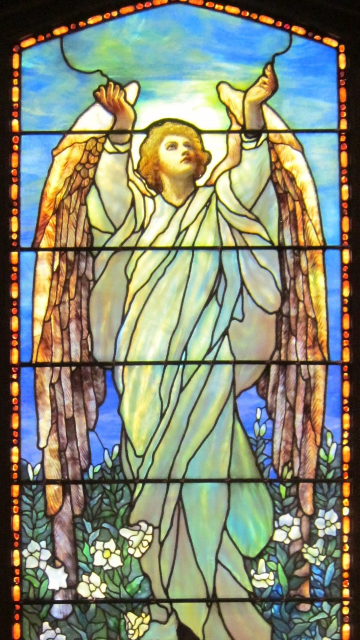
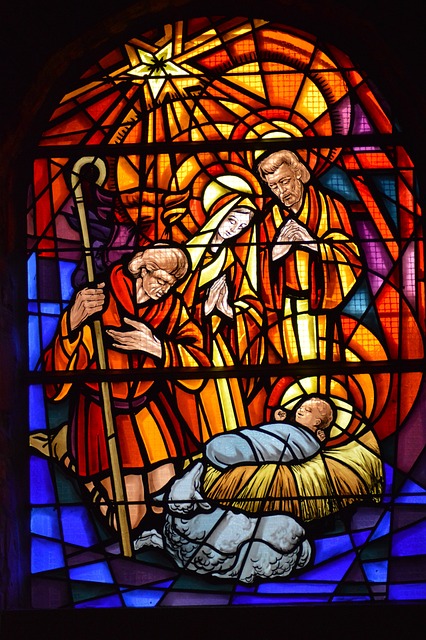
Hark! The Herald Angels Sing

Image courtesy of Hippopx CCO 1.0: Public Domain

What’s your favourite Christmas carol?

“Jingle Bells” seems to be at the top of many lists of the top Yuletide songs. It’s catchy, kids love it, and it puts people in a cheery mood.

Or perhaps you’re more partial to “Silent Night”? I don’t blame you—it’s a beautiful classic.

The honour of the best-selling Christmas single would have to go to Bing Crosby’s “White Christmas.” And with good reason—how can you not love this song?

(I’m hoping that your favourite Christmas number isn’t “Grandma Got Run Over By A Reindeer.” If it is, I’m not sure we can be friends.)

As for me, my favourite carol is “Hark The Herald Angels Sing,” with lyrics by Charles Wesley and a rousing melody by Felix Mendelssohn.

This hymn is not only enjoyable to sing, it’s also richly loaded with Biblical truths. It starts out this way:

“Hark! The herald angels sing:
‘Glory to the new-born king
Peace on earth and mercy mild
God and sinners reconciled.’ “

The angels are celebrating the inauguration of a new Kingdom featuring world-wide peace and the reconciliation of humanity to its creator.

But wait a minute: aren’t the angels jumping the gun in this account?

God and sinners wouldn’t be reconciled until decades later in Jesus’ life, at the Cross.

And since Jesus was born the world hasn’t had a year without war somewhere or other. Where is the peace the carol describes?

Aren’t the angels being a bit premature in celebrating?

Not at all.

Read more

God With Us

I’m so pleased to share with you another guest post by my friend Veronica Gerber. I know you’ll be blessed by her wisdom!


What’s in a name?

So it’s Christmas time again … when we remember Jesus’ birth:

“For unto us a child is born, to us a son is given,
and the government will be on his shoulders.
And he will be called Wonderful, Counsellor,
Mighty God, Everlasting Father, Prince of Peace.” (Isaiah 9:6)

Do you have a favourite way of addressing God or thinking of Jesus?

I’m quite partial to Emmanuel which means “God with us” … ever alongside those who have eyes to see and ears to hear. It’s all too easy to lose sight, so to speak, of Jesus being with us in the day-to-day, especially during the hustle and bustle of Christmas, wouldn’t you say?

“Behold, a virgin shall be with child, and shall bring forth a son, and they shall call his name Emmanuel, which being interpreted is God with us.” (Matthew 1:23)

C.S. Lewis has written about God’s plan, “The whole thing narrows and narrows, until at last it comes down to a little point, small as the point of a spear—a Jewish girl at her prayers.”

Today as I read the accounts of Jesus’ birth I tremble to think of the fate of the world resting on the responses of two rural teenagers long ago. How many times did Mary review the angel’s words? How many times did Joseph second-guess his own encounter with an angel—“Was it just a dream?”—as he endured the hot shame of living among villagers who could plainly see the changing shape of his fiancée?

Mary, the virgin, whose parenthood was unplanned, had a commendable response to the angel. She heard the angel out, pondered the repercussions, and nonetheless replied:

“I am the Lord’s servant.
May it be to me as you have said.”

Often a work of God comes with two edges, great joy and great pain … as is the joy and travail of giving birth. In Mary’s matter-of-fact response, she embraced both. She was the first person to accept Jesus on his own terms, regardless of the personal cost. An ordinary beginning, an extraordinary journey.

It makes me wonder what work of God hinges on me at my prayers? And on you and your prayers?

Read more

Unsung Heroes

Image by Myriams-Fotos from Pixabay

Ever had a time when all your plans were upended?

Joseph certainly did.

The man who would become the earthly father of Jesus probably had his life all mapped out.

He thought he’d get married to Mary, settle in Nazareth with her, have a posse of kids, and build his business. He could probably foresee how his life would unfold over the ensuing decades.

But then God stepped in.

First Joseph had to deal with the jaw-dropping news that an angel told Mary that she would bear the Messiah. Joseph was told by a divine messenger to go ahead with the marriage, despite tongues wagging in town about his being cuckolded by some other man. No doubt Joseph hadn’t figured his married life would start out this way.

Then the couple had to travel to Bethlehem to be counted in a census. While there, Mary delivered her child in a stable. Joseph certainly never thought this was how a child of his would be born.

The next thing you know, the young family had to flee to Egypt to escape those who wanted to murder Jesus. I’m sure Joseph hadn’t banked on having to travel to a foreign country to evade capture by the authorities.

At every turn, Joseph’s life and plans were upended.

And yet he’s something of a hero in the Christmas story, albeit an unsung one.

Read more

The Wrong Yardstick

Image by Ariel from Pixabay

Do you have a friend who’s a bit of a screw-up?

No? You’ve got to get one!

Friends who make a shambles of things are amazing, because they make you feel so competent by comparison.

Your friend Sue might misplace one of her children, regularly set off the smoke detector when cooking, or accidentally rear-end a police car.

You roll your eyes smugly and think, “At least I’m not as bad as she is!”

In the same way, we like to justify ourselves before God by comparing our sins to those of others.

We think, “At least I’m not a bank robber or a serial killer. I’m not as bad as others. On the whole, I figure I’m a pretty decent person. I don’t think I really qualify as a ‘sinner.’ ”

The problem with this is that we’re using the wrong yardstick.

Instead of measuring ourselves against other people, we should be seeing whether we pass muster according to God’s standards.

Read more

Accept No Substitutes

Image by StockSnap from Pixabay

I have a special treat for visitors to The Faith Cafe today: a guest post by my dear friend Veronica Gerber. I’m sure you’ll be as impressed as I am with her Biblical insights and compassionate heart. Enjoy!


Yes, I’ll admit it. I’ve become a bit of a coffee snob since I first tasted the black gold that is the hallmark of the 90s: specialty coffee. It’s easy now to simply say “no thanks” to casual offers of coffee at a meeting or the local diner. Once you’ve tasted the real thing, the competition doesn’t even come close: it may look like coffee, perhaps even smell like coffee, but doesn’t quite pack the same punch…there’s simply no comparison.

Can I say the same about my spiritual palate? Psalm 34:8 declares, “O taste and see that the Lord is good.” Once we’ve tasted, as-it-were, the goodness of the Lord, dined at the King’s table, how can we feed again on the swill that darkly courses through the world’s troughs?

Take a reading of your own heart and mind. Are you consciously aware of what you’re drinking in day by day through the eye-gate and ear-gate? If you’re settling for the trough when you could be drinking deeply of the living water Jesus offers, stop.

Read more

Keep Your Eyes On The Son

Image by mbll from Pixabay

Why don’t trees freeze to death in winter?

After all, if you or I stood outside naked for several months in sub-zero temperatures, we’d soon be turned into frosty statues.

Trees can’t burrow into the ground and hibernate like bears, and they can’t fly south like migratory birds. They’re fixed in place, at the mercy of the elements.

And yet they somehow survive through the cold depths of winter. Why don’t they turn to ice, since, like other living things, they’re made mostly of water?

Their trick is something called “hardening.”

In autumn, trees in cold climates undergo a change whereby water flows out of their cells. The concentrated sugars, proteins, and acids left behind act as a potent antifreeze. The water now in the spaces between the cells is so pure that ice crystals can’t form. This ultra-pure water can be cooled to -40 degrees F and still remain an ice-free liquid.

Pretty cool, isn’t it?

But what is it that triggers the hardening?

Ah, this is where we can learn a lesson from the trees.

Read more

Label Jars, Not People

By Frank Vincentz, Wikimedia Commons, CC BY-SA 3.0

What’s the difference between a tart and a torte?

For that matter, what’s the difference between torte-with-an-e and tort-without-an-e? Are they all edible?

Let’s see if we can straighten out the confusion.

A tart is an open pastry containing a filling. A torte is a multi-layered cake-like confection. They’re both edible (and extremely tasty—see recipe for Lemon Almond Tart below).

Tort is a legal term referring to a wrongful act or infringement of a right. You could try to eat the paper a tort was described on, but I wouldn’t recommend it!

But we’re not quite finished unpacking the meanings of these similar-sounding words.

A tart can also refer to a promiscuous woman: one who has had many sexual partners. A woman others would look down on. A woman polite society might consider to be “loose.”

But we should be careful before we slap anyone with a label such as this. We never know how God might use them.

Read more

Put On The Right Costume

It’s amazing what a cape can do.

Ask any child who puts on a superhero costume for Halloween.

They suddenly feel braver. Their confidence gets a boost. They believe that they can achieve things that they couldn’t before.

Actors understand this. Many actors report that they can more readily get in character for their role once they don the costume associated with it.

Interestingly, some actors identify with the characters they portray so much that they become real-life action heroes.

Tom Cruise has reportedly rescued people in real life at least six times, including coming to the aid of a woman set upon by muggers in London, rescuing a family from a burning boat in France, and helping the victim of a hit-and-run in California.

Likewise, action star Harrison Ford has pulled someone out of a burning car, and has used his own helicopter to rescue a stricken hiker.

The theory behind this phenomenon is called “embodied cognition,” and it might help explain how actors and others become their roles.

In the case of action heroes, acting brave in movies may lead to actually being brave. The more you practice something, the more you become it.

The key might be in putting on a costume or adopting a set of behaviours.

I think that’s why Scripture tells us to “put on” Christ.

Read more

You Were Meant to Soar

Image of European swift by Kev from Pixabay

What is the ultimate flying machine?

The Concorde? A high-tech fighter jet?

I’d suggest to you that the holder of this title belongs to the common swift.

The swift holds the record for the fastest confirmed level flight of any bird: 111.5 km/h (69.3 mph). (Birds like falcons can fly faster, but only when diving down through the air to catch prey.)

Swifts also spend most of their lives on the wing, landing only to nest. Some individuals can spend up to ten months in continuous flight. In a single year a common swift can cover at least 200,000 km. No other bird spends as much of its life in the sky.

They are truly astonishing creatures.

A funny thing about swifts, though: they don’t do very well on the ground.

Their small, weak legs, which are placed far back on their bodies, are really only good for clinging to vertical surfaces like cliffs. They never voluntarily settle on the ground, where they’d be vulnerable to predation. Although swifts are capable of taking flight from level ground, they prefer to “fall” into the air from a high point.

Simply put, swifts were meant to soar.

And so were you.

But oftentimes there are things inhibiting our flight…

Read more

Straight Out of Left Field

Image by Pexels from Pixabay

Have you ever had a time in your life when God did a work for you that came straight out of left field?

The blessing, provision or miracle he bestowed on you caught you off guard and astonished you. It was completely unexpected and surprising.

You never saw it coming.

God seems to like to work that way, doesn’t he?

Think of Moses in the Old Testament, when he was leading the children of Israel out of bondage in Egypt.

They found themselves in a jam: cornered at the Red Sea with the Egyptian army snapping at their heels.

Moses had faith that God would save them, but I wonder if he was racking his brains trying to figure out just how it would happen.

Maybe God would send a flotilla of boats from the other side to rescue them, Dunkirk-style? But no one knew they were coming, and at any rate, the only people on the other side were either enemies or strangers.

Maybe God would send an affable and reasonable Egyptian captain to negotiate with Moses? Not likely, since all of Egypt’s firstborn had just been killed. The Egyptians were in no mood to parley with their escaped slaves.

No matter what Moses came up with as a potential solution, he never could have expected the curveball that God threw:

God miraculously parted the waters of the Red Sea and allowed the Israelites to cross over on dry ground, then closed up the waters to drown their enemies. Moses surely didn’t see that one coming!

And that’s not the only curveball that God threw…

Read more