God Will Go Ahead of You

Do you ever get a bit anxious when faced with something completely new?

Like how to find a new job in an economy that’s unlike anything you’ve seen before? Or how to navigate a world that’s turned upside-down?

Many of us shrink from the prospect of entering uncharted territory.

And we’re not the only ones: even some animals balk when confronted with something unfamiliar.

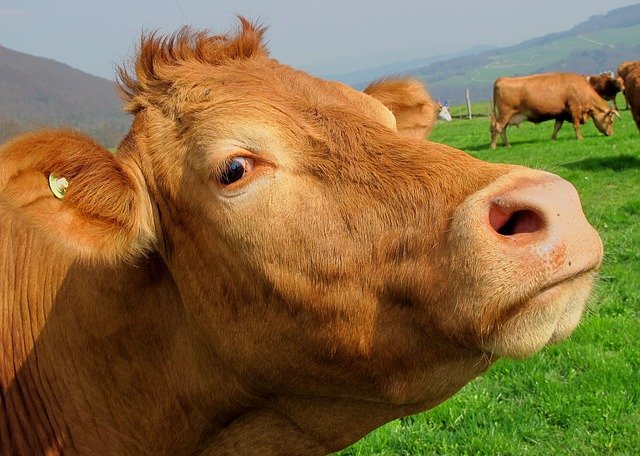
Cows are notorious for disliking disruptions to their routines and environments. They’re particularly averse to new gates. Cows are made so nervous by new entrances and openings that they’ll stubbornly resist going through them.

This trait is so well known that it’s given rise to a phrase: “Like a cow looking at a new gate.” It means to view something with bewilderment and confusion, as though to say, “Are you serious? I’m not going through that.”

Do you feel this way when faced with the uncertainties that a new situation may bring? Is fear of the unknown keeping you from stepping forward in faith to realize your dreams?

Fear has a way of paralyzing us, so that we stay stuck where we are instead of trying something new.

But we needn’t be afraid.

God will go through the gate ahead of us.

Read more
Create Your Own Dark Sky Preserve

I sometimes wonder if people who live in the countryside have a better appreciation for God’s creation than we city folk?

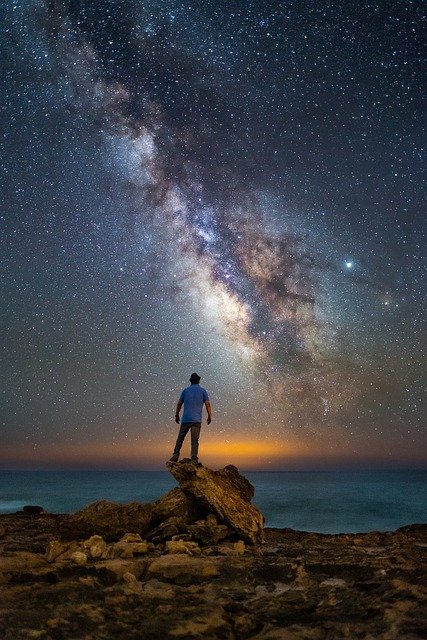
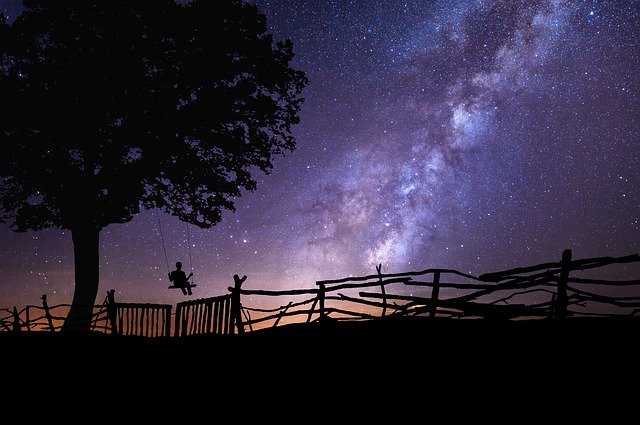
I’m specifically thinking of the ability to see the majesty of God’s handiwork as seen in the starry night sky.

Living in a big city (in my case, Toronto), I’m only able to see a handful of heavenly bodies. I can see the Big Dipper and a smattering of other stars, bright planets such as Venus, and the moon in its phases. But that’s about it.

Big cities produce so much ambient light that it obscures our view of the wonder of the night sky. That’s why many jurisdictions are creating what’s known as “dark sky preserves.” These are regions far enough away from the lights of built-up urban areas that the majority of stars can still be seen.

Governments commit to protecting these preserves from development so that the full range of the starry sky will always be visible from those areas. They seem to understand that it’s important for us to be able to maintain our connection with the night sky, and see it the way our ancestors did.

Perhaps we should take a page from their book, and create some “dark sky preserves” in our own lives.

I don’t mean areas from which to see the night sky, but spaces in our lives that remind us of God’s majesty and creative ingenuity as expressed in nature.

Read more

What Birds Can Teach Us About Prayer

It’s good to keep in touch with those you love, isn’t it?

Even birds know this.

Birds will engage in what are called “contact calls” with their mate or others in their flock. Unlike a bird’s song, a call is usually shorter and quieter. The purpose of contact calls is to maintain a continuous connection and to keep track of where each bird is located.

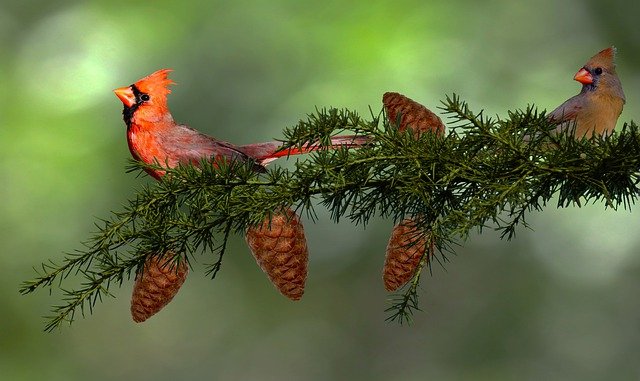
The Northern Cardinal, for instance, makes a brief metallic “chip” sound to keep tabs on its mate’s location when they’re both foraging for food. The mate will respond with the same call as reassurance that they’re nearby and that all is well.

We humans engage in the same type of behaviour. We’ll often make a short phone call or send a quick text to a loved one to keep track of how they’re doing and to reassure them that we’re all right.

I think our Creator would appreciate getting a “contact call” from us on a regular basis, too.

We have the privilege of doing so through the medium of prayer.

For many of us, however, we only engage in prayer when we’re in a crisis.

Read more

Sing While You Fly!

Birds, like humans, have different quirks.

Some birds like to have everything “just so” before they sing.

The time of day has to be just right, they have to be perched at the top of just the right tree, or they have to be within earshot of a desirable mate.

They would never think of singing if the conditions weren’t to their liking, or if they were busy doing something else at the time, like flying.

Other birds aren’t quite so picky.

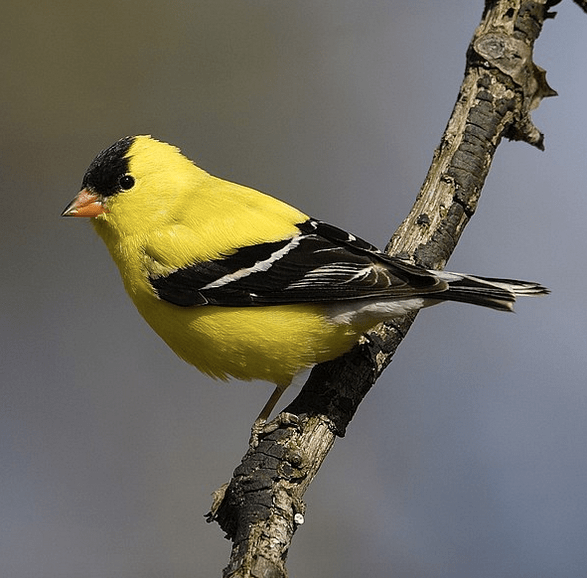
Take the American goldfinch, for example.

This handsome little songbird has some unusual traits. One of them is that his flight pattern resembles a roller-coaster instead of a level path.

Another is that the goldfinch is perfectly happy singing while he’s flying.

He doesn’t wait until just the right circumstances fall into place—this yellow fellow sings while he goes about his daily business.

Perhaps we can take a page from the goldfinch’s book?

Read more

Bloom Where You’re Planted?

Some say you should “bloom where you’re planted.”

You can get all manner of products printed with this slogan: T-shirts, mugs, posters, and notecards.

But is that always the best advice?

Maybe not. There’s something to be said for not staying in the same place for too long.

Your garden will tell you that if you plant the same type of vegetable in the same plot year after year, you’ll notice that the health of the plant and the yield it produces will begin to suffer. The plant will be attacked by more diseases and pests, and the nutrients in the soil will have been depleted by past crops of the same type.

The answer to this problem?

Crop rotation.

Don’t plant the same type of vegetable or crop in the same location several years running. Mix it up; plant something new in that spot.

What about in life?

Does God intend us to stay rooted to the same location for much of our lives?

Read more

You’re Not Insignificant to God!

When you look up at the stars in the night sky, what do you feel?

Many people say the vastness of the universe and the countless stars make them feel puny and insignificant.

In a way, that’s understandable.

The star that Earth orbits around is just one of many in the Milky Way, the galaxy in which we live. In fact, there are perhaps 100 billion stars in our cosmic “neighbourhood.”

And the Milky Way is just one of many galaxies. Estimates vary as to how many galaxies exist in the observable universe: some experts suggest a couple hundred billion, and others postulate as many as 10 trillion.

It’s impossible for us to know how many stars there are in the observable universe, but here’s the largest guess I came across: Multiplying the higher number of estimated galaxies by the Milky Way’s estimated 100 billion stars gives a possibility of 1 septillion stars in the universe (1 quadrillion in the European system). That’s a “1” with 24 zeroes after it!

The Milky Way is so enormous that, even travelling at light speed, it would take 100,000 years to travel across it. The observable universe is incredibly more vast: according to current thinking, it’s about 93 billion light years in diameter.

No wonder people feel small when they contemplate the unimaginable expanse of the universe!

But for me, this knowledge doesn’t make me feel insignificant.

It makes me feel just the opposite.

Read more

Are You a Cat or a Dog?

It’s hard to embarrass a cat. They just don’t seem to have a sense of shame.

If they’ve done something naughty, like shredded the fabric on your expensive couch with their claws, they’re not actually sorry about it. They’re just ticked off that you’re making such a big fuss about it.

Cats seem to lack the ability to be repentant.

Dogs, on the other hand, can definitely feel and show contrition.

Just take a look at the plethora of “dog-shaming” videos online.

Dog owners upload clips in which they confront their mutts with the evidence of their misdeeds. The owners come home to garbage-strewn rooms, destroyed furniture, and chewed-up shoes. The disaster area is documented on video, and then the camera pans to the dog…

The results are often hilarious.

The mutt slinks off with its tail between its legs, or else sits there looking sheepish and trying not to meet their owner’s eyes. The pooch might even try to hide in a cupboard.

Yes, dogs know when they’ve done something wrong.

The question is, do we?

Are we quick to ask God’s forgiveness when we sin, or do we justify our behaviour to ourselves and continue in our disobedience?

Read more

You Need a North Star

Polaris star trail

Many of us have GPS systems in our cars or on our phones. They allow us to pinpoint our locations on a map, letting us know exactly where we are.

But in the days before modern technology, how did people navigate? If they needed to cross an ocean, what told them where they were?

The North Star did.

More formally known as Polaris, the North Star is the brightest star in the Ursa Minor constellation. Because it’s almost in a direct line above the north celestial pole, the North Star appears to stand motionless in the sky, with the other stars seeming to rotate around it.

This made it a perfect fixed point by which to draw measurements for celestial navigation. In fact, the Old English word for the North Star meant “ship-star,” reflecting its use in helping to chart a course when sailing.

We still need a north star today.

Not to get from point A to point B in our vehicles, but to navigate the seas of our lives. When our whole world has turned topsy-turvy, we need a fixed point to focus on to keep us on a stable course.

Read more

Prayers Live On, Like Lilacs

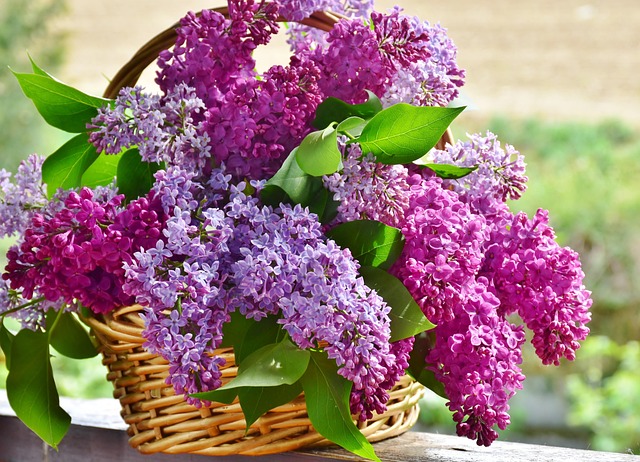
This is a special time of year in my part of Canada: the lilacs are speaking!

Lilac flowers don’t use words, of course. They announce their presence through their beautiful fragrance and delicate purple colour.

But there’s another way lilac shrubs can talk to us. Their very location can give us clues to the history of a place.

“…the story of early Canada can be read in the lilacs clustered where log cabins once stood, at the edge of abandoned fields—flowers marking time in centuries.” (from “A New Leaf,” by Merilyn Simonds)

Settlers to the northern parts of North America would often plant lilac shrubs on either side of the front door to their farmhouse. Generations or even centuries later, the building has long since been torn down, but the lilacs live on.

If you see a pair of huge lilac bushes in a field or empty lot, you can be pretty sure they used to flank someone’s front door. The house is gone, the family has moved away, but the fragrance of the lilacs they planted still fills the air.

This reminds me a bit of how prayers can live on, long after the person who prayed them is gone.

Read more

With God, You Get the Flower First!

Eastern Redbud Tree

Sometimes nature can be a bit unpredictable—things happen in an order we wouldn’t expect.

Normally, plants put forth leaves long before they produce flowers.

But some trees and shrubs flip the script, so to speak.

With certain plants, the normal sequence is reversed: the flowers come first, before the leaves have developed.

A good example is the beautiful redbud tree. It puts forth gorgeous pink flowers on its bare branches in early spring, when none of its leaves are yet in sight.

The forsythia shrub bears its bright yellow flowers in advance of its leaves, and the lovely magnolia presents its pink or white blooms before the green foliage appears. Some maples and oaks also exhibit this flower-first behaviour, although with less showy blossoms.

All of these plants give us a treat in springtime when we’re starved for colour. We get the flower first without having to wait for the leaves.

Why do some plants reverse the normal order of things?

Some trees are wind-pollinated, so put forth flowers before their bulky leaves get in the way. The same goes for flowers that need extra sunlight. Other plants produce a mass of conspicuous flowers first, unobscured by leaves, to better attract the attention of pollinating insects.

Did you know that God also flipped the script and gave us the flower first, so to speak?

Read more