Being Cruel To Be Kind

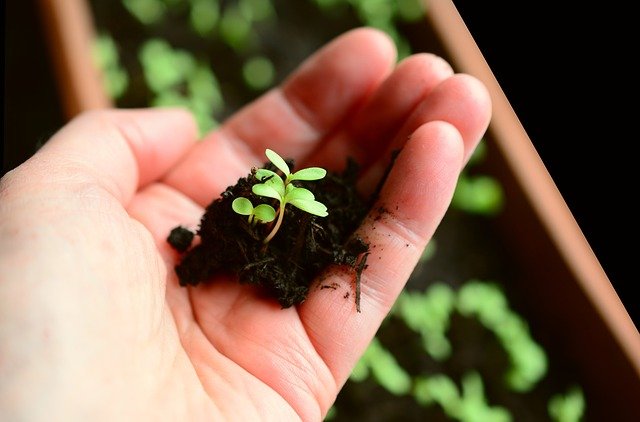
Image by congerdesign from Pixabay

Sometimes, in the garden as in life, you have to be cruel to be kind.

Perhaps like me, you’ve started seeds indoors in late winter. I have a sunny spot in a front bay window where I put my trays of seeds.

I cover them while they’re germinating to keep them warm and moist. After they’ve sprouted, I check the seedlings daily in their protected nook and make sure they’re well watered.

Life for my little seedlings is sweet.

However, I’ve sometimes made the mistake of babying my charges too much. They then shoot up too fast and get “leggy”: their stems are tall but weak.

The problem with this is that when they’re transplanted outdoors, they won’t be able to cope well with the harsher conditions in the garden: the colder night temperatures, the wind buffeting them or the rain pelting on them.

What I need to do is subject the seedlings to a bit of hardship while they’re still in their trays indoors. So I’ve learned that I should blow on them or run my hand over them to simulate wind: this will strengthen their stems. I harden them off by gradually introducing them to greater temperature fluctuations and stronger sunlight. I let them feel a bit of cold.

The seedlings may not like what I’m doing to them, but my efforts will produce stronger plants that will have a better chance of surviving and thriving once translated outside. I do them no favours if I coddle them and leave them unprepared for the hardships they’ll face outdoors.

I think God does the same with us.

Sometimes He subjects us to unwelcome things in order to toughen us up and prepare us for what lies ahead. We may not like it, but He would be an unloving Father if He didn’t do so.

Read more
Weed-Free Living

Image of dandelions by Hans Linde from Pixabay

Is it just my imagination, or do weeds actually grow faster than the flowers I’m trying to nurture?

Gardeners will know what I’m talking about. Weeds seem to be gifted with internal steroids that accelerate their growth, outpacing the delicate flowers that we’ve brought home from the garden centre.

Weeds don’t seem to be affected by lack of rain or by intense heat. They’ll grow just about anywhere. They’re speed demons of growth compared to the flowers we try to baby along with regular watering and fertilizing.

I looked into this crucial issue on behalf of readers of The Faith Cafe, and found that weeds do have some competitive advantages.

Weeds which are perennials have the benefit of established root systems that have been alive for many years; these dormant roots have a lot of stored energy. Perennial weeds grow faster and are harder to kill than annuals.

Weeds are already acclimated to the region’s soil, and are highly adaptable. They’re usually native plants that thrive in the local ecosystem, unlike plants from the garden centre which may be non-native and need time to adjust.

Weed seeds are already present in our garden soil. They bide their time until the right conditions present themselves, and then race out of the soil. They’re often excellent self-propagators and are opportunistic growers.

All these things give weeds a head start over the flowers we favour.

This got me thinking:

Why do the “weeds” of our character grow better than the fruits of the Spirit?

Are there lessons we can learn from the natural world?

Read more

Bad With Names? God Isn’t!

Photo by EvelynGiggles on Flickr CC BY-2.0

Are you one of those people who is terrible with names?

I must confess to belonging to this group as well.

When being introduced to someone new, somehow their name starts to slip my mind’s grasp only a few minutes later.

This failing bothers me, because I know that people appreciate it when you remember their names.

My late father hit on a mnemonic device to solve this problem: You should come up with some sort of image to associate with the person’s name. That will help fix it in your mind.

He figured this method was foolproof.

Until the day he was in a camera store and met an employee there named Royce.

When you hear the name Royce you naturally think of Rolls Royce, a maker of luxury British cars. So my Dad decided the best way to remember this man’s name was to picture him driving an expensive British car.

The next time my father saw Royce in the camera shop, he confidently greeted him with, “Bentley, good to see you!”

(For those who don’t know, Bentley is another maker of luxury British cars.)

So much for mnemonic devices!

Aren’t you glad that we have a God who is perfect with names?

God not only knows your name, He knew you before you were even given a name.

Read more

Clues to God’s Presence

If you’re out in the countryside, how can you tell if you’re near water?

You may be able to catch a glimpse of blue and know that you’re near a lake or pond, but sometimes trees may hide it from your view. What then?

You can use your other senses, plus search for indirect clues.

If you hear the sound of waves lapping on the shore or running water cascading over rocks, you know you’re close to water even if you can’t see it.

Hearing the call of the red-winged blackbird can be another clue, because this bird prefers habitats near water.

Your sense of smell might help you detect the presence of water, too. Wet earth gives off a distinctive scent, and the presence of algae in a lake also emits an odour that can be a tip-off.

If vegetation is blocking the sight of a pond or river, even that vegetation itself can be a clue for you. If you see lots of willow trees, you’re bound to be near water, as willows are naturally found there.

So there are things we can look for that indicate the presence of water, even if it’s hidden from our sight.

But what about when we’re trying to determine if God is near?

We might not be able to see Him directly in physical form, but are there still indications that our Heavenly Father is close by?

Yes!

Read more

The Bright Side of Storms

Photo by slgckgc on Flickr CC BY-2.0

Gardeners know that storms can wreak terrible havoc with their plant friends.

If the winds are strong enough, mature trees can be downed, leaving a gaping hole where they once stood.

In a garden, the loss of a large tree upsets the ecosystem of the area. It changes all manner of things, from the shade afforded plants in the understory, to the strength of the wind that buffets them, to the amount of rain reaching the ground. The entire microclimate is affected.

But the subtraction of a tree also presents new opportunities for a gardener.

Suddenly, more sunlight and rain can reach the area. There is space now for new plants or trees to grow that couldn’t before. Where once the gardener was limited to plants suitable only for shade, now he or she can consider roses, vegetables or other sun-loving plants.

So I suppose a storm’s effects aren’t always strictly negative for gardeners.

But what about the storms of life? Is there anything good that can come when some disaster leaves a gaping hole in our lives?

Read more

God Hasn’t Changed A Bit!

Yesterday-today-and-tomorrow plant. Wikimedia Commons CC BY-SA-3.0

Some flowers have a trick up their sleeve (or up their petals):

They’re able to change colour.

I recently noticed a beautiful flowering plant heavy with pink blossoms in a neighbour’s garden. When I walked by several days later, I saw that some of the flowers had turned a lighter creamy colour as they matured. I did a double take and had to make sure I was indeed looking at the same plant as before.

Other flowering plants have the same ability to surprise us with shifting colours.

Among them is the aptly named “yesterday-today-and-tomorrow” plant. This tropical shrub has short-lived flowers which change colour as they age. They start out as purple, then shift to lavender and finally fade to white before dropping from the plant.

While flowers that change colour can delight and surprise us, sometimes we need something unchanging and constant in our lives.

Isn’t it good to know that we can count on God to always remain the same?

Read more

5 Things A Monstera Plant Can Teach You

Photo by Maja Dumat on Flickr CC BY-2.0

Can the monstera houseplant teach us something about our faith in God?

This plant, nicknamed the Swiss cheese plant, has become hugely popular in recent times. Much sought after, it has risen to the status of an icon among houseplant aficionados.

But besides being a fun plant to grow indoors, is there anything we can learn from the monstera? Can its example help us grow spiritually?

I believe that just about everything in the natural world can teach us something that can deepen our faith. I like how Ralph Waldo Emerson put it: “Every natural fact is a symbol of some spiritual fact.”

And the monstera is no exception!

Here are 5 things this special and beloved plant can teach us:

Read more

The Comparison Trap

Image by Sue Rickhuss from Pixabay

Around this time of year, an unwanted visitor makes its way into many a gardener’s life.

I’m not talking about weeds or pests, although we certainly have to contend with those.

Rather, I’m referring to garden envy.

It starts out when we’re visiting the gardens of friends or neighbours. At first, we admire their lush plantings and attractive landscaping.

If we’re not careful, however, this appreciation can morph into envy. We think, I wish I had roses as beautiful as hers. Or, if only I had room in my yard for a gazebo like he does.

This envy can then develop into disenchantment with what we have. Why am I stuck with so much shade in my yard? Why can’t we afford an inground pool?

We can even become resentful of our comparatively meagre gardens, when we should be grateful to have a garden at all: many people don’t.

Envy is something we need to nip in the bud, whether it relates to our gardens or our lives.

We get into trouble when we start comparing ourselves to others. This is true even in spiritual matters.

Read more

Do Not Disturb?

Columbine Flower. Image by Paul McGowan from Pixabay

Gardeners know that every plant species has its own personality.

Some are easygoing and low maintenance; they’ll happily bloom wherever you plant them.

Others, however, are stubborn and picky. They simply will not cooperate when you try to transplant them.

When they’re comfortably settled in the soil they call home, they’re highly resistant to being moved. They might as well have a sign hanging on their branches that says, “Do Not Disturb.”

I found this out the hard way with some columbines in my yard. Try as I might, I can’t get them to transplant successfully to another location. It’s like they’d rather die in protest than go along with my plans.

We may not want to admit this, but some of us are a lot like my columbines.

Sometimes God wants us to make a major change in our lives to carry out His purposes and plans. It may be to change where we live or what we do.

But we often stubbornly resist His instructions. We dig in our heels in protest at any unwanted disturbance to our lives, even if we know the new course of action is something God would like us to undertake. We simply refuse to cooperate or obey.

Read more

The Master of Deception

Peacock Butterfly. Image by 👀 Mabel Amber from Pixabay

If you’re out for a walk in nature, you may not realize how much you’re being tricked.

You may think you’ve got an accurate picture of the natural world around you, but in many cases, you’re being fooled.

That’s because some creatures are masters of deception.

Stick insects camouflage themselves by mimicking the shape and colour of twigs on a tree. Moths may blend in so well with the bark pattern of the tree they’re resting on that you’d never know they’re there.

The killdeer bird fakes having a broken wing to make a predator think she will be an easy meal, thereby luring it away from the vulnerable chicks in her nest. Then she suddenly flies away, to the surprise of the predator.

Even beautiful butterflies get in on the act of trickery. Some species have markings on their wings that look like huge eyes. The eyespots may discourage a predator from attacking by making it think the insect is in fact a much larger animal.

These false eyes may serve another purpose: to encourage an attacker to aim for the wrong target. The markings deflect an attack away from the butterfly’s head or body to parts less vital for survival, such as its wing margins. By using this deception, the butterfly outwits its enemies and is able to fly away with a torn wing at worst, but otherwise relatively unscathed.

Butterflies aren’t the only creatures to use misdirection in this way:

Satan does, too, and we need to be wise to his tactics. We may not realize how much he’s tricking us.

Read more