God Knows How To Get The Word Out

Image of milkweed pod and seeds by HeungSoon from Pixabay

Plants are ingenious things.

They have numerous ways of dispersing their seeds to grow new plants, methods that go far beyond simply dropping a seed to the ground from the mother plant above.

Some plants sport wings on their seeds (called samaras) to enable the wind to carry them farther away from the mother tree than regular seeds could go. The maple tree uses this method of seed dispersal: once released from the tree, its seeds spin through the air like helicopters to find a new home.

Other seeds, like that of the milkweed, drift on the wind using their own downy parachutes. Dandelions do the same (much to the chagrin of those trying to maintain a dandelion-free lawn!).

Some seeds come wrapped in tasty packages, like that of the raspberry. Animals or birds eat the berry, then excrete the seed later on (along with some “fertilizer”).

The burdock plant takes another tack: its seeds have sticky hooks that attach to an animal’s fur as it passes by. The seed essentially “hitchhikes” to begin life in another location.

Another intriguing method of seed dispersal is used by the jewelweed plant. Its seed pod “explodes” when touched, flinging the seeds far and wide. It’s no coincidence that jewelweed also goes by the name “touch-me-not.”

I guess we can’t put nature in a box when it comes to seed dispersal. It uses a variety of creative ways to achieve its goal of propagating new plants.

We can’t put limits on God either.

He uses many different ways to plant the seed of the Word of God in people’s hearts.

Read more
The Only Horoscope You’ll Ever Need

Image by Hermann Traub from Pixabay

What’s your astrological sign? Are you a Libra or a Leo?

Do you read your horoscope daily and make life decisions based on that advice?

Astrology teaches that the time cycle in which you were born determines your personality, and to some extent the course of your life. But this might leave you with a sense of being powerless, at the mercy of impersonal forces beyond your control.

Isn’t there something better to help you navigate your way through life?

I believe there is.

How would you like a horoscope that is valid for every day of the year, no matter when you were born?

One that contained truths you could always rely on, was written by Someone who knows you and loves you, and is not determined by inanimate objects like stars or an impersonal and arbitrary time cycle?

Read more

Look Beyond The Obvious

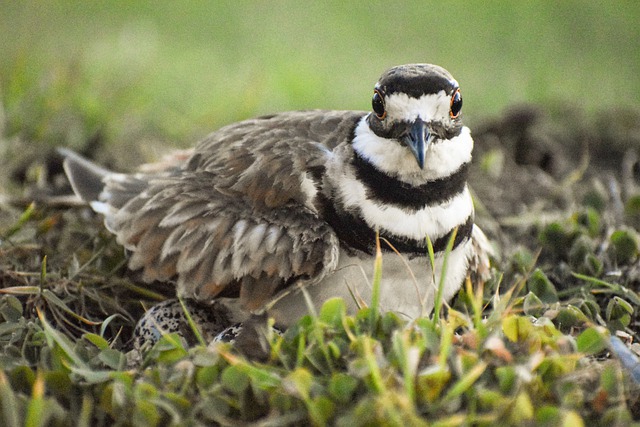
Image of a killdeer bird by Esteban Rodriguez from Pixabay

Sometimes the most innocent-looking birds can be the craftiest.

Take the killdeer, for instance.

This bird, a type of plover, has cheery horizontal stripes across its front in bold black and white. The rest of its body is decked out in gentle brown and buff colours. It has what look to me like honest, kind eyes.

It seems like a bird that has nothing to hide.

But looks can be deceiving.

The killdeer isn’t above pulling a fast one on you.

If you or a predator gets too close to its nest, which is invariably on the ground, the killdeer puts on an act worthy of an Oscar-winner.

It pretends to be injured, holding its wing out at an awkward angle while emitting plaintive cries of distress.

This “broken-wing act” distracts the predator and lures it away from the bird’s eggs or chicks in the nest.

So if you want to take a peek at the killdeer’s nest, you have to look beyond the deception. You have to realize there’s something the bird doesn’t want you to see; hence the hullabaloo.

You have to have the discipline to not let yourself be distracted by the bird’s conniving song and dance.

I think sometimes Satan works a bit like the killdeer.

There are things he doesn’t want us to see or realize.

So he deceives us.

Read more

What Will You Grow: Fear or Faith?

Image by HeungSoon from Pixabay

With the arrival of spring, gardeners are faced with some difficult decisions:

What should I grow in my garden?

You only have so much square footage and only so much soil.

You have to make hard choices about what plants will be given space, and which ones you’ll have to forgo this year.

Maybe you’d like to grow dozens of pink roses in your garden plot. That’s a great idea: it would look gorgeous and smell beautiful.

But then you’d have to give up on the idea of growing a vegetable garden in that spot. You simply don’t have the space to do both.

If you dream of having a wildflower meadow in your yard, you’ll have to skip your plan of creating a formal French garden. You have enough room for one or the other, but not both.

Similarly, you only have so much real estate in your mind.

You have to make decisions about what you’ll let take up space.

What will you grow there?

Faith or fear?

They both grow in the same soil, so to speak: uncertainty.

But only one of them produces a harvest that’s worthwhile.

Read more

Same Spider, Different Silks

Dew drops on spider’s web. Image by Pezibear from Pixabay

When you let your mind wander, do you ever find yourself asking odd questions?

Such as, “Why doesn’t glue stick to the inside of the bottle?”

Or, “How do you grow a seedless fruit?”

Or how about this one:

“Why don’t spiders get caught in their own webs?”

I can’t help you with the first two, but I do have an answer for the third.

When spiders build their webs, they draw out silk from their abdomens with six spinnerets. The key is that they’re able to emit different types of silk for different purposes.

The spider first constructs a frame for its web. Then, it lays down spokes of non-sticky silk to use as walkways.

Next, the spider weaves spirals of connecting lines between the spokes using sticky silk. This is for ensnaring small insects that it will later eat. The spider knows to avoid walking on these gluey strands.

A spider can also spin stretchy silk for the centre of its web, or extra-strong silk for the anchor lines.

Whichever type of silk the spider decides to spin, it all has a specific purpose. And even though the types of silk differ, they all come from the same source.

I think we can borrow this analogy to describe how we can receive quite different things from God’s hand.

Read more

God Can Use Anything And Anyone

Image by Terri Cnudde from Pixabay

Now that spring has arrived, the birds are starting to build their nests.

It’s delightful to watch them collect items to fashion into a new home.

They’ll mostly gather twigs and leaves as their construction materials. They might also add moss, plant fluff, dried grass, or feathers to make the nest soft for their chicks.

But sometimes birds use unexpected things when constructing a home.

They’ve been known to use mud, pet fur, discarded snake skins, and spider silk for their nests. They’ll even use man-made items, such as plastic, tinsel, dryer lint, or even purloined underwear from a clothesline!

Birds don’t seem to count anything out: they’ll use the most unlikely things to achieve their goal.

And so does God.

God also uses unexpected things and unlikely people to fulfill His purposes. The Bible is chock-full of examples of this:

Read more

Mustard Seed Faith

What are the smallest seeds on earth?

You might guess mustard seeds. Close, but not quite.

How about poppy seeds?

They’re very tiny. You’ll find out how extremely tiny they are if you accidentally spill them on the floor. You’ll discover that you can’t pick them all up by hand: it’s hopeless. You have to bring out your vacuum. (Don’t ask me how I found this out!)

Actually, the tiniest seeds on earth are said to be those of certain orchids from the tropical rainforest. Each of these dust-like seeds weighs only one 35 millionth of an ounce. They’re smaller than a grain of salt.

At the opposite end of the spectrum, the prize for the largest seed on earth probably goes to the Coco-de-Mer palm tree of the Seychelles Islands. One of its seeds can weigh up to 45 pounds.

Mustard seeds are a bit larger than poppy seeds, but they’re still exceptionally tiny compared to most seeds.

They’re so small that Jesus used them as an example in one of His teachings. Surprisingly, He said that if we have faith the size of a mustard seed, we could see great things accomplished.

How is this possible?

Because when we have even a small amount of pure faith, God uses it as a force multiplier. Our tiny contribution somehow provides the spark for God’s power to show up in a big way.

Read more

The Blessings Of Barren Seasons

Image by Henning Sørby from Pixabay

Looking out the window here at The Faith Cafe, you see that the trees in the park display a stark beauty.

Stripped of their leaves in winter, they stand amid the snow looking rather barren and forlorn.

But a funny thing happens when a tree has lost its leaves: you can see things that you didn’t know were there before.

Going for a walk in your neighbourhood in winter, you might see that the bare trees are now revealing things that had been concealed by summer’s foliage. You might be surprised to see a bird’s nest the size of a teacup nestled in the bare branches; you’d passed beneath it dozens of times without knowing it was right above you.

Or you might see a larger nest, called a drey, which was built by squirrels. You’d had no idea that the squirrels had been raising a family there in their hidden home, perhaps in a tree just feet from your own house.

With the trees denuded of leaves, you might spot a kite or balloon that had been caught in the branches months before. Only winter could reveal this lost object. Maybe it belonged to your child: “So that’s where it went!” you think.

Or you realize that there are dead branches in some of the trees around your house that need removing. You can only see the problem now that the dense foliage has been stripped away.

So it is with us, too.

Sometimes there are things we can only see when we hit a barren season in our lives, brought on by a loss, a breakup, a setback, or a disappointment. Sometimes it’s only when something has been stripped away from us that other things are revealed.

Read more

Of Lions And Lambs

Image by David Mark from Pixabay

Do you have some weather sayings or proverbs in your area?

Maybe you’ve heard ones like “April showers bring May flowers,” or “Clear moon, frost soon.”

Perhaps you know this weather proverb: “Red sky at night, sailor’s delight. Red sky in morning, sailors take warning.”

Here in the northern hemisphere, we say “March comes in like a lion but goes out like a lamb.”

This saying might have started out referring to the stars. The beginning of March sees the constellation Leo (the lion) rising in the east. The end of the month features the constellation Aries (the ram or lamb) setting in the west.

Over time, the saying shifted to have more of a weather connotation. The start of March is often cold and stormy, fierce like a lion. By the end of the month, the weather has turned more calm and gentle, almost lamb-like.

This weather proverb doesn’t always hold true, of course; sometimes March starts out like a lamb but ends like a ferocious lion!

There is, however, a Biblical promise about these two animals that you can bank on:

Jesus came to earth first as a lamb, but will return as a lion.

Read more

One Hundred Words for Snow (and for God)

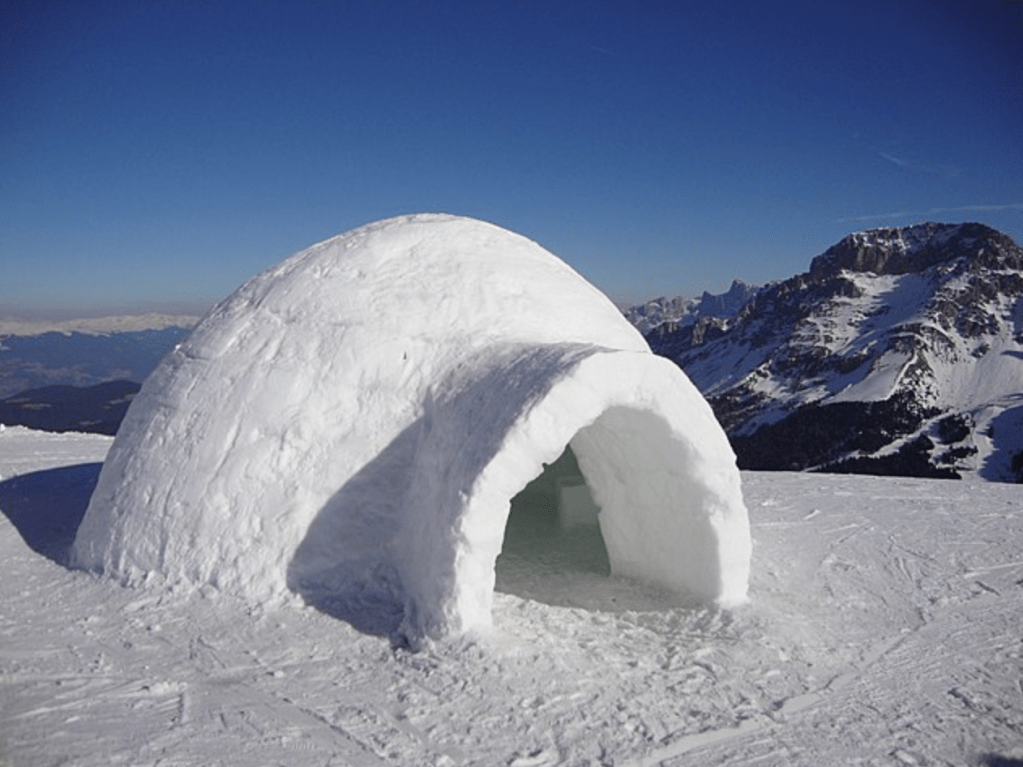
Image by Maurizio Ceol, Wikimedia Commons, CC BY 3.0

They say that the Eskimo and Inuit peoples have over 100 words for snow.

Is this actually true, or is it just a cliché?

There has been heated debate on whether the Eskimos really do have that many distinct words for snow. I consulted Giles Whittell’s 2019 book “Snow: A Scientific and Cultural Exploration” for information.

Whittell refers to a recent contribution to the question by the Smithsonian Arctic Studies Center. They determined that in Canada’s Nunavik region, the Inuit there have 53 distinct words for snow; in the Central Siberian Yupik dialect they counted 40.

Among the words listed in the Yupik dictionary are:

“kanevvluk” = fine snow
“navcaq” = snow formation about to collapse
“qanisqineq” = snow floating on water
“utvak” = snow carved in a block, as for an igloo

Clearly, those living in the extreme north do have far more words to describe snow than those who makes their homes farther south.

As Whittell says, “…people learn to describe in greatest detail what matters most to them.”

I suppose that the number of words a culture has to describe something tells us a great deal about the importance they place on it.

Read more