5 Messages Christians Send When They Compromise

A little compromise never hurt anyone, did it?

I don’t mean the kind of beneficial compromising we do to make a relationship more harmonious or a business arrangement go more smoothly.

I’m getting at the negative type of compromising that often seeps into our Christian walk.

For instance, we might skimp on practices like Bible reading, praying, or even attending church if there are things we’d rather spend our time on.

At work, we might “go along to get along,” putting up with ethical practices that aren’t congruent with our Christian beliefs.

At school, we might keep quiet about issues we don’t agree with because we’d sooner not rock the boat.

In relationships with non-Christians, we might adopt behaviours that are at odds with our faith just to fit in.

Ring any bells?

We might think that these types of compromises are harmless, but our behaviours are actually sending messages, inadvertent though they may be.

Read more

God Will Go Ahead of You

Do you ever get a bit anxious when faced with something completely new?

Like how to find a new job in an economy that’s unlike anything you’ve seen before? Or how to navigate a world that’s turned upside-down?

Many of us shrink from the prospect of entering uncharted territory.

And we’re not the only ones: even some animals balk when confronted with something unfamiliar.

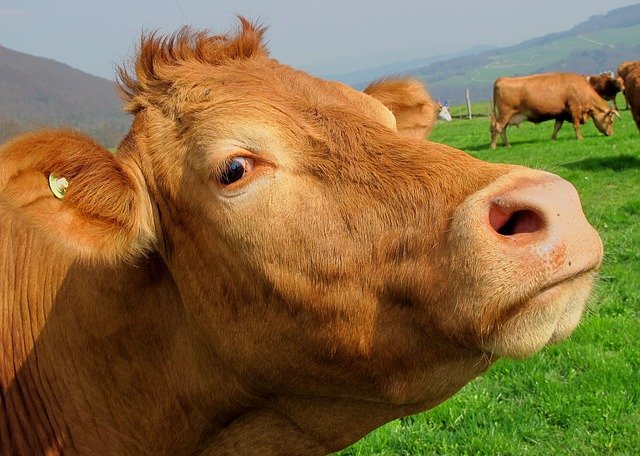
Cows are notorious for disliking disruptions to their routines and environments. They’re particularly averse to new gates. Cows are made so nervous by new entrances and openings that they’ll stubbornly resist going through them.

This trait is so well known that it’s given rise to a phrase: “Like a cow looking at a new gate.” It means to view something with bewilderment and confusion, as though to say, “Are you serious? I’m not going through that.”

Do you feel this way when faced with the uncertainties that a new situation may bring? Is fear of the unknown keeping you from stepping forward in faith to realize your dreams?

Fear has a way of paralyzing us, so that we stay stuck where we are instead of trying something new.

But we needn’t be afraid.

God will go through the gate ahead of us.

Read more

The Promise of Return

Photo of Monarch butterfly by Peter Miller on Flickr CC BY-NC-ND-2.0

One of the greatest natural events on Earth is now underway: the migration of the monarch butterfly.

Each fall, millions of these colourful insects set off from their summer breeding grounds in the northeastern U.S. and Canada for a gruelling journey. They travel thousands of miles across North America all the way to Mexico, where they’ll spend the winter.

Many people believe that the monarch butterflies that leave in the fall are the same ones that arrive back in the spring, but this isn’t so. Individual butterflies don’t make the entire round-trip journey. The ones that migrate from the northeastern part of North America in fall will never return.

Rather, their great-great-grandchildren are the ones who will arrive the following spring, as successive generations keep making their way north. The entire annual migration cycle of the monarch takes about four generations.

Perhaps I’m being fanciful, but I can imagine monarch butterflies telling their children of the awesome journey they’ll be undertaking. They may say that they’ll only be able to go part of the way with them, but to keep the faith and keep going.

Maybe they encourage their children to tell successive generations to keep believing in the promise of return. Because eventually, their descendants will see the promise fulfilled.

Aren’t we in a similar situation as believers?

We’re living in a time when we’re awaiting the fulfillment of a promise, the promise of Christ’s return. We’re not sure exactly when Christ will come back to Earth, but He has promised that He will.

Read more

What Geese Can Teach Us

Photo by David Mark on Pixabay

Usually, the first signs of fall are visual: the leaves on trees start to redden, the fall asters begin blooming, and the sun is at a noticeably lower angle.

But sometimes you can hear the onset of fall.

There’s a chill in the air hereabouts this week, and it won’t be long before we hear the sound of Canada geese honking at each other as they fly overhead, preparing to go south for the winter. They’ll fly to warmer climes in their iconic V-formation, honking the whole trip.

But why do they honk at one another as they undertake their momentous journey, and why fly in a V-shape at all?

The lessons geese can teach us have long been used in leadership seminars, but I think they apply to our Christian walk as well.

The V-shape that Canada geese fly in actually has aerodynamic benefits to the flock. As each goose flaps its wings, uplift is created for the bird following it. By flying in a V-formation, the flock can add over 70% more flying range than if each bird was flying on its own.

As Christians, we’re all “flying” in the same direction, pointing others to Christ. We have a common purpose, to bring others into the Kingdom, and a common destination, our heavenly home. We’re more effective when we work together in Christian community, because we give one another “uplift” and turbocharge one another’s efforts.

Read more

We Grow Better Together

Image by Jill Wellington from Pixabay

As gardeners know, some plants need their best buddies nearby in order to flourish.

It’s been known for centuries that planting certain combinations of plants together can help the garden prosper. This practice is known as “companion planting.”

For instance, planting alliums such as garlic underneath roses can protect the latter against blackspot and aphids. When lilies and roses are planted together, the scent of each improves.

Yarrow and foxglove have a tonic effect on the plants in their vicinity. Yarrow helps fight off pests, attracts beneficial insects, and improves the soil. Likewise, foxglove stimulates the growth of nearby plants and helps them build up resistance to disease. Planting foxglove under fruit trees improves the storage qualities of the fruit.

Perhaps the ultimate companion plant is marigold. It has traditionally been grown with tomatoes to keep them healthy and produce a better crop. Marigold’s pungent odour disguises the scent of vegetables from pests, preventing them from homing in, and its root secretions kill nematodes that attack plant roots.

Who wouldn’t want such stalwart companions in their corner?

God wants us to have buddies like these on our team, too.

Read more

The Only Horoscope You’ll Ever Need

Image by Hermann Traub from Pixabay

What’s your astrological sign? Are you a Libra or a Leo?

Do you read your horoscope daily and make life decisions based on that advice?

Astrology teaches that the time cycle in which you were born determines your personality, and to some extent the course of your life. But this might leave you with a sense of being powerless, at the mercy of impersonal forces beyond your control.

Isn’t there something better to help you navigate your way through life?

I believe there is.

How would you like a horoscope that is valid for every day of the year, no matter when you were born?

One that contained truths you could always rely on, was written by Someone who knows you and loves you, and is not determined by inanimate objects like stars or an impersonal and arbitrary time cycle?

Read more

Supercharge Your Prayers

Fertilized vs. unfertilized rows of maize. Wikimedia Commons, Public Domain

If you’re a gardener, you might sometimes look at your plants and decide that they’re missing something.

They need more “oomph.”

That’s where fertilizer comes in.

It can supercharge your flowers and vegetable plants by providing them with nutrients, such as nitrogen, that might be lacking in the soil.

With the addition of fertilizer, your plants can grow to their full potential and become as fruitful as they were meant to be.

Similarly, our prayers sometimes need more oomph, too.

But how do we give them that? How do we go about supercharging our prayers?

Read more

How To Pass The Baton

Image by Thomas Wolter from Pixabay

Have you ever run a relay race?

If you have, you’ll know that how well your team passes the baton matters just as much as how fast you all run.

I participated in a few relay races during high school when I was on the track team, and learned that there’s a knack to it.

When passing the baton to your teammate, you have to make sure that they’re up to speed first: at a sprint. You can’t hand off the baton at a standstill or even at a jog or your team will fall behind.

Therefore, we were taught a method to use at track meets when coming up behind the next runner on our team. We would shout out the name of our particular school, then say, “Go!”

Our next runner would immediately start sprinting with one hand behind them, ready to grab the baton in the passing zone. They wouldn’t look back at us, but simply keep running and power forward once we’d put the baton in their hand.

I think some these tips can apply to how we “pass the baton” to the next generation of believers in our spiritual race.

Read more