Bloom Where You’re Planted?

Some say you should “bloom where you’re planted.”

You can get all manner of products printed with this slogan: T-shirts, mugs, posters, and notecards.

But is that always the best advice?

Maybe not. There’s something to be said for not staying in the same place for too long.

Your garden will tell you that if you plant the same type of vegetable in the same plot year after year, you’ll notice that the health of the plant and the yield it produces will begin to suffer. The plant will be attacked by more diseases and pests, and the nutrients in the soil will have been depleted by past crops of the same type.

The answer to this problem?

Crop rotation.

Don’t plant the same type of vegetable or crop in the same location several years running. Mix it up; plant something new in that spot.

What about in life?

Does God intend us to stay rooted to the same location for much of our lives?

Read more

Give It Time

Antique clock photo by Wallpaper Flare

Do you get the feeling that society is becoming too impatient?

We seem to expect instant results these days: immediate responses to our texts or emails, same-day delivery for things we order, or instantaneous loading of videos or web pages. In fact, a study showed that a YouTube video that loads slowly will start losing viewers after two seconds.

The problem is that sometimes our impatience with technology gets applied to people, too. We expect people to change quickly, and if they don’t, we lose patience with them and give up on them.

This reminds me of the tale of the handkerchief tree.

Called the dove tree in its native China, it became known to Western visitors in the late 1800s, who were entranced by it. The handkerchief tree features stunning white bracts surrounding its flowers, which resemble doves, ghosts or fluttering handkerchiefs, hence its name in the West.

European botanists in China collected the seeds and brought them back home, keen to grow such a gorgeous tree. One gardener planted the seeds, but was disappointed to find after a year that they hadn’t sprouted into seedlings. Figuring that the seeds must be no good, he discarded them by dumping them onto his compost pile, then forgot about them.

To his surprise, two years later he saw a bunch of seedlings on the compost pile. They were from the handkerchief tree. They had sprouted after all!

What he didn’t know was that seeds of the handkerchief tree have what’s called a “double dormancy”: they require two years to germinate, unlike most seeds which will sprout within the first year.

He had written them off too soon.

Don’t we do the same with people sometimes?

Read more

The J-Turn

Image by Kahl Orr from Pixabay

I’ll bet that for many of us, car chases on TV shows or in films are a guilty pleasure.

There’s invariably a suspenseful moment where it looks like the bad guys have the heroes at their mercy: they’re coming at the protagonists head-on. The good guys are forced to throw their car into reverse to escape their pursuers.

It seems like the baddies have the upper hand, because our heroes are at the disadvantage of driving backwards.

But then comes the thrilling moment when the good guys make a 180-degree reverse turn, spin their car around, and peel off facing forwards without losing any speed. The bad guys are left in the dust.

Our heroes have just performed a “J-turn.”

This evasive driving technique is a staple of almost every action film with a car-chase scene. It was made famous in the old detective show “The Rockford Files,” in which it was Jim Rockford’s signature maneuver. The J-turn is also called the “reverse 180” or simply “The Rockford Turn.”

The master of J-turns in the Bible was none other than Jesus.

Although he never drove a car, Jesus was adept at rescuing people by suddenly reversing their situation.

Read more

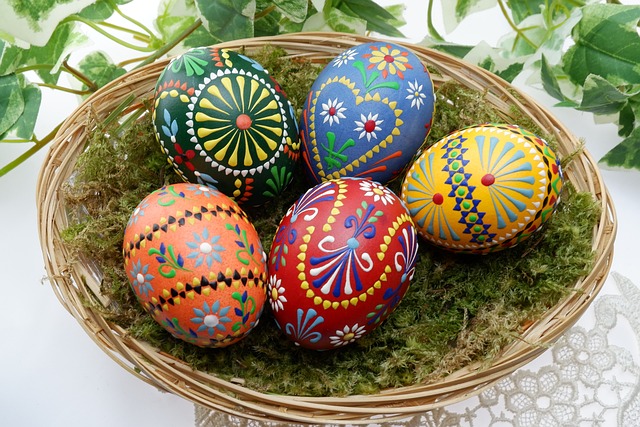
New Life From Broken Eggs

Image by Kornelia Thor on Pixabay

There is often great beauty in simple things. Take the egg, for instance.

Even a plain white egg is pleasingly shaped, adorably sized, and a perfect blend of form and function.

Add some decoration, and you’ve got a small masterpiece.

Countries such as Ukraine have made an art out of decorating eggs as an Easter tradition.

Eggs “decorated” by God have a beauty all their own. There’s a charm to naturally speckled bird eggs that is irresistible.

You’d like to keep them intact forever, enjoying their freckled surface and gentle colours for as long as possible.

But if the eggs perpetually remained in the same state and were never broken open, you’d miss out on an even greater joy: you’d never get to see the chick emerge.

Sometimes you have to let go of something you love to receive an ever greater blessing.

This is something the disciples had to learn at the first Easter.

Read more

Start As You Mean To Go

Image by morzaszum from Pixabay

Have you ever heard the phrase “start as you mean to go on”?

Maybe your parent or teacher taught it to you. But what exactly does it mean?

It means to begin doing something in the same manner that you intend to continue doing it: to set a consistent pattern of behaviour right from the start.

That way, everyone will know what to expect from you, and they won’t end up disappointed.

Many of us have a hard time being consistent. We start out the new year with grand resolutions about exercising more, being a better parent, or reading the Bible.

But then our enthusiasm wavers, we get busy, and our resolutions fall by the wayside.

What about Jesus? Did Jesus start as He meant to go in His earthly ministry?

Let’s take a look at His first miracle and see what we find out.

Read more

Some Things Never Change

Image by mabi2000 on Flickr. by CC BY-SA 2.0

Has your head been spinning with all the changes the world has undergone in the past several years?

We stumble through one crisis, only to find another totally unexpected one emerge. We wonder if life will ever truly be the same again.

It’s at times like these that we need something that never changes, much like conifers.

During the winter, when deciduous trees are bare, I’m thankful for coniferous trees. These loyal friends, like the spruces, pines and firs, still have their mantle of green, which they’ll keep year-round. These silent sentinels might not be flashy, but we can count on them not to change.

God’s character is like that, too.

When the world seems to be in turmoil, and life is changing in ways that are distressing and unpredictable, we need something unchanging to hold on to. That something is our eternal Heavenly Father.

Read more

Get Ready For God To Act

Image by webvilla from Pixabay

When you read a cake or muffin recipe, it will usually instruct you to preheat your oven and get your baking pans prepared before describing how to make the dessert itself.

But why do it in this order? Why not make the batter first, and let it sit there in the bowl while you leisurely grease or line the baking pans and let the oven slowly heat up?

There’s a very good reason to have everything prepared before you start the actual baking, and it has to do with how leaveners behave.

As soon as a raising agent like baking soda comes into contact with the liquids in your cake batter, a chemical reaction starts to take place. Gases are generated, and bubbles begin forming. You want those bubbles to stay trapped inside the cake to give it loft and airiness.

If you let the batter sit there on the counter for too long, the gases would escape into the air. This would prevent your finished cake from being as light and fluffy as it could be. So as soon as the leavening agent is added and mixed in, put the batter into the prepared pan and get it into the heated oven as quickly as you can.

It’s the same way in life, isn’t it?

When God adds the circumstance or person that will be a catalyst to change your situation, things often begin moving very fast. If you’re not ready, it might catch you off guard. You may end up stumbling instead of stepping confidently into the new level God has in mind for you. You might not rise as high as you could have.

Read more

Shift Your Perspective

Mallard duck. Image by Ralphs_Fotos from Pixabay

Among the most spectacular aspects of nature for me are its colours.

I’m continually wowed by the vivid colours found in nature, such as the brilliant red plumage of the Northern cardinal.

The cardinal’s red feathers, which come courtesy of pigments, look the same when viewed from any angle. But there’s another source of colour in nature that is even more mesmerizing:

Iridescence.

With iridescence, the hue of something changes when seen from different angles. You’ve probably experienced this shimmery optical phenomenon yourself when looking at certain insects, butterflies, birds, or even soap bubbles.

A good example of iridescence is the head of the mallard, a common duck found in the northern hemisphere. Its head appears to be a bright emerald green at first, but if you shift your angle of observation, it can appear green-gold, blue, or indigo.

It all depends on your perspective.

Maybe there’s a little lesson here for us.

If we shift our perspective about our own situations, we can see beauty that we didn’t know was there.

Read more

Fast Or Slow, God Is Always At Work

Image by Valiphotos from Pixabay

If you look out the (virtual) window here at The Faith Cafe, you can see the leaves starting to change colour on the trees outside.

The tops of the maple trees are starting to blush with red. There’s a hint of yellow among the linden leaves. And the sumacs are beginning to fire up in vivid shades of orange.

This change creeps in gradually, however. At first, you barely notice fall coming on. Weeks from now, though, the trees will be ablaze in vibrant yellows, oranges, and reds. The difference from how they look today will be dramatic.

Oftentimes, I think this is the way God works in our lives.

He is slowly but surely leading us through a process of change and sanctification.

We may not notice that aspects of our character are being transformed, because the change is so gradual. One day, however, you look up and realize how far you’ve come and what amazing things God has done in your life.

Read more

An Avalanche of Blessings

Image by Tatjana Posavec from Pixabay

Avalanches are mysterious things.

The snow on the mountains appears static and unchanging. From day to day, nothing looks different. It seems like the status quo will continue as before.

But then all of a sudden, a mass of snow and ice breaks loose and barrels down the hills. Sweeping change happens in a flash, seemingly coming out of the blue.

There was no hint that this would happen.

Or was there?

Underneath the surface, things were going on that we couldn’t see. Perhaps the composition of the snowpack was changing, the load was becoming too great, or sublayers were weakening through melting. From above, we might not be able to tell that the snowpack was becoming increasingly unstable.

But it was now being held in such precarious tension that at any moment a tipping point would be reached. It would be enough to set the whole thing off, leading to a massive snow slide.

Do you ever feel that you’re in a period in your life where nothing seems to be happening? Despite your prayers for change, everything looks the same from day to day.

Looks can be deceiving.

When Jesus is in the picture, sudden change may be on its way, perhaps even an avalanche of blessings.

Read more