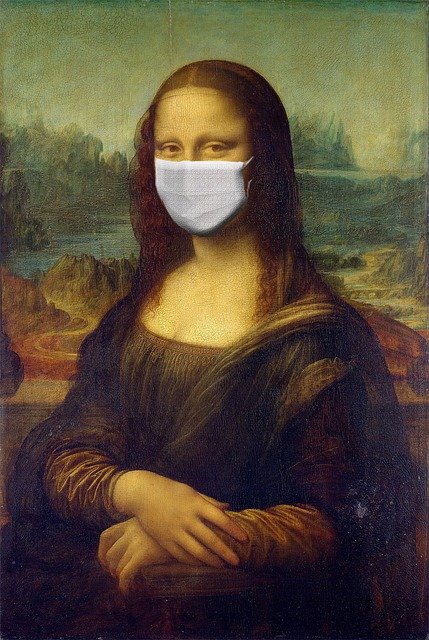
Divine Forgetfulness

Image by Tumisu from Pixabay

Does God have a bit of a memory problem?

It would appear so, according to the Bible.

Several Scriptures tell us that when God forgives our sins, he also forgets them.

Isaiah 43:25 tells us that God blots out our transgressions and remembers our sin no more.

Hebrews 8:12 echoes this: “And I will forgive their wickedness, and I will never again remember their sins.”

But if God’s memory of the sinful things we did is wiped clean, why isn’t ours?

Why didn’t He arrange it so that we can’t remember our shameful deeds, either?

I’m sure many of us would love to have amnesia about our moral failures, but God knows that this isn’t best for us.

I think there are several reasons for this:

Read more
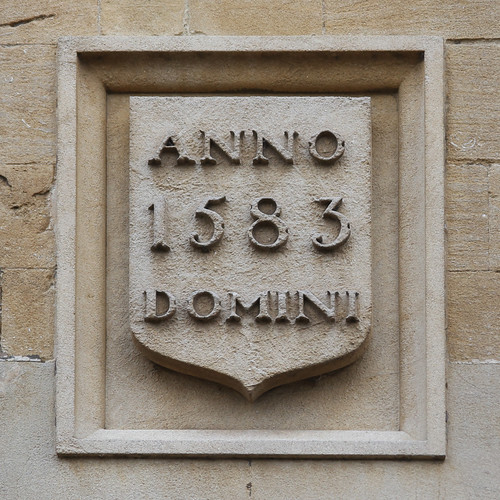
Create Your Own BC/AD Pivot Point

Image of Anno Domini inscription on Windsor Castle, England, by Leo Reynolds via Flickr CC BY-NC-SA 2.0

It’s natural to divide your life into “before” and “after,” isn’t it?

We mentally calculate whether something happened before or after certain important events in our lives.

We might say that such-and-such happened before we moved to Boston, or after we got married. We may recall that another thing happened after we had our son but before the twins were born.

Ancient cultures did something similar. Those with monarchies would mark events in relation to what king was on the throne at the time. They’d say that something happened in the 9th year of the reign of King so-and-so.

Certainly, most of us will divide our lives into pre-and post-pandemic eras. March of 2020 was a clear demarcation point between our previous “normal” life and one dominated by COVID-19.

The dividing lines of our lives will be different for all of us, but what most of the world has in common is the use of the same calendar system to mark off years. This system has its own before-and-after pivot point.

For instance, most of us just celebrated the start of AD 2022.

What does the “AD” mean, anyway? Or “BC” for that matter?

Read more

Are You On The Naughty Or Nice List?

Image by Jill Wellington from Pixabay

Are you on Santa’s “Naughty” list or his “Nice” list?

Sometimes it’s hard to know, isn’t it?

You shovelled the snow off your elderly neighbour’s walkway, so that counts as nice.

But on the other hand, you greedily ate half a pan of freshly baked brownies before sharing them with your family. Not so nice.

You made up for that by running errands for a sick friend, and volunteering to work late at the office to help finish a project. Definitely heading well into “nice” territory!

But then you lost your temper at your spouse, fibbed to get out of visiting your mother-in-law, and illegally parked your car in a disabled space while you dashed into the store to buy milk. Uh-oh! Looks like you’re squarely back on the naughty list.

With Santa, it’s hard to know where you stand on the naughty/nice spectrum.

That’s why it’s good to know that, if you’re a believer in Jesus, there’s only one list:

Forgiven.

Read more

When You Can’t See God’s Face

Image by Sumanley xulx from Pixabay

I don’t know about you, but I still have trouble recognizing acquaintances when they’re wearing a mask.

One of the unusual things this pandemic has taught us is just how much we rely on a person’s whole face to clue us in to who they are.

When someone wears a mask, we’re missing half the visual information we normally get from their features. It takes us longer to cotton on to who it is.

We waltz past someone, glance at the top half of their face above their mask, and think they look vaguely familiar.

“That’s not so-and-so, is it?” we wonder, as we keep walking.

Too late, we realize it was so-and-so. We can only hope they weren’t offended that we sped past them without a hello.

This pandemic has been unnerving in many ways. Mask-wearing has robbed us of some of the crucial information we need to identify people quickly. Not only that, masks also deprive us of the ability to see people smile.

Do you ever feel like you’re only seeing half of God’s “face,” as it were?

Has hardship obscured His features from your sight? Do you long to see Him smile upon you again?

Read more

Watch the Impossible Happen

Image by Josef Pichler from Pixabay

They say that it’s impossible for bumble bees to fly.

The theory goes that their weight and size are too great for their tiny wings to support, so according to the laws of aerodynamics they shouldn’t be able to get off the ground.

The only problem is, no one has told the bumble bees that.

They seem to have no difficulty in buzzing about in the air from flower to flower, collecting pollen and nectar to bring back to the hive.

So how do they do it, when physics would seem to suggest that they can’t?

For a long time, this was a mystery to us. Eventually we discovered that bumble bees actually don’t defy the laws of aviation: they simply fly in a different way than a plane or bird does.

We learned that the propeller-like way they beat their wings creates an invisible force above them, like a mini-tornado or -hurricane. This vortex actually sucks them upward, giving them lift in spite of their weight.

There was more going on than met the eye, which allowed the “impossible” to happen.

Likewise, when we believe in God, there is more going on in our lives than we’re aware of.

When God is working in your life, sometimes He will cause the impossible to happen, even when you can’t see how it could.

Read more

The Law of the Universe

Newton’s cradle, a device which illustrates conservation of momentum and conservation of energy. Image by 3D Animation Production Company from Pixabay

If you were paying attention during physics class in high school, you’ll know that there are certain laws that the natural world abides by.

The Law of Gravity, for instance. Legend has it that this principle was discovered by a young Isaac Newton when he was hit on the head by an apple which fell from the tree he was sitting under.

Or the Law of Inertia, which states that an object at rest or in motion will continue in that state unless acted upon by an external force. So when I’m sitting in my easy chair and don’t want to get up to do any housework, I’m not being lazy. I’m simply obeying the law of inertia.

I recently heard a wag rephrase Newton’s Third Law of Motion (“For every action there is an equal and opposite reaction”). He dubbed it the Law of Emotion: for every male action there is a female overreaction!

Then there’s the Law of Conservation of Energy, which says that energy can’t be created or destroyed, but can be altered from one form to another. For instance, our bodies transform the chemical energy in food into kinetic energy to help us move around.

I think sin has a principle attached to it which is similar to the Law of Conservation of Energy.

Sin can’t just disappear. It has to be dealt with in some way.

But it can be transformed.

As author Dorothy Sayers said, “There is only one real law—the law of the universe. It may be fulfilled either by way of judgement or by the way of grace, but it must be fulfilled one way or the other.”

Read more

The Best Swap Of All

World’s Largest Paperclip, Bell Park, Kipling, Saskatchewan, Canada.
Photo by purecanucks on Flickr. CC BY-2.0

Did you hear about the guy who traded a paperclip for a house?

It’s a little more involved than that, but it really happened.

Over the course of a year starting in 2005, Canadian Kyle MacDonald made a series of 14 online trades, bartering small items for successively larger and more valuable ones.

He started with a red paperclip, which he traded for a pen. He swapped the pen for a doorknob, which he then bartered for a Coleman stove.

The stove was flipped for a generator, which was exchanged for an instant party, which he soon traded for a snowmobile.

Kyle’s next transactions involved a trip, a truck, a recording contract, and a year’s rent in Phoenix. They eventually culminated in a film role, which was traded for a two-storey farmhouse in Kipling, Saskatchewan.

A large sculpture of a red paperclip now stands in the small Canadian town where his trades ended, commemorating his achievement.

Pretty impressive, I must say!

But I can think of an even more astonishing swap.

It took only one transaction and involved the most valuable thing of all…

Read more

Not In Kansas Anymore

Characters from the film “The Wizard of Oz.” Photo by Richard Hitt.

Have you ever brought preconceived notions to a new situation, but then realized they simply don’t apply anymore?

I did something of the sort when visiting Southern California as a teen.

Growing up in Central Canada, I was used to street numbers being put on the actual houses themselves, at eye-level. But when I stayed in San Diego for a time, I noticed that the street numbers were instead spray-painted on the vertical parts of the curb at the foot of people’s driveways, just a few inches above the pavement.

That made no sense, I thought to myself. In winter, those numbers on the curb will be covered under several feet of snow, and no one will be able to read them. How silly!

I soon realized that my line of thinking was faulty: it doesn’t snow in San Diego. The numbers on the curb will always be readable. What was true for Toronto had no bearing on what was true for San Diego.

I needed to realize that I was “not in Kansas anymore,” as Dorothy said in the film, “The Wizard of Oz.”

I think we sometimes make the same mistake when we think about the Kingdom of God.

We superimpose our past experiences and assumptions on it, but we don’t realize that with the Kingdom of God we’re in a whole new world. The old rules don’t apply anymore.

Read more

Cake Mix Religion

Photo by Roadside Pictures on Flickr CC BY-NC-2.0

Is there such a thing as something being too easy?

The original developers of cake mixes seemed to believe so.

When cake mixes first debuted in the 1930s, all the baker had to do was add water and then bake. It was as easy as pie, so to speak.

But they soon realized they had to tweak the recipe. First off, the powdered eggs in the original mixes didn’t taste that great.

Later, psychologists thought that bakers wanted to feel more involved in the cake-baking process. Home bakers found the mixes a bit too easy, as though they weren’t putting in enough effort. There was a sense that baking a cake from a mix didn’t really count.

So the cake mix companies changed their recipes to require home bakers to add fresh eggs in addition to the liquid. Putting the eggs back in the hands of the bakers proved to be the winning formula.

I sometimes wonder if we apply the same logic to our faith.

Does trusting in Jesus’ sacrifice on the Cross for the forgiveness of our sins seem like it’s only part of the recipe?

Are we sometimes tempted to add in some effort on our own part to make it “complete”?

Does faith alone seem too easy?

Read more

Sticker Shock

Image by Merio from Pixabay

Have you been taken aback recently by rising prices?

I think a lot of us have been suffering from sticker shock lately.

Whether it’s an item at the grocery store, gas at the pumps, or a house to live in, prices have been going up.

We look at something that we’re accustomed to buying at a certain amount and do a double-take at the suddenly inflated cost.

We think, “Are you kidding me? I’m not paying that much! They’ve got to be crazy charging that price.”

And off we stomp in a huff.

But aren’t you glad Jesus didn’t do the same?

He could easily have suffered from “sticker shock” when faced with the incalculable price He’d have to pay to save us from our sins.

Read more