The Polar Bear’s Secret

Pop quiz: What colour is a polar bear’s skin?

Did you guess “white”?

It’s the obvious answer, isn’t it, because their fur is white.

Surprisingly, though, you’d be wrong.

If you shaved a polar bear, you’d discover that it would look much like its cousin, the black bear.

That’s right: polar bears have black skin!

Don’t believe me? Here’s a clue: check out their noses and foot pads. They’re both black. Their thick fur so completely hides the blackness underneath that you’d never know it’s there.

Not only that, but polar bears’ fur isn’t actually white.

Pardon me?

It’s true! Their outer coat of fur consists of translucent hollow hairs that scatter and reflect visible light. These hairs have no white pigment, but merely appear white due to an optical trick involving the physics of light.

The polar bears certainly had us fooled, didn’t they?

And they’re not the only ones.

There are people whose lives have been so thoroughly changed by the gospel of Christ that you’d be shocked to discover their dark past.

Read more

The Stand-In

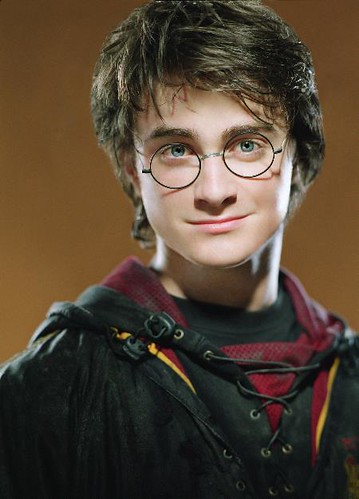
Daniel Radcliffe as Harry Potter.
Photo by longplay on Flickr.

If you’re a Harry Potter fan, this post might have special resonance for you.

While much media attention has focussed on the astonishing success of the Harry Potter juggernaut over the years, perhaps less attention has been paid to the stories of the unsung heroes behind the scenes who have worked so hard to create the films in the franchise.

A recent documentary, “David Holmes: The Boy Who Lived,” sheds light on the poignant story of one of these individuals.

David Holmes was chosen early on to be the stunt double for Daniel Radcliffe, who played Harry Potter in the films. Starting with the very first film, and for the next ten years, David and Daniel worked closely together and developed a strong bond.

David’s exceptional talents as a gymnast enabled him to perform breathtaking stunts. As a stand-in for Daniel, David’s skills were brought into play whenever a stunt was deemed too dangerous for the lead actor himself.

All went well, until the filming of the next-to-last Harry Potter movie in 2009.

While filming a scene for “Harry Potter and the Deathly Harrows, Part One,” a tragic accident left David paralyzed with a spinal injury, turning his world upside down.

The documentary is an inspiring account of David’s story and of the bond that still exists between the two men. It also depicts the reverberations the accident had on Daniel’s life, and how he navigated the complex mix of guilt and admiration brought on by seeing the great cost his friend bore for taking his place.

And therein lies the lesson we can learn from this as believers.

We, too, have someone who stood in our place and paid a terrible price for doing so.

Read more

The Greatest Miracle of All

Image by Chil Vera from Pixabay

What would you pick as Jesus’ greatest miracle?

Feeding the 5,000 with just five loaves and two fish?

Yes, that definitely rates as one of Jesus’ greatest hits.

Calming a storm with only His words?

That one would make the top ten as well.

How about walking on water?

Oh, now we’re getting somewhere! That miracle surely places in the top three.

Wait a second….we haven’t mentioned Jesus’ raising of the dead. He did that several times: the widow of Nain’s son, Jairus’ daughter, and Lazarus.

That has to be Jesus’ greatest miracle!

Doesn’t it?

Perhaps not. Perhaps none of these is Jesus’ greatest miracle.

But if that’s true, then what would qualify?

Read more

Explaining Rituals

Image by Terren in Virginia via Flickr, CC BY 2.0

While I was raking up fallen leaves in the yard recently, a passerby stopped to talk.

This lady was from India, and was curious about why Canadians raked up leaves each fall. Was it some cultural tradition of ours, she asked, a ritual that we enjoyed doing?

I smiled at her mistaken assumption, but explained that if we didn’t rake up the leaves, the lawn underneath would die. With a blanket of leaves blocking the sun and air, the grass would be smothered.

We’re certainly not raking up dozens of bags of leaves because it’s fun!

Our conversation got me thinking about rituals, and how we sometimes need to explain them to puzzled outsiders.

Why do kids dress up in outlandish costumes on Halloween and go door to door asking for candy?

Why do we decorate a tree in our homes at Christmas?

And why do Christians have bread and wine at Communion? Is it because they get hungry and need a snack partway through a church service?

Like Lucy in the old sitcom, we have some explaining to do…

Read more

Forgive and Forget? Not!

Image by John Liu on Flickr CC BY-2.0

I know you’ll love these wise insights on forgiveness from my friend Veronica Gerber. We’re very fortunate to have her as our guest blogger today!


It’s popular to think of “forgive and forget” but, paradoxically, the bridge to forgiveness includes remembering, not forgetting!

Remembering what?

  • How much I’ve been forgiven and what it cost the Savior
  • Actions have consequences; learning from past mistakes
  • Vengeance belongs to the Lord

What dynamic is at work when you find it hard to forgive?

In my own experience, I’ve found it easiest to forgive when I remember how much I myself have been forgiven. When it’s hard to forgive, perhaps it’s because I’ve actually forgotten how much the Lord has forgiven me.

"Be kind and compassionate to one another, forgiving each other, just as in Christ God forgave you." (Ephesians 4:32, NIV)

That being said, actions do have repercussions. There is often a place for rebuke. Forgiving one another does not mean sweeping consequences aside! It’s not an easy or glib exercise.

"He who rebukes a man will in the end gain more favour than he who has a flattering tongue." (Proverbs 28:23, NIV)

True forgiveness includes a thorough assessment of the offence and yet chooses to extend the grace of forgiveness.

Read more

Turning Minuses into Plusses

Image by Tumisu from Pixabay

In math, as in sports, mistakes count as permanent marks against your score.

These setbacks are always a lag on your performance, and you struggle to overcome them.

But in God’s marking system, our mistakes and failures are viewed differently: minuses aren’t permanent, and can even be turned into plusses.

First of all, God provides forgiveness for our sins through the atonement bought by His Son on the Cross. Our sins are wiped off the record, and we’re given a fresh start.

Secondly, God can even use our mistakes to further His purposes. He can bring good out of the messy parts of our lives.

Examples from the Old and New Testaments show us how:

Read more

Thirteen By Any Other Name…Is Still Thirteen

I recently realized that I wasn’t living in the house that I thought I was.

Last summer I moved into a house bearing the number 15. I love everything about it: the house itself, the neighbours, and the area’s community spirit.

It wasn’t until some months later that I realized that I didn’t actually live at #15: I live at #13. The house next door is #11, and opposite my house is #12. Counting from the bottom of the street, mine is the thirteenth house.

So why didn’t the city call it #13 when it was assigning street numbers to the houses?

In many countries, the number 13 has unlucky connotations. Why? One reason is that there were thirteen present at the Last Supper, including Judas, who would betray Jesus.

Some people are superstitious about this number, and try to avoid its “bad luck” by keeping away from anything labelled 13. There’s even a word for the fear of the number thirteen: triskaidekaphobia.

The result is that many companies and cities fudge their numbering to avoid 13. This is why many hotels and tall buildings seem to lack a thirteenth floor: the elevator buttons skip from floor 12 to 14.

The thirteenth floor continues to exist, as does the thirteenth house on a street: we haven’t erased them. But we just call them by other names. We simply pretend that they’re actually the fourteenth floor or the fifteenth house. Everyone goes along with this fiction because it means we don’t have to face reality. We’re deluding ourselves, of course, but it seems we prefer to live in denial.

We do the same with sin, don’t we?

We call it by other names so we don’t have to face up to the reality of what it really is.

Read more

The Wrong Yardstick

Image by Ariel from Pixabay

Do you have a friend who’s a bit of a screw-up?

No? You’ve got to get one!

Friends who make a shambles of things are amazing, because they make you feel so competent by comparison.

Your friend Sue might misplace one of her children, regularly set off the smoke detector when cooking, or accidentally rear-end a police car.

You roll your eyes smugly and think, “At least I’m not as bad as she is!”

In the same way, we like to justify ourselves before God by comparing our sins to those of others.

We think, “At least I’m not a bank robber or a serial killer. I’m not as bad as others. On the whole, I figure I’m a pretty decent person. I don’t think I really qualify as a ‘sinner.’ ”

The problem with this is that we’re using the wrong yardstick.

Instead of measuring ourselves against other people, we should be seeing whether we pass muster according to God’s standards.

Read more

Put On The Right Costume

It’s amazing what a cape can do.

Ask any child who puts on a superhero costume for Halloween.

They suddenly feel braver. Their confidence gets a boost. They believe that they can achieve things that they couldn’t before.

Actors understand this. Many actors report that they can more readily get in character for their role once they don the costume associated with it.

Interestingly, some actors identify with the characters they portray so much that they become real-life action heroes.

Tom Cruise has reportedly rescued people in real life at least six times, including coming to the aid of a woman set upon by muggers in London, rescuing a family from a burning boat in France, and helping the victim of a hit-and-run in California.

Likewise, action star Harrison Ford has pulled someone out of a burning car, and has used his own helicopter to rescue a stricken hiker.

The theory behind this phenomenon is called “embodied cognition,” and it might help explain how actors and others become their roles.

In the case of action heroes, acting brave in movies may lead to actually being brave. The more you practice something, the more you become it.

The key might be in putting on a costume or adopting a set of behaviours.

I think that’s why Scripture tells us to “put on” Christ.

Read more

You Were Meant to Soar

Image of European swift by Kev from Pixabay

What is the ultimate flying machine?

The Concorde? A high-tech fighter jet?

I’d suggest to you that the holder of this title belongs to the common swift.

The swift holds the record for the fastest confirmed level flight of any bird: 111.5 km/h (69.3 mph). (Birds like falcons can fly faster, but only when diving down through the air to catch prey.)

Swifts also spend most of their lives on the wing, landing only to nest. Some individuals can spend up to ten months in continuous flight. In a single year a common swift can cover at least 200,000 km. No other bird spends as much of its life in the sky.

They are truly astonishing creatures.

A funny thing about swifts, though: they don’t do very well on the ground.

Their small, weak legs, which are placed far back on their bodies, are really only good for clinging to vertical surfaces like cliffs. They never voluntarily settle on the ground, where they’d be vulnerable to predation. Although swifts are capable of taking flight from level ground, they prefer to “fall” into the air from a high point.

Simply put, swifts were meant to soar.

And so were you.

But oftentimes there are things inhibiting our flight…

Read more