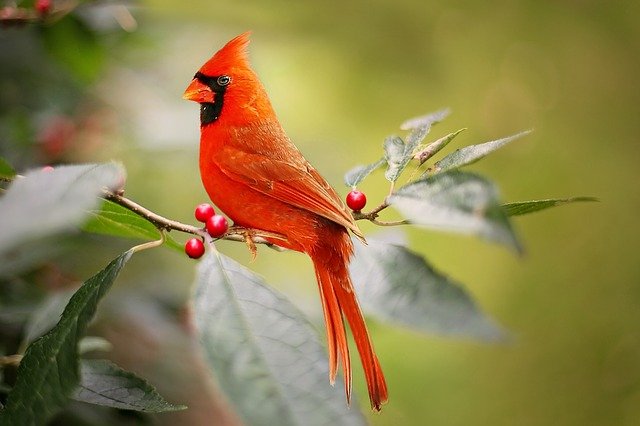
Your Spring Is On Its Way

A beautiful red cardinal has been singing heartily outside my window the past week, as though spring had already arrived.

The robins, now back from wintering in the south, can hardly get a word in edgewise.

A hawk in the nearby park has been gathering twigs for its nest.

And yet a couple days ago we had some snow flurries. This is Canada, after all, and it’s only April. It’s often still chilly enough outside to need a coat.

Doesn’t seem like spring to me.

Do the birds know something I don’t?

In fact, they do. They sense the lengthening of the days and the increased hours of sunlight, things that have escaped my notice.

They know that spring is on its way, even if I haven’t put away my winter coat just yet.

In the same way, God knows a thing or two that we don’t.

He knows when a turnaround in our situation is on its way, even if we can’t see any evidence of a change in the offing.

He knows that our “spring” is coming.

Read more

Bloom Where You’re Planted?

Some say you should “bloom where you’re planted.”

You can get all manner of products printed with this slogan: T-shirts, mugs, posters, and notecards.

But is that always the best advice?

Maybe not. There’s something to be said for not staying in the same place for too long.

Your garden will tell you that if you plant the same type of vegetable in the same plot year after year, you’ll notice that the health of the plant and the yield it produces will begin to suffer. The plant will be attacked by more diseases and pests, and the nutrients in the soil will have been depleted by past crops of the same type.

The answer to this problem?

Crop rotation.

Don’t plant the same type of vegetable or crop in the same location several years running. Mix it up; plant something new in that spot.

What about in life?

Does God intend us to stay rooted to the same location for much of our lives?

Read more

Need A Clean Slate?

Image of birch bark by Lisa Johnson from Pixabay

If you feel like you could use a clean slate, you’re not the only one.

Birch trees feel the need to start afresh with a new page occasionally, too.

Except they do it literally, by allowing their outer bark to peel off to reveal a fresh layer underneath.

Why do birches do this?

After all, most trees don’t shed their bark. As trees grow from the inside out, their rigid outer bark, which can’t stretch, splits and cracks instead. This gives tree bark the rough texture and fissure-like patterns that we’re all familiar with.

The drawback of these crevices and grooves is that pests and parasites like to burrow into them, which can affect the health of the tree.

Birches have solved this problem by growing smooth bark. This type of bark doesn’t split, which means it’s more impervious to insects, bacteria and fungi. As the birch grows, it exfoliates some of its outer bark, like a snake shedding its skin.

Along with the shed bark the tree is able to cast off insects, moss and lichen at the same time. Birch trees are continually refreshing themselves.

Smart, isn’t it?

Could you use a fresh start, too? Would you like to get rid of some things that are dragging you down?

Jesus gives us an opportunity to do just that.

Read more