Who Loves You?

Photo from Pxhere

How many times today has someone told you that they love you?

If you have a loving family, you’ll probably hear them express their love for you frequently.

But what if your family ties are a bit strained? What if you don’t have many close relationships at all, and consider yourself to be fairly alone in the world?

Then you probably don’t hear the words “I love you” nearly enough.

There’s a remedy for that:

Open a Bible.

The unfailing love of God is a soundtrack that reverberates through the Scriptures.

It’s easy to find verses in the New Testament that exemplify God’s love:

“But God demonstrates his own love for us in this: While we were still sinners, Christ died for us.” (Romans 5:8)
“This is real love—not that we loved God, but that he loved us and sent his Son as a sacrifice to take away our sins.” (1 John 4:10)
And of course: “For God so loved the world that he gave his one and only Son, that whoever believes in him shall not perish but have eternal life.” (John 3:16)

But what about the Old Testament?

Read more
Prayers Live On, Like Lilacs

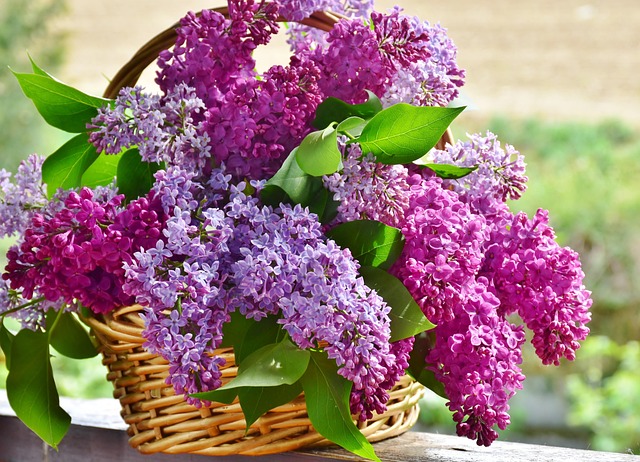
This is a special time of year in my part of Canada: the lilacs are speaking!

Lilac flowers don’t use words, of course. They announce their presence through their beautiful fragrance and delicate purple colour.

But there’s another way lilac shrubs can talk to us. Their very location can give us clues to the history of a place.

“…the story of early Canada can be read in the lilacs clustered where log cabins once stood, at the edge of abandoned fields—flowers marking time in centuries.” (from “A New Leaf,” by Merilyn Simonds)

Settlers to the northern parts of North America would often plant lilac shrubs on either side of the front door to their farmhouse. Generations or even centuries later, the building has long since been torn down, but the lilacs live on.

If you see a pair of huge lilac bushes in a field or empty lot, you can be pretty sure they used to flank someone’s front door. The house is gone, the family has moved away, but the fragrance of the lilacs they planted still fills the air.

This reminds me a bit of how prayers can live on, long after the person who prayed them is gone.

Read more

Put On Some Heart-Shaped Glasses!

Image by StockSnap from Pixabay

When we’re going through tough times, it’s easy to get discouraged.

We all worry about our health, our families, our finances, and the future. Believers aren’t immune to these anxieties.

When life is spinning out of control, we often feel overwhelmed. We wonder where God is in our difficulties.

What we need is a different perspective.

I’m not suggesting we put on rose-coloured glasses, but rather heart-shaped ones.

The beating heart of God resounds with love for His children.

Read more

Golden at the Broken Places

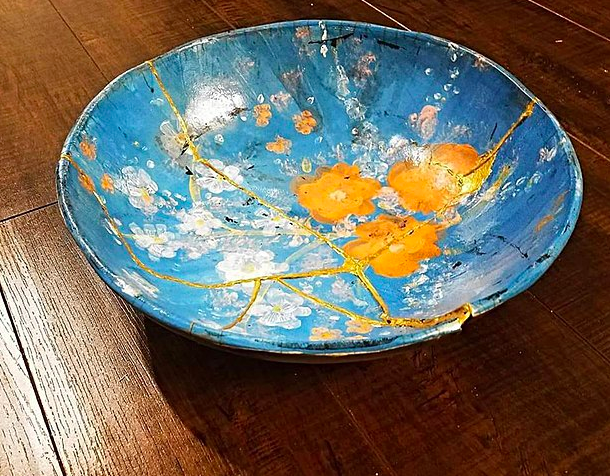
Bowl repaired using Kintsugi method by artist Ruthann Hurwitz.
Wikimedia Commons CC BY-SA-4.0

We all shudder at the sound of something breaking, don’t we? We can’t help but wince when we hear glass or crockery shattering into pieces on the floor.

Why do we have that involuntary reaction? Because we know that the object probably can’t be repaired: it’s likely to be damaged irreparably, and must be thrown away.

We’re wincing at the sound of loss.

But what if there were a way to not only put the pieces back together, but to make the object more beautiful than it was before, despite the breaks?

The Japanese long ago invented a way of doing just that, and have even made an art form of it. It’s called “Kintsugi,” which means “golden joinery.”

The process involves mending the cracks in pottery with gold lacquer. Instead of trying to hide the damaged areas, they are instead highlighted with something precious. The end result is a restored piece of pottery that is beautiful at the broken places.

But what happens if it’s not a piece of pottery that is broken, but a life? How can a shattered heart be put back together?

Long ago, God also devised a way to put the pieces of a broken life back together again. God doesn’t throw away broken people; they still have value to Him. He puts them back together again with the gold lacquer of His Son’s love and redemptive power.

Read more

Why Is The Universe So Big?

Image from Pixexid

Have you ever wondered why the universe is so immensely big?

Astronomers at NASA suggest that the most distant objects in the universe are about 47 billion light years away from Earth. This would make the size of the observable universe about 94 billion light years across. (A light year is the distance light travels in one year, about 6 million million miles.)

But that just describes the extent of our observable limits. The universe is vastly larger than that, because it is expanding at a rapid rate.

If there is an “edge” to the universe, it’s expanding away from us faster than we could ever catch up. No matter how swift our spaceship, we would never hit a boundary of some kind.

So for all practical purposes, you could say that the universe is infinitely big.

But why did God create it this way?

Read more

What Love Looks Like

The incomparable Taj Mahal, India

The Taj Mahal, in Agra, India, is considered to be one of the world’s most beautiful buildings, and rightly so.

Built from white marble, it was commissioned in 1631 by Shah Jahan as a memorial to his favourite wife, Mumtaz Mahal, who died that year giving birth to their fourteenth child.

For many in India and around the world, the Taj Mahal is an iconic symbol of love. Every stone and jewel used in its construction speaks of the tremendous affection the Shah had for his wife, and his grief at her passing. To many people, the Taj Mahal is the embodiment of love.

What does love look like to you?

Read more

The Ultimate Love Story

Image by lillaby from Pixabay

Valentine’s Day is just around the corner!

On this beloved day of the calendar, we celebrate our love for that special someone in our lives. Many of us will be giving (or receiving) boxes of chocolates and bouquets of roses as an expression of that love.

But sometimes those roses have thorns, don’t they?

The truth is, love sometimes hurts. It can cost us something.

We think of Valentine’s Day as simply about romantic love, but the history behind this day shows us that true love is often about sacrifice.

This was certainly the case for Saint Valentine of Rome, for whom Valentine’s Day is named.

This third-century priest was known for his evangelistic work and for aiding persecuted Christians. He was martyred for his faith on February 14 in AD 269, executed by order of Emperor Claudius for refusing to deny Christ.

Saint Valentine patterned for us a life focussed on loving others; he refused to deny the Source of that love, even if it cost him his life.

Christ modelled that sort of sacrificial love, too.

He would let nothing stop His purpose of showing love to others by securing for them a way to spend eternity with Him, even if it cost Him His life.

And it did.

Read more

Don’t Get Used To It

How would you feel if you won the lottery?

Pretty amazing, I’d imagine!

And the feelings of joy and gratitude at your good fortune would last for a long time, wouldn’t they?

Um, maybe not.

Researchers have discovered that positive feelings following a stroke of good luck soon subside and return to baseline. By the same token, people eventually adjust back to their baseline after some misfortune has befallen them.

This phenomenon is called “hedonic adaptation.” Whether your situation is good or bad, you get used to it.

I wonder if something like this happened to the children of Israel after being freed from slavery in Egypt.

Read more

When You Can’t See God’s Face

Image by Sumanley xulx from Pixabay

I don’t know about you, but I still have trouble recognizing acquaintances when they’re wearing a mask.

One of the unusual things this pandemic has taught us is just how much we rely on a person’s whole face to clue us in to who they are.

When someone wears a mask, we’re missing half the visual information we normally get from their features. It takes us longer to cotton on to who it is.

We waltz past someone, glance at the top half of their face above their mask, and think they look vaguely familiar.

“That’s not so-and-so, is it?” we wonder, as we keep walking.

Too late, we realize it was so-and-so. We can only hope they weren’t offended that we sped past them without a hello.

This pandemic has been unnerving in many ways. Mask-wearing has robbed us of some of the crucial information we need to identify people quickly. Not only that, masks also deprive us of the ability to see people smile.

Do you ever feel like you’re only seeing half of God’s “face,” as it were?

Has hardship obscured His features from your sight? Do you long to see Him smile upon you again?

Read more

Want To Feel God’s Love?

Image by Adina Voicu from Pixabay

It seems like marriage proposals these days are a competitive sport.

It used to be that a man would propose to his beloved over a romantic dinner, with flowers on the table and perhaps some violins playing. He would get down on bended knee, present a ring, and ask for her hand in marriage.

Apparently, that just doesn’t cut it anymore.

Now, proposals have to be over-the-top. They might feature anything from fireworks to skywriting. A will-you-marry-me moment nowadays might involve a scavenger hunt, a fake movie trailer, a full orchestra and choir, or a ride in a hot-air balloon.

More adventurous grooms might enlist a celebrity in the proceedings, hire a flash mob at Times Square, or arrange to appear on the Jumbotron at a sports game.

And then there’s the man whose proposal took an entire year to create. Unbeknownst to his girlfriend Jennifer, each day for 365 days Dean Smith videotaped himself proposing to her, every time with a unique message. On the 366th day, he showed her the completed video and finally proposed in person (she said yes).

Why do people go to so much trouble?

Because they want to show their intended how much they’re loved.

Did you know that God has done the same for you?

He loves you deeply and He wants you to know it!

Let’s see how God stacks up when it comes to showing love.

Read more