Which Body Part Are You?

Don’t you just love cookies shaped like little people, such as gingerbread men and women?

I always start munching on gingerbread people at the head. According to a survey conducted by the folks at Dunkin’ Donuts, I’m not alone. Almost two thirds of people surveyed start at the top when eating a gingerbread figure. A fifth of people begin with the legs, while the remainder go for the arms first. (To make some gingerbread people yourself, see below for a classic recipe.)

We seem to have a penchant for foods shaped like bodies, or at least named after various body parts.

There are chicken fingers, kidney beans, artichoke hearts, navel oranges, black-eyed peas, heads of lettuce, ladyfingers and elbow macaroni.

The Italians have given us pasta shapes like orecchiette (little ears), linguini (little tongues), and capellini (angel’s hair). In France, cotton candy is called, “Dad’s beard.”

Our bodies are precious to us and are wondrously made, so it’s no wonder we pay tribute to them by naming foods after our various body parts.

But did you know that if you’re a believer, you don’t just have your own body, you’re a part of another body, too?

Scripture tells us that those who follow Jesus are all parts of the body of Christ.

“Our bodies have many parts, but the many parts make up only one body when they are all put together. So it is with the ‘body’ of Christ.” (1 Corinthians 12:12)
“All of you together are Christ’s body, and each of you is a part of it.” (1 Corinthians 12:27)
Read more

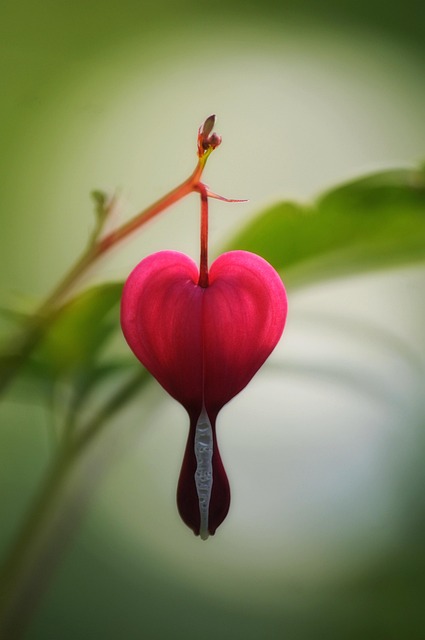
The Garden of the Heart

Image by Miroslav Kaclík from Pixabay

As a special treat for my Faith Cafe visitors, here’s a fresh take on Psalm 23:

In the garden of the heart, where shadows fade,
I walk with the Beloved, who never leads astray.
He is the shepherd, gentle and wise,
His love, like a river, flows through the skies.
The pastures of grace are green and wide,
I rest in His presence, where peace will reside.
Still waters call, soft and serene,
In His embrace, I am cleansed, I am seen.
Though the valley of darkness may stretch its might,
I fear no shadow, for He is my light.
His staff and His rod, steady in hand,
Guide me with wisdom, through this shifting land.
Image by Kati from Pixabay
No hunger nor thirst shall find me here,
For the table He sets, overflows with cheer.
Anointing my soul with oil of bliss,
I drink from His cup, a cup of endless kiss.
In the house of the Beloved, I shall stay,
Where love is the lamp that lights my way.
From moment to moment, from breath to breath,
I walk in His grace, defying death.
In the arms of the Shepherd, I am whole,
For He leads me home, to the garden of soul.
Image by Susann Mielke from Pixabay

(In case you’re wondering who wrote this lovely poem, it was the result of my tooling around with ChatGPT!)

© 2025 Lori J. Cartmell. All rights reserved.

Fill Up Your Storehouse

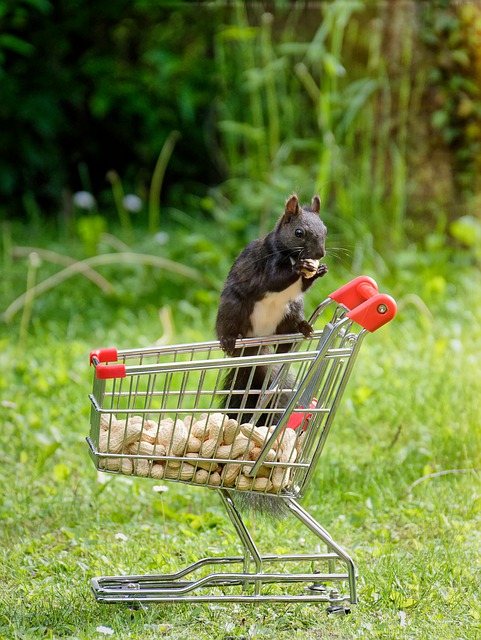
Image by Alexa from Pixabay

This is a busy (and nutty) time of year for squirrels.

The little critters are hard at work storing up nuts and seeds for the hard winter ahead.

Depending on the species, they may either store their nuts in one spot (a stash), or hide them by burying them in multiple locations (known as “scatter-hoarding”). They’ve even been known to shamelessly steal nuts from the stashes of other squirrels.

The jury is out on whether squirrels actually remember where they’ve hidden all those nuts. Some studies suggest they can recall the location of thousands of buried nuts. Other research implies that squirrels fail to recover a good number of their treasures, which allows the nuts and acorns to grow into trees.

One thing is for certain: these little guys are single-minded about gathering up nuts before winter, often using unconventional places to store them.

Like cars.

Just ask Bill Fischer of Fargo, North Dakota. For the past eight years, a red squirrel has been using Bill’s pickup truck to store walnuts. Each year, the poor man has to remove thousands of walnuts from every crevice of his truck, including the engine compartment and bumpers.

The critter set a new record several years ago, stashing 348 pounds of nuts in Bill’s vehicle. And this was all the work of one tiny squirrel.

These crafty little animals might exasperate us, but we can learn something from them:

They make sure they’ve “squirrelled away” provision for hard times to come.

I think we should do something similar:

Store up the Word of God in your heart, because you never know when you might need a certain verse to sustain you in a tough situation.

Read more

Golden at the Broken Places

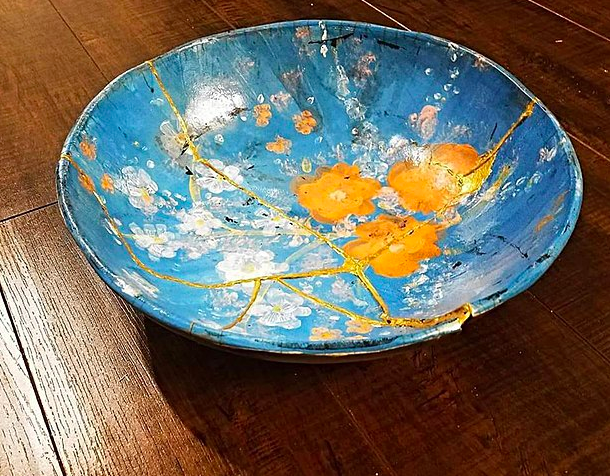
Bowl repaired using Kintsugi method by artist Ruthann Hurwitz.
Wikimedia Commons CC BY-SA-4.0

We all shudder at the sound of something breaking, don’t we? We can’t help but wince when we hear glass or crockery shattering into pieces on the floor.

Why do we have that involuntary reaction? Because we know that the object probably can’t be repaired: it’s likely to be damaged irreparably, and must be thrown away.

We’re wincing at the sound of loss.

But what if there were a way to not only put the pieces back together, but to make the object more beautiful than it was before, despite the breaks?

The Japanese long ago invented a way of doing just that, and have even made an art form of it. It’s called “Kintsugi,” which means “golden joinery.”

The process involves mending the cracks in pottery with gold lacquer. Instead of trying to hide the damaged areas, they are instead highlighted with something precious. The end result is a restored piece of pottery that is beautiful at the broken places.

But what happens if it’s not a piece of pottery that is broken, but a life? How can a shattered heart be put back together?

Long ago, God also devised a way to put the pieces of a broken life back together again. God doesn’t throw away broken people; they still have value to Him. He puts them back together again with the gold lacquer of His Son’s love and redemptive power.

Read more

The Inside Scoop

Image by Dan Fador from Pixabay

What do you see when you look at a tree?

Probably the same things I do: its pleasing shape, the attractiveness of the leaves, its height, or the welcoming shade it casts. The presence of flowers, fruit, or nuts on its branches would also catch my attention.

But someone who wants to use the tree will look at it quite differently.

A woodworker will assess a tree’s trunk and branches and have a sense of the quality of wood it will bear. He or she will know which areas will produce the truest grain, and whether the core of the tree is likely to be “conky,” or decayed inside.

My grandfather could judge a tree in this way.

He could discern how the way the tree had grown and the stresses it had been exposed to would combine to make the strongest grain. He could point to the best part of the tree out of which to make an axe handle, for instance.

My grandfather and I could look at the same tree but see entirely different things. I would consider the outside, but he would look much deeper.

I think God’s vision works in the latter way.

Read more

Volatility Index of Your Heart

Feel like pressing the panic button?
Photo from Wikimedia Commons CC BY-SA-2.0

If you follow the stock market, you might be familiar with something called the Volatility Index. Sometimes called the “fear index,” it gauges the market’s anxiety level.

When investors are fearful and markets are in turmoil, the volatility index spikes higher. Now happens to be one of those times, thanks to fears over the impact of the coronavirus.

It made me wonder, do our hearts have a “volatility index” of their own?

And if they do, what can we do to keep our emotions on an even keel, when our circumstances might give us every reason to panic? How can we find peace even in the midst of turmoil?

Read more