Following In His Footsteps

Image by Jennifer Beebe from Pixabay

In winter, it can be fun to decipher tracks left in the snow.

I sometimes make a little game of this as I’m going for a walk.

You can usually tell by the size and spacing of bootprints whether they were left by a man, woman, or child.

Tracks going to each house in turn clearly belong to the mail carrier.

Human footprints next to smaller, clawed ones indicate that a neighbour was walking the dog.

Dainty, single-file paw prints show that a cat was making its rounds, whereas a repeating W-shaped pattern of impressions indicate that a squirrel was hopping across the lawn.

And small bootprints that meander crazily like a butterfly are a sure sign that my four-year-old neighbour Noah passed this way!

What tracks are you leaving in life?

Will people want to follow in your footsteps?

Read more

Winter, the Great Leveller

Photo by Mark Evans on Flickr, CC BY-ND-2.0

If you live in a cold climate, as I do, you’ll have noticed that winter has a way levelling us out.

It shows us we’re all in the same boat.

Let me explain:

No matter how rich or poor you are, you’re going to have to deal with snow one way or another. If you live in a cold climate, there’s no escaping this fact.

Whether you drive a snazzy, expensive car or a modest runabout, winter has a way of making all vehicles look rather crappy. No matter how much you paid for your car, road salt and slush will cover it with an ugly grey-brown film.

Image by pasja1000 from Pixabay

And despite searching high and low for the most fashionable winter parka, you’ll still end up looking like an Arctic explorer, indistinguishable from everyone else.

Winter has a way of humbling us.

I think sin has the same sort of levelling effect.

Whatever walk of life we come from, we’re all going to have to deal with our sins somehow. There’s no escaping it.

No matter how wealthy or poor we are, when sin sticks to us, it makes all of us look rather stained. Whether a pauper or a prince, the muck of sin covers us all.

And even if we try to gussy up our image and paper over our sins, it simply doesn’t work. We’re fooling ourselves if we think we’re any better or different than anyone else.

When it comes to sin, we’re all in the same boat.

Read more

The Dreams of the Blind

What do blind people dream about?

Do they dream in pictures, or in sensations and sounds?

Researchers tell us that it depends on when they lost their sight.

The brains of those who went blind after ages five to eight will have received a lot of visual inputs during the years when they could still see. These individuals are able to form visual dreams using the images stored in their memory banks for a good while after they’ve lost their sight.

People who are blind from birth are different, researchers say. The brains of these individuals have no visual images to work with, so they don’t dream in pictures like the rest of us. Instead, their dreams are based on input from the other senses: sound, taste, smell, or touch.

The upshot is that the blind can only dream using the inputs they’ve received.

Isn’t this true for all of us, in a way?

We can only dream about achieving or receiving things based on the examples that have been “inputted” into our minds. If we have never seen a real-life example that something is possible, we’ll probably never dream about it for ourselves.

Read more

Divine Forgetfulness

Image by Tumisu from Pixabay

Does God have a bit of a memory problem?

It would appear so, according to the Bible.

Several Scriptures tell us that when God forgives our sins, he also forgets them.

Isaiah 43:25 tells us that God blots out our transgressions and remembers our sin no more.

Hebrews 8:12 echoes this: “And I will forgive their wickedness, and I will never again remember their sins.”

But if God’s memory of the sinful things we did is wiped clean, why isn’t ours?

Why didn’t He arrange it so that we can’t remember our shameful deeds, either?

I’m sure many of us would love to have amnesia about our moral failures, but God knows that this isn’t best for us.

I think there are several reasons for this:

Read more

The Joy of Long Letters

Image by hudsoncrafted from Pixabay

Isn’t it lovely to receive a long letter from someone who loves you?

In an age of tweets, text messages, and sound bites, perhaps many of us are missing out on this special joy.

Several times a year, I am privileged to receive a long missive from an older male relative. These letters are hand-written, and the latest one was 18 pages long! I treasure these letters, and go back to them time and again to refresh my memory about what he’s said.

In the letters, my relative will share his views on world events, discuss the progress his garden is making, or pass along some wisdom about life. Invariably, he’ll also throw in a bit of cornball humour.

Throughout the letters are woven his love and regard for me. After all, you wouldn’t go to the trouble of writing an 18-page letter to someone if you didn’t care about them, would you?

Would you like to receive a letter like that from someone who loves you?

In fact, you already have!

God Himself has written letters to you in the form of the Bible.

Read more

Create Your Own BC/AD Pivot Point

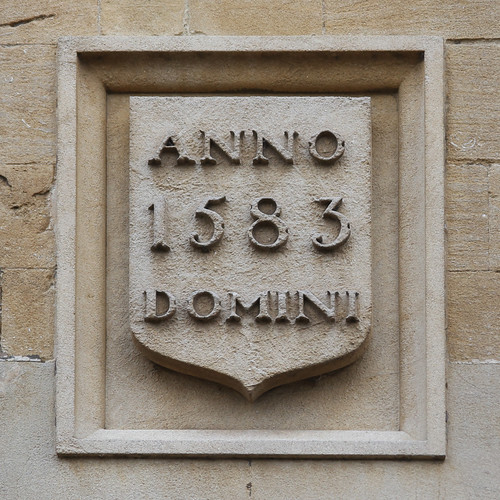
Image of Anno Domini inscription on Windsor Castle, England, by Leo Reynolds via Flickr CC BY-NC-SA 2.0

It’s natural to divide your life into “before” and “after,” isn’t it?

We mentally calculate whether something happened before or after certain important events in our lives.

We might say that such-and-such happened before we moved to Boston, or after we got married. We may recall that another thing happened after we had our son but before the twins were born.

Ancient cultures did something similar. Those with monarchies would mark events in relation to what king was on the throne at the time. They’d say that something happened in the 9th year of the reign of King so-and-so.

Certainly, most of us will divide our lives into pre-and post-pandemic eras. March of 2020 was a clear demarcation point between our previous “normal” life and one dominated by COVID-19.

The dividing lines of our lives will be different for all of us, but what most of the world has in common is the use of the same calendar system to mark off years. This system has its own before-and-after pivot point.

For instance, most of us just celebrated the start of AD 2022.

What does the “AD” mean, anyway? Or “BC” for that matter?

Read more

The Most Memorable Gift Of All

Image by Marco Verch on Flickr CC BY-2.0

What’s the most memorable gift you’ve ever received?

Whatever it was, it probably wasn’t something bought for you in a panic at the last minute.

More likely, the gift you remember most involved time or trouble on the part of the giver.

Perhaps your child presented you with something that they’d painstakingly fashioned themselves.

Or maybe your spouse had a piece of jewellery custom made for you that they’d had a hand in designing.

Or a friend spent months searching high and low for a hard-to-find collector’s item that you’d always wanted, and finally tracked one down.

The present was especially meaningful for you because the time and trouble the giver went to were part of the gift.

Did you know that Jesus has given you a gift? And it isn’t something He picked up at the mall on Christmas Eve.

He offers you the gift of eternal life.

Read more

Are You On The Naughty Or Nice List?

Image by Jill Wellington from Pixabay

Are you on Santa’s “Naughty” list or his “Nice” list?

Sometimes it’s hard to know, isn’t it?

You shovelled the snow off your elderly neighbour’s walkway, so that counts as nice.

But on the other hand, you greedily ate half a pan of freshly baked brownies before sharing them with your family. Not so nice.

You made up for that by running errands for a sick friend, and volunteering to work late at the office to help finish a project. Definitely heading well into “nice” territory!

But then you lost your temper at your spouse, fibbed to get out of visiting your mother-in-law, and illegally parked your car in a disabled space while you dashed into the store to buy milk. Uh-oh! Looks like you’re squarely back on the naughty list.

With Santa, it’s hard to know where you stand on the naughty/nice spectrum.

That’s why it’s good to know that, if you’re a believer in Jesus, there’s only one list:

Forgiven.

Read more

All I Want For Christmas Is Staff

Have you made a list yet of what you want for Christmas?

Time is running short, so if you want to submit your list to Santa, you’d better get cracking!

Maybe you want some jewellery, a designer handbag, or a trip to a tropical isle?

Or perhaps your tastes run more to tools for your workshop, some custom bling for your car, or season tickets to see your favourite sports team play.

The kids in your life are probably way ahead of all of us and already know what toys and games they’d like.

As for me, after years of watching the historical British TV drama “Downton Abbey,” I’ve come to appreciate the benefits of having staff.

The size of staff required to keep a stately home like the fictional Downton Abbey running a century ago was considerable. They needed maids, cooks, valets, butlers, chauffeurs, and gardeners.

But the position that intrigued me most was that of footman. They seem to be so useful, able to turn their hands to any task around the house.

I really think I need a footman!

Or maybe, if I had to ask Santa for just one, a chef would be the better choice?

But really, I’m asking the wrong question. I should be asking: do I want to serve or to be served?

For Christians, there’s only one right answer:

It’s to serve others.

Read more

Need A Clean Slate?

Image of birch bark by Lisa Johnson from Pixabay

If you feel like you could use a clean slate, you’re not the only one.

Birch trees feel the need to start afresh with a new page occasionally, too.

Except they do it literally, by allowing their outer bark to peel off to reveal a fresh layer underneath.

Why do birches do this?

After all, most trees don’t shed their bark. As trees grow from the inside out, their rigid outer bark, which can’t stretch, splits and cracks instead. This gives tree bark the rough texture and fissure-like patterns that we’re all familiar with.

The drawback of these crevices and grooves is that pests and parasites like to burrow into them, which can affect the health of the tree.

Birches have solved this problem by growing smooth bark. This type of bark doesn’t split, which means it’s more impervious to insects, bacteria and fungi. As the birch grows, it exfoliates some of its outer bark, like a snake shedding its skin.

Along with the shed bark the tree is able to cast off insects, moss and lichen at the same time. Birch trees are continually refreshing themselves.

Smart, isn’t it?

Could you use a fresh start, too? Would you like to get rid of some things that are dragging you down?

Jesus gives us an opportunity to do just that.

Read more