Not In Kansas Anymore

Characters from the film “The Wizard of Oz.” Photo by Richard Hitt.

Have you ever brought preconceived notions to a new situation, but then realized they simply don’t apply anymore?

I did something of the sort when visiting Southern California as a teen.

Growing up in Central Canada, I was used to street numbers being put on the actual houses themselves, at eye-level. But when I stayed in San Diego for a time, I noticed that the street numbers were instead spray-painted on the vertical parts of the curb at the foot of people’s driveways, just a few inches above the pavement.

That made no sense, I thought to myself. In winter, those numbers on the curb will be covered under several feet of snow, and no one will be able to read them. How silly!

I soon realized that my line of thinking was faulty: it doesn’t snow in San Diego. The numbers on the curb will always be readable. What was true for Toronto had no bearing on what was true for San Diego.

I needed to realize that I was “not in Kansas anymore,” as Dorothy said in the film, “The Wizard of Oz.”

I think we sometimes make the same mistake when we think about the Kingdom of God.

We superimpose our past experiences and assumptions on it, but we don’t realize that with the Kingdom of God we’re in a whole new world. The old rules don’t apply anymore.

Read more

Cleaning Tips From The Bible

Image by Carola K. from Pixabay

If your Mom is like mine, she’s probably given you some handy cleaning tips over the years.

She (or your Dad or caregiver) may have told you that you can use baking soda, vinegar or lemon juice as natural cleaning products.

She might have even told you about some surprising substances you can use to clean household items, like Coca-cola, mayonnaise, toothpaste or ketchup.

You may have been taught the secret to getting blood stains out of clothes: wash the fabric in cold water only. This is counterintuitive, because it’s the opposite of how you treat most other stains.

In the case of blood, however, heat will only set the stain and make it harder to remove.

It’s good to know how to deal with pesky stains: what substances to use to clean things, and what substances and methods not to use.

For instance, you’d certainly never use blood itself to clean anything.

Or would you?

Scripture tells us that there’s a special case where blood washes things whiter than snow:

When it’s the blood of Jesus.

Read more

Weed-Free Living

Image of dandelions by Hans Linde from Pixabay

Is it just my imagination, or do weeds actually grow faster than the flowers I’m trying to nurture?

Gardeners will know what I’m talking about. Weeds seem to be gifted with internal steroids that accelerate their growth, outpacing the delicate flowers that we’ve brought home from the garden centre.

Weeds don’t seem to be affected by lack of rain or by intense heat. They’ll grow just about anywhere. They’re speed demons of growth compared to the flowers we try to baby along with regular watering and fertilizing.

I looked into this crucial issue on behalf of readers of The Faith Cafe, and found that weeds do have some competitive advantages.

Weeds which are perennials have the benefit of established root systems that have been alive for many years; these dormant roots have a lot of stored energy. Perennial weeds grow faster and are harder to kill than annuals.

Weeds are already acclimated to the region’s soil, and are highly adaptable. They’re usually native plants that thrive in the local ecosystem, unlike plants from the garden centre which may be non-native and need time to adjust.

Weed seeds are already present in our garden soil. They bide their time until the right conditions present themselves, and then race out of the soil. They’re often excellent self-propagators and are opportunistic growers.

All these things give weeds a head start over the flowers we favour.

This got me thinking:

Why do the “weeds” of our character grow better than the fruits of the Spirit?

Are there lessons we can learn from the natural world?

Read more

Sticker Shock

Image by Merio from Pixabay

Have you been taken aback recently by rising prices?

I think a lot of us have been suffering from sticker shock lately.

Whether it’s an item at the grocery store, gas at the pumps, or a house to live in, prices have been going up.

We look at something that we’re accustomed to buying at a certain amount and do a double-take at the suddenly inflated cost.

We think, “Are you kidding me? I’m not paying that much! They’ve got to be crazy charging that price.”

And off we stomp in a huff.

But aren’t you glad Jesus didn’t do the same?

He could easily have suffered from “sticker shock” when faced with the incalculable price He’d have to pay to save us from our sins.

Read more

The Most Valuable Thing On Earth

Image by JamesDeMers from Pixabay

If you had to guess, what would you say is the most valuable thing in the world by weight?

If you’re a cook, you might pick costly foods like beluga caviar or white truffles. Or perhaps the spice saffron, which can go for thousands of dollars per pound.

If you’re a jewellery lover, your mind might go to precious metals like silver, gold or platinum. You’d know that gold has been revered since ancient times, and sometimes goes for thousands of dollars per ounce.

You’d be getting warmer if you worked in industry and knew that some substances used in things like catalytic converters are very costly indeed. Rhodium and palladium are even more valuable than gold.

These would all be good guesses, but not even close.

What about diamonds as the most valuable thing on earth by weight? Very rare coloured diamonds such as the red can be valued at millions of dollars per gram.

If you’re a scientist, you might get closer by guessing plutonium, used to fuel nuclear reactors. Or you might figure you’ve hit the jackpot by picking antimatter, which might power spaceships one day.

This substance requires inconceivable amounts of energy to generate. It’s estimated that antimatter costs tens of billions or even trillions of dollars per gram.

But there’s one thing on earth more valuable than even that…

Read more

Marinate Yourself in God’s Word

Image by Bruno /Germany from Pixabay

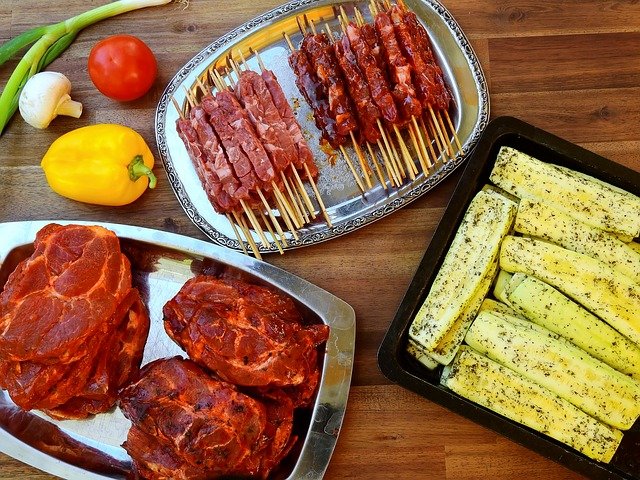
When you marinate food before cooking it, more is going on than meets the eye (or the taste buds).

You’re doing more than simply soaking the food in a seasoned liquid to add extra flavour to it.

You’re actually changing its structure and making it yield.

Marinating tenderizes meat, breaking down tough connective tissues to make it more palatable. It also helps meat retain moisture, ensuring that the cooked meat will be juicy and not dry.

Marinades usually have a sharp, acidic ingredient, like wine, vinegar or lemon juice, or an enzymatic one, like yogurt of papaya. Herbs, spices and oils are added as well.

Whether you use a red-wine-based marinade for beef dishes, or a tangy yogurt-lemon one for chicken, your meat is guaranteed to turn out tender and better-tasting.

Likewise, when we meditate on God’s Word, or “marinate” in it, we’re doing more than simply adding Biblical quotations to our knowledge base.

As we absorb and internalize Scripture, it changes us and leaves us better off than before.

Read more

The Comparison Trap

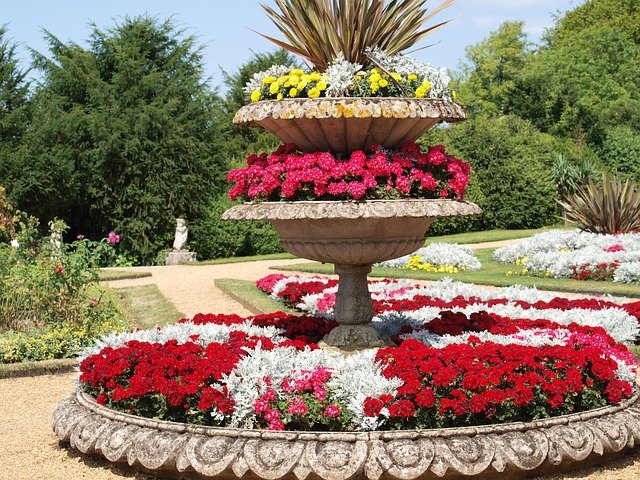
Image by Sue Rickhuss from Pixabay

Around this time of year, an unwanted visitor makes its way into many a gardener’s life.

I’m not talking about weeds or pests, although we certainly have to contend with those.

Rather, I’m referring to garden envy.

It starts out when we’re visiting the gardens of friends or neighbours. At first, we admire their lush plantings and attractive landscaping.

If we’re not careful, however, this appreciation can morph into envy. We think, I wish I had roses as beautiful as hers. Or, if only I had room in my yard for a gazebo like he does.

This envy can then develop into disenchantment with what we have. Why am I stuck with so much shade in my yard? Why can’t we afford an inground pool?

We can even become resentful of our comparatively meagre gardens, when we should be grateful to have a garden at all: many people don’t.

Envy is something we need to nip in the bud, whether it relates to our gardens or our lives.

We get into trouble when we start comparing ourselves to others. This is true even in spiritual matters.

Read more

The Cutworms Of Our Lives

Image by congerdesign from Pixabay

If you’re a young seedling trying to survive, the worst thing that can happen to you is to be set upon by a cutworm.

Gardeners know this all too well. We start seeds indoors early in the season, with grand visions of the sturdy and beautiful plants they’ll eventually become. We baby the seedlings and give them just the right amount of water and light to set them on their journey to a bright future.

But then, soon after we’ve planted the seedlings in their forever home in our garden, disaster strikes.

The dreaded cutworm arrives in the night and stealthily attacks our precious young plants. It eats through their tender stems at ground level, cutting them off at the knees, as it were.

When we eagerly bound outside in the morning to check on the progress of our young charges, we’re confronted with a garden plot that has been laid waste in the most cruel way. Severed young plants lie helplessly wilting, cut off from the roots supplying them with sustenance. There is no hope for them now: they will surely die.

What makes it worse is that the cutworm hasn’t even bothered to eat the whole seedling, like a rabbit would: it seems to have acted out of sheer spite.

The cutworm has done its worst, and all we can do is mourn.

I’m overdramatizing this, of course, but the frustration, anger and sense of powerlessness gardeners feel when faced with the cutworm’s nefarious deeds are very real.

Even if you’re not a gardener, you’ve probably experienced emotions like these in your life. I’m sure we all have.

Because there will always be people trying to cut you down to size.

Read more

Light in the Darkness

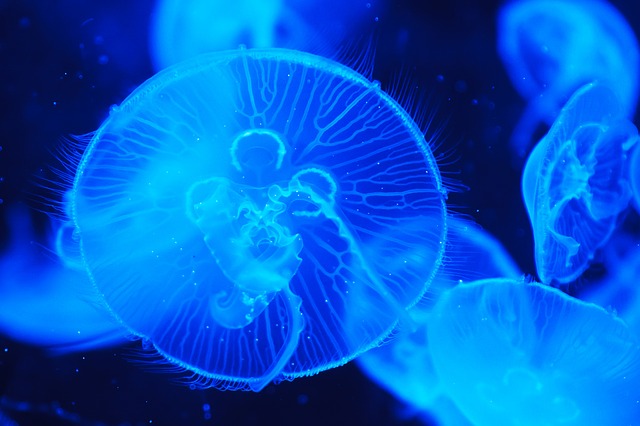
Jellyfish Image by PublicDomainPictures from Pixabay

The Earth’s oceans are a bit mysterious to landlubbers, aren’t they? Especially the farther down you go.

The top zone of the ocean, 200 meters or less from the surface, is called the “sunlight” zone. This zone hosts the vast majority of fish, sea mammals and aquatic plant life that we’d be familiar with.

In the next zone down, the “twilight” zone, the amount of sunlight rapidly diminishes. Such a tiny amount of light penetrates this region that photosynthesis is no longer possible.

But it’s the lowest reaches of the oceans that are the most otherworldly and forbidding.

The bottom zone, below 1,000 meters, is called the “midnight” zone, and with good reason. Sunlight has no hope of penetrating this far down. These inky depths are darker than most humans have ever experienced.

And yet some creatures down here have eyes.

What on earth for? What is there to see in this eternal darkness?

There’s actually still light in the deepest part of the oceans. It comes not from the sun but from bioluminescent creatures. Some deep-sea organisms, like jellyfish, can generate and emit light much the way fireflies do here on land.

There’s still light, even in areas where sunlight never penetrates and the darkness seems impossible to vanquish. Even in the “midnight” zone.

Are you going through a “midnight” of your own?

Does it seem to you that you’re living in a kind of darkness, that you’ll never see the light of day in your situation?

Rest assured that there’s no place on earth where God’s light can’t reach you.

Read more

With God, You Get the Flower First!

Redbud blossoms. Photo by Sheila Brown, Public Domain CC0

Sometimes nature can be a bit unpredictable—things happen in an order we wouldn’t expect.

Normally, plants put forth leaves long before they produce flowers.

But some trees and shrubs flip the script, so to speak.

With certain plants, the normal sequence is reversed: the flowers come first, before the leaves have developed.

A good example is the beautiful redbud tree. It puts forth gorgeous pink flowers on its bare branches in early spring, when none of its leaves are yet in sight.

The forsythia shrub bears its bright yellow flowers in advance of its leaves, and the lovely magnolia presents its pink or white blooms before the green foliage appears. Some maples and oaks also exhibit this flower-first behaviour, although with less showy blossoms.

All of these plants give us a treat in springtime when we’re starved for colour. We get the flower first without having to wait for the leaves.

Why do some plants reverse the normal order of things?

Some trees are wind-pollinated, so put forth flowers before their bulky leaves get in the way. The same goes for flowers that need extra sunlight. Other plants produce a mass of conspicuous flowers first, unobscured by leaves, to better attract the attention of pollinating insects.

Did you know that God also flipped the script and gave us the flower first, so to speak?

Read more