
How Can We Sum Up God?

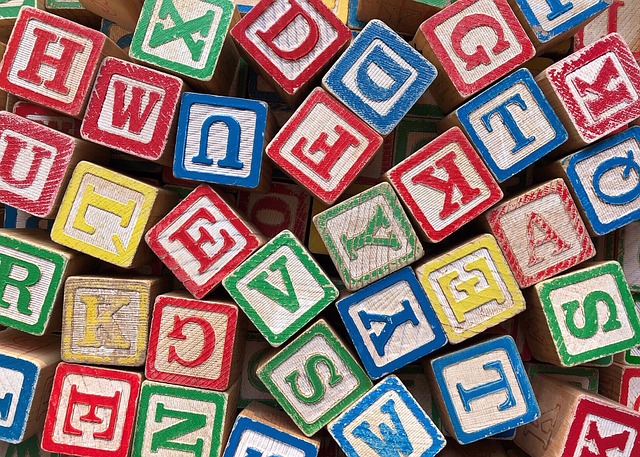
Image by Gerd Altmann from Pixabay

“The quick brown fox jumps over the lazy dog.”

Some of you might recognize this sentence from typing tests in school. It’s an example of a “pangram,” a sentence which contains every letter of the alphabet at least once.

At 35 letters, this is not the shortest pangram, however. This next one comes in at a slim 28 letters:

"Waltz, bad nymph, for quick jigs vex."

We can trim it even shorter than that if we allow abbreviations. The following sentence is a perfect pangram, using each of the 26 letters of the English alphabet only once:

"Mr. Jock, TV quiz PhD, bags few lynx.”

That got me thinking… If we wanted to construct a sentence expressing all of God’s attributes, how short could we make it? Is it possible to sum up God?

This is a tall order, because God is so multi-faceted.

We’d have to start off with His role as Creator of the universe and all life on earth, including you and me.

We’d have to include His unfathomable love, His mercy, truth, justice, holiness, faithfulness, wisdom, righteousness, goodness and grace.

We couldn’t leave out His omniscience, omnipotence, and omnipresence. And let’s not forget his unchanging, eternal nature.

Whew! Looks like our sentence is getting pretty long. We might have to trim it a bit.

I wonder if we can encapsulate all God is in one word?

Turns out, we can:

Jesus.

Read more
Cna Yuo Raed Tihs?

Image by WOKANDAPIX from Pixabay

I’ll bet you can!

I’m sure most of us immediately deciphered the title of this post as “Can You Read This?”

But how was your brain able to make sense of the jumbled letters so quickly?

Researchers believe that our brains use context to make predictions about what’s to come. Take an example like:

“Yuo cna porbalby raed tihs esaliy desptie teh msispeillgns.”

This is readable because as our brains decipher each word, they also predict which words would logically come next in order to make a coherent sentence. When faced with a word we can’t quite unscramble, our brains fill in the gaps based on subsequent words.

This even works with words that have NUMB3RS 1NST3AD 0F L3773RS. The numbers’ similar appearance to letters trumps their normal meaning.

Jumbled words are easiest to read when the first and last letters of the word remain the same, and only the letters between them are transposed. But when the middle letters are scrambled more confusingly, your brain has a harder time trying to process all the letters simultaneously. Try deciphering this:

“Big ccunoil tax ineesacrs tihs yaer hvae seezueqd the inmcoes of mnay pneosenirs.”

That was a bit more difficult, wan’t it?

But what about when it’s our lives that are a-jumble? When things happen to us that don’t seem to fit a meaningful pattern?

How do we make sense of the bewildering hardships and crises that often beset believers?

Read more

The Joy of Long Letters

Image by hudsoncrafted from Pixabay

Isn’t it lovely to receive a long letter from someone who loves you?

In an age of tweets, text messages, and sound bites, perhaps many of us are missing out on this special joy.

Several times a year, I am privileged to receive a long missive from an older male relative. These letters are hand-written, and the latest one was 18 pages long! I treasure these letters, and go back to them time and again to refresh my memory about what he’s said.

In the letters, my relative will share his views on world events, discuss the progress his garden is making, or pass along some wisdom about life. Invariably, he’ll also throw in a bit of cornball humour.

Throughout the letters are woven his love and regard for me. After all, you wouldn’t go to the trouble of writing an 18-page letter to someone if you didn’t care about them, would you?

Would you like to receive a letter like that from someone who loves you?

In fact, you already have!

God Himself has written letters to you in the form of the Bible.

Read more