Who Loves You?

Photo from Pxhere

How many times today has someone told you that they love you?

If you have a loving family, you’ll probably hear them express their love for you frequently.

But what if your family ties are a bit strained? What if you don’t have many close relationships at all, and consider yourself to be fairly alone in the world?

Then you probably don’t hear the words “I love you” nearly enough.

There’s a remedy for that:

Open a Bible.

The unfailing love of God is a soundtrack that reverberates through the Scriptures.

It’s easy to find verses in the New Testament that exemplify God’s love:

“But God demonstrates his own love for us in this: While we were still sinners, Christ died for us.” (Romans 5:8)
“This is real love—not that we loved God, but that he loved us and sent his Son as a sacrifice to take away our sins.” (1 John 4:10)
And of course: “For God so loved the world that he gave his one and only Son, that whoever believes in him shall not perish but have eternal life.” (John 3:16)

But what about the Old Testament?

Read more

The Game is Rigged

In life, it’s easy to conclude that you’re getting the short end of the stick.

On social media, everyone seems to be having a better life than you are.

At the grocery store, each year you pay a bit more for the same item.

In the parking lot, the other guy inevitably gets the spot you were waiting for.

At the casino, the house always wins.

Even your bathroom scale seems to be part of the conspiracy against you: surely it’s rounding up?

But with God, this isn’t true. The game is rigged in your favour!

How so?

When we think of the scales of justice and mercy, we assume they’re evenly balanced. But God actually has his finger on the scale, so to speak. For those who believe in His Son, it’s tilted heavily toward mercy.

“The Lord isn't slow about keeping his promises, as some people think he is. In fact, God is patient, because he wants everyone to turn from sin and no one to be lost.” (2 Peter 3:9)

God longs to be merciful (Isaiah 30:18). But at the same time He must judge sin.

How does He reconcile these two seemingly contradictory impulses?

At the Cross.

Read more

What Is Your Inukshuk?

Inukshuk Photo by Jsig9 on Pixabay

If you’re Canadian, you probably know what an inukshuk is.

If you’re not Canadian, then let me offer you my condolences. (Sorry! Just kidding!)

But seriously, as we Canadians celebrate our national birthday today, it seems apt to delve into the meaning behind this iconic symbol of the high north.

An inukshuk is a stone structure built by the Inuit and other peoples of the Arctic regions of North America. The stones may simply be stacked vertically, or they may take the form of a human figure.

The distinctive shape of the inukshuk is featured on the flag of Nunavut, a Canadian territory, and also served as the inspiration for the logo of the 2010 Olympics in Vancouver.

Inukshuks have been traditionally used by the Inuit people as landmarks for navigation, guideposts for travellers in a barren landscape. They might also mark out a sacred spot, or function as a commemorative sign.

I think we believers need “inukshuks” in our lives, don’t we?

Reminders of the things God has done for us, how far He’s brought us. Beacons to others travelling the same journey, showing them the path that leads to life.

Read more

It’s Raining Diamonds!

If diamonds are a girl’s best friend, I’m on the wrong planet.

I’ve just discovered that there are planets on which it rains diamonds.

Scientists believe that diamond rain could occur deep in the atmospheres of our gas giant neighbours in the solar system: Jupiter, Saturn, Uranus and Neptune.

Thousands of miles below the surface of these planets, carbon atoms come under such crushing pressure in the dense atmospheres that diamonds could form. The conditions are so extreme that further down, the diamonds could melt into liquid, forming diamond “rain” drops.

On some planets in the universe, these drizzles could involve diamonds millions of carats in size.

The wonders of the cosmos don’t end there. Scientists suggest that on the exoplanet WASP-121b it rains liquid rubies and sapphires. Clouds on this planet could be made of corundum, a mineral out of which these precious gems are formed.

It gets better.

The asteroid Psyche 16, which orbits the sun in the asteroid belt between Mars and Jupiter, is made entirely of solid metal. It has enough gold to turn every person on Earth into a billionaire. As well as gold, this intriguing minor planet contains metals such as platinum, iron and nickel in abundance. If Psyche 16’s metals were on Earth, their combined value would be worth perhaps $100,000 quadrillion.

Talk about an embarrassment of riches!

What does all this tell us?

That the precious gems and metals we covet are a dime a dozen in God’s universe. After all, Scripture tells us that in Heaven, the streets are paved with gold.

More importantly, God has an inexhaustible supply of the things that we truly need: grace, mercy, love, and forgiveness.

Read more

Islands of Hope

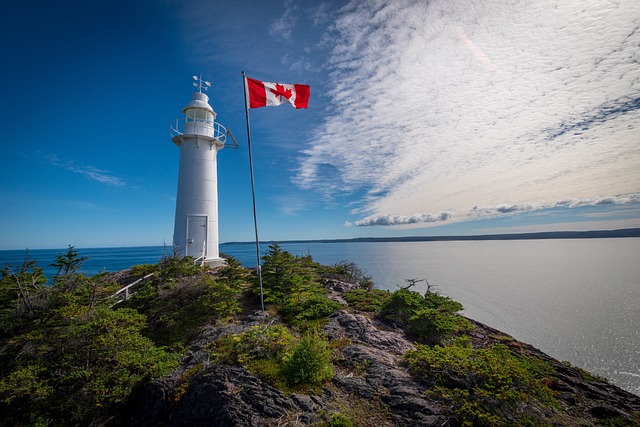
Image of lighthouse on the coast of Newfoundland by Felix Dilly from Pixabay

Transoceanic plane travel has always been fraught with potential problems.

Fuel could run low or a plane could develop mechanic problems mid-flight. The pilots would need a place to set down, pronto.

But in the middle of the ocean, where is there to land?

That’s where islands come in.

There are some handy places to land even in the vast expanse of the oceans.

In the Pacific, islands such as Midway, Wake, and Hawaii are available. The Atlantic offers Iceland, the Azores, and Bermuda, among others.

Not least is Newfoundland, an island off the eastern coast of Canada. For decades its Gander airport was used as a refuelling stop for planes making the hop across the Atlantic. It’s also an emergency landing spot for aircraft in trouble.

Gander is perhaps best known for its role in accepting 38 diverted planes that had to set down during the terrorist attacks in the U.S. on 9/11, twenty-two years ago today. Over six thousand passengers were generously hosted by the surrounding communities until U.S. airspace was reopened, a story commemorated in the hit musical, “Come From Away.”

Gander was truly an island of hope during that time.

I think we can all be islands of hope for others.

Read more

Dressing Up Animals

Image by Robledo Rafael Andrade on Pexels

Do you enjoy dressing your pet in clothes?

I won’t tell anyone if you do.

There’s something undeniably appealing about seeing animals in mini versions of human clothing, isn’t there?

(Your cat, however, might not agree.)

Even if you’re the type to roll your eyes at the idea of dressing up animals, there’s a lesson we can learn about this from the Bible.

Wait, what? The Bible mentions putting clothing on animals?

Yes, it does!

Let’s take a look at one of the more unusual stories in the Old Testament, found in the Book of Jonah.

Read more

My Lifeguard Walks On Water

Image by Hermann Traub from Pixabay

For those of you who live near a large body of water, or who might be visiting one during the summer, what are some important things to remember when spending a day at the beach?

Remembering to apply sunscreen is definitely important. So is bringing snacks, a blanket to lie on, and perhaps an umbrella to sit under. Maybe a toy bucket and shovel for the kids to play with in the sand.

But isn’t there something more important than all of those?

How about remembering to pay attention to the lifeguard?

If you’re visiting a public beach by an ocean or large lake, there will probably be a lifeguard station there. Lifeguards will be in place at intervals on raised platforms above the sandy shoreline. If the lifeguard tells you the undertow makes it unsafe to swim in the water, obey his or her instructions.

There will also be rules set forth on signs along the beach. To have an enjoyable and safe day at the beach, it’s important to obey those rules. Stay within the boundaries of the supervised areas. Pay close attention to the warning flags.

The rules are there to protect you.

It’s the same with God, isn’t it? He has set forth rules for us in His Word, the Bible. He wants us to stay within His boundaries in the way we behave. He wants us to obey His instructions, because they’re for our good.

His rules are there to protect us.

Read more

Freshly Baked Mercies

Isn’t it nice to eat something that’s freshly made?

There’s nothing quite like bread that was baked just hours ago, slathered with butter. French people know this: they go to the market each day to buy freshly baked baguettes or croissants.

Others like freshly squeezed orange juice in the mornings, or freshly brewed coffee.

A favourite treat of mine (at any time of the day) is freshly made brownies, still warm from the oven.

No one really likes leftovers (although leftover brownies are still pretty good!). But we love it when someone give us something that they baked fresh just for us.

God knows this, too.

That’s why He offers us fresh mercies every day, newly baked.

Read more

What Is Your “Job One”?

Man installing seat into Ford F-150 pickup truck at the Kansas City, MO plant. Wikimedia Commons CC BY-2.0

Sometimes we need a reminder of what we’re really here for, don’t we?

Many companies know this. Their employees can get so focussed on the little details of their tasks that they lose sight of what their main goal is.

That’s why for many years the auto manufacturer Ford put a large sign on the walls of its factories:

“Quality is Job One.”

An employee might have been helping to assemble the engine, working on the upholstery of the seats, or perfecting the paint finish on the vehicle.

But no matter what their specific task, the sign reminded the workers that their overarching goal was to produce a quality product.

Perhaps we as Christians sometimes need to be reminded what our primary function here on earth is?

Read more

Some Things Never Change

Photo by mabi2000 on Flickr CC BY-SA-2.0

During this worldwide crisis, many of us are concerned about the changes that are being wrought by the COVID-19 pandemic. We wonder what the world will look like once we emerge from the lockdowns.

Will life truly return to the way it was before? Will there be thousands of small businesses that will never reopen? Will we ever be able to gather in large crowds like we did in the past? Will the way we “do life” have changed permanently because of this pandemic?

It’s at times like these that we need something that never changes, much like conifers. During the winter, when deciduous trees are bare, I’m thankful for coniferous trees. These loyal friends, like the spruces, pines and firs, still have their mantle of green, which they’ll keep year-round. These silent sentinels might not be flashy, but we can count on them not to change.

God’s character is like that, too.

Read more