The Other Side of the Window

Image from PIckpik

While walking in my neighbourhood the other day, I saw something mysterious.

On one person’s front lawn there stood a jumble of foot-high letters of the alphabet, placed upright on stakes near the front window.

But the letters seemed randomly placed; they didn’t form coherent words. Was this some sort of secret code? Also, the letters were backwards from the perspective of anyone walking by on the sidewalk.

I then realized that they were meant to be read by someone inside the house.

When I deciphered the letters with this in mind, it suddenly made sense. Someone inside looking out the front window would see this message clearly spelled out on their front lawn:

“Happy Birthday!”

I was looking at the letters from the wrong side of the window. If I had been inside the home gazing out, the message would have been clear from the get-go.

I think this is true of a lot of things in our lives.

Some things we go through as believers won’t make sense until we’re on the “other side of the window.” By that I mean when we’re in Heaven, looking back at our time on Earth.

Read more
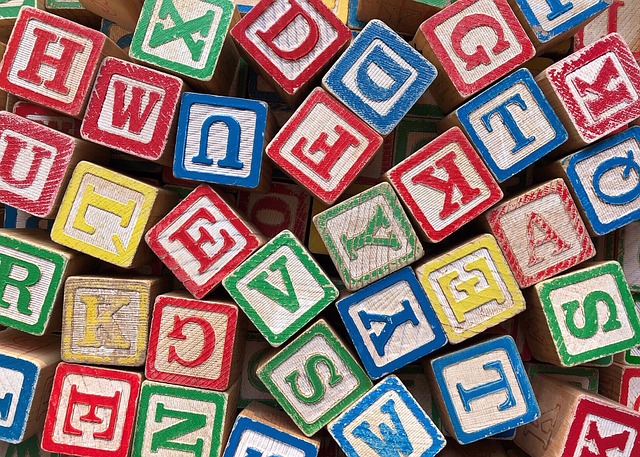

Cna Yuo Raed Tihs?

Image by WOKANDAPIX from Pixabay

I’ll bet you can!

I’m sure most of us immediately deciphered the title of this post as “Can You Read This?”

But how was your brain able to make sense of the jumbled letters so quickly?

Researchers believe that our brains use context to make predictions about what’s to come. Take an example like:

“Yuo cna porbalby raed tihs esaliy desptie teh msispeillgns.”

This is readable because as our brains decipher each word, they also predict which words would logically come next in order to make a coherent sentence. When faced with a word we can’t quite unscramble, our brains fill in the gaps based on subsequent words.

This even works with words that have NUMB3RS 1NST3AD 0F L3773RS. The numbers’ similar appearance to letters trumps their normal meaning.

Jumbled words are easiest to read when the first and last letters of the word remain the same, and only the letters between them are transposed. But when the middle letters are scrambled more confusingly, your brain has a harder time trying to process all the letters simultaneously. Try deciphering this:

“Big ccunoil tax ineesacrs tihs yaer hvae seezueqd the inmcoes of mnay pneosenirs.”

That was a bit more difficult, wan’t it?

But what about when it’s our lives that are a-jumble? When things happen to us that don’t seem to fit a meaningful pattern?

How do we make sense of the bewildering hardships and crises that often beset believers?

Read more

Start As You Mean To Go

Image by morzaszum from Pixabay

Have you ever heard the phrase “start as you mean to go on”?

Maybe your parent or teacher taught it to you. But what exactly does it mean?

It means to begin doing something in the same manner that you intend to continue doing it: to set a consistent pattern of behaviour right from the start.

That way, everyone will know what to expect from you, and they won’t end up disappointed.

Many of us have a hard time being consistent. We start out the new year with grand resolutions about exercising more, being a better parent, or reading the Bible.

But then our enthusiasm wavers, we get busy, and our resolutions fall by the wayside.

What about Jesus? Did Jesus start as He meant to go in His earthly ministry?

Let’s take a look at His first miracle and see what we find out.

Read more

Have You Found The Way?

Image by claumoho on Flickr CC BY-2.0

Have you ever tried navigating through a maze?

Perhaps as a kid you tried to find your way in and out of a hedge maze in a park. Or maybe you visited a maze made of corn or sunflower stalks in a farmer’s field. They’re fun, aren’t they?

Mazes can vary dramatically in size. Some are so large that visitors are given an emergency cell phone number to call if they get lost in the maze and can’t find their way out!

You might wonder, is a maze the same as a labyrinth?

The terms are often used interchangeably, but there’s actually a difference between them.

A maze is known as “multicursal.”

It branches off into many confusing paths and surprising dead ends. A maze may have several entrances and exits. The surrounding hedges or walls are so high and dense that you can’t see the whole pattern unless you get up high in a viewing tower or balloon ride. A maze is for entertainment, a fun puzzle to try to solve.

A labyrinth, on the other hand, is “unicursal.”

A labyrinth has only one track or walkway, and it doesn’t branch off into dead ends. There’s only one way in or out. You enter, follow the path to the centre, and continue on the same path until you reach the exit. Sometimes the barriers on either side are very low, allowing you to see the entire pattern. Walking a labyrinth can be a calming, spiritual practice.

Which does Christianity most resemble, a maze or a labyrinth?

Jesus implies that it’s more like a labyrinth:

There’s only one way in, and one path to follow.

Read more

Beauty in Unexpected Places

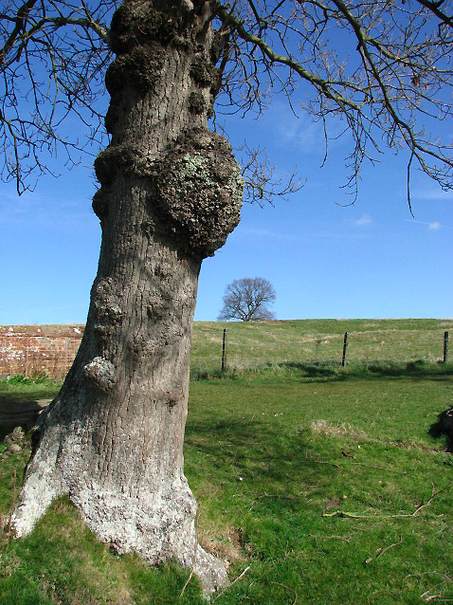
Burl on Tree Trunk.
Image by Evelyn Simak, Wikimedia Commons, CC BY SA-2.0

Sometimes there can be magic hidden within the most unlikely of places.

Take tree burls, for instance (or burrs, to our British friends).

These rounded, knotty growths found on tree trunks can seem very ugly.

Burls form when the tree is under some kind of stress, causing bud growth cells to develop in an abnormal way. Such stressors might include bacteria, viruses, fungi, insect infestations, or wounds. A burl is visible evidence of how the tree is dealing with these attacks.

They look rather like tumours, and mar the otherwise regular pattern of the bark.

Surely there’s nothing good about burls?

But there is.

Their unsightly exterior hides magnificence.

Few people know that inside these contorted and gnarled outgrowths is concealed something wonderful. The wood that burls yield is unusual and highly figured, making it valued and sought after by woodworkers and artists.

This unique wood is prized for its beauty and rarity, and is often used for veneers or inlays in fine furniture, trim or panelling inside luxury cars, and for household objects like bowls or pens, which become works of art.

Do you have a few “burls” in your life? Some knotty problems that have grown into a tangled mess?

Wonder if God could ever bring something good out of them?

He can!

Read more