The Cure for Seasickness

Image by Manfred Richter from Pixabay

Ever been to sea?

If you have, you just might have experienced a bout of seasickness. For landlubbers, the first time on a boat that is rolling and pitching on the waves can produce feelings of nausea.

Why is this?

The problem is a disconnect between the messages your eyes and your inner ear are giving your brain. If you’re in an enclosed space on a boat, your eyes tell you that you’re standing on level ground. The fluids swishing around in your inner ear, however, tell a different story: that you’re being tossed to and fro. It’s the contradictions between these messages that produces the sensation of seasickness.

So what’s the solution?

A time-tested remedy for seasickness is to get up on deck and look at the horizon: it’s the only thing that isn’t moving when the boat you’re aboard encounters heavy seas.

Looking at a fixed target gives your eyes a stationary point of reference, allowing your brain to reconcile this information with the motions your inner ear is reporting. Once you can see what “level” is, your brain can more easily deal with the feeling of movement from your inner ear.

And this isn’t just an old-wives’ tale: scientific studies have backed up the idea that staring at the horizon actually does make you feel steadier while at sea.

But what if you’re on dry land and feel “seasick” with the turbulence in your life?

What if it feels like the challenges in your life have put you in heavy, roiling seas, and you can barely tell up from down?

The same advice applies: focus on a fixed point, something that can be relied upon not to change.

For believers, that thing is Jesus.

Read more

Message in a Bottle

Image by Antonios Ntoumas from Pixabay

Have you ever put a message in a bottle and then thrown it into the ocean?

More importantly, has anyone ever come across it years later?

Believe it or not, there are actually people who keep track of this sort of thing.

According to the Message in a Bottle Hunter website, the world’s oldest seagoing message in a bottle is almost 132 years old. It was dropped into the Indian Ocean by a German research vessel studying ocean currents in 1886, and was found on a beach in Western Australia in 2018. (Wikipedia records an even older message, a Japanese one found after 151 years afloat.)

Bottled messages have travelled many thousands of miles. The farthest recorded distance travelled is probably the one that floated from New Zealand to Spain, almost an antipodean journey.

Perhaps the most romantic message in a bottle story concerns Swedish sailor Ake Viking. In 1956, he stuffed the message “To Someone Beautiful and Far Away” into a bottle and cast it into the sea. It was later retrieved by a young woman named Paolina in Sicily. Their subsequent correspondence culminated in marriage in 1958, with the wedding ceremony attracting 4,000 people.

We marvel at events like these: the idea that something thought lost and forgotten can show up decades later.

But there are some things we don’t want to come across again.

Who wants to be reminded of a sordid episode in our past—something that we did that now makes us cringe with regret and horror?

Fortunately, once our sins have been forgiven by God, they won’t wash up on a beach somewhere to accuse us.

Read more

Get Under the Dome

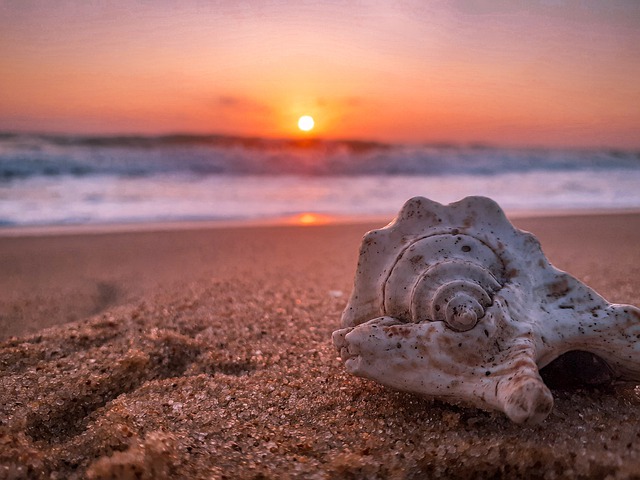
Image by Karuvadgraphy from Pixabay

They say if you put a seashell up to your ear, you can hear the sea.

Maybe some people truly can.

With my luck, I’m more likely to hear, “Your call is very important to us. Please stay on the line…” or, “How did you get this number?”

Sometimes it’s hard to tune in to what you really want to hear, isn’t it?

Similarly, it’s often difficult for us to hear God clearly.

There are so many other competing voices in our lives, and even our own thoughts can crowd out God’s attempts to get through to us.

We’ll discuss more about how to hear from God in future posts, but for now let’s concentrate on the most important tip:

Get under the dome.

What do I mean by that?

Perhaps I can best illustrate this by exploring a quirk in the construction of St. Paul’s Cathedral in London, United Kingdom.

Read more