The Best Worst Day

There are some dates in history which stand out for being associated with awful events. Each year, when the calendar rolls around to these dates, we shudder in horror when we recall what happened.

Here are a few “worst days in history” that come to mind:

September 11th, 2001: the deadly World Trade Centre terrorist attacks in New York.

August 6, 1945: the dropping of a nuclear bomb on Hiroshima, Japan.

June 28, 1914: the day Archduke Ferdinand was assassinated, igniting the horrific First World War which killed tens of millions.

December 26, 2004: the Boxing Day tsunami which killed hundreds of thousands.

Some horrible dates in history have specific terms associated with them, such as:

December 7, 1941: the Japanese attack on Pearl Harbor, a date which President Roosevelt said would “live in infamy.”

October 29, 1929: called “Black Tuesday,” the worst day of a stock market crash which would send the world spiralling into the Great Depression.

What term is associated with the horrible day Jesus Christ was crucified?

“Good.” It’s called Good Friday.

But why?

Read more

Lest We Forget

View from D-Day Landing Craft, June 6, 1944

Each year we mark November 11th as Remembrance Day in Canada (Veterans Day in the US).

On this special day, we remember the servicemen and -women who lost their lives to ensure the freedom we cherish so deeply today.

The numbers are staggering: it’s estimated that over 400,000 U.S. military personnel lost their lives during World War II. The US National D-Day Memorial Foundation estimates that over 4,000 Allied servicemen lost their lives on June 6, 1944 (D-Day) alone.

The fatalities during World War I are equally appalling, with close to 60,000 Canadians having lost their lives in service. The best estimate of war historians is that over 140,000 Allied soldiers lost their lives during the hellish Battle of the Somme alone in 1916 (including my great-uncle Pte. Robert John Tisdale, still in his teens).

The numbers who lost their lives in the Korean War, the Gulf War, Afghanistan, and others only adds to the toll of war’s terrible cost.

But wait a minute…every sentence I just wrote contained a mistake. Did you spot it?

Read more

Nip Sin in the Bud

Image by mouad gnnoni from Pixabay

Is it possible to limit yourself to just one piece of chocolate?

I’ve never been able to.

I find that having the first piece simply whets my appetite for a second. And I deserve a treat, don’t I?

Then I reason that dark chocolate contains antioxidants, so I’d better have several more pieces, if only for medicinal purposes. After all, you wouldn’t want me to oxidate, would you? I should hope not.

Finally, I rationalize continuing my chocolate binge by referring to the nutritional information on the package of my favourite dark chocolate for support.

It states that 4 squares of the chocolate contain 25% of my daily recommended amount of iron. So if I ate 16 squares, I’d be getting 100% of my daily iron needs met, right? Well, it’s important to prevent anemia, so I then decide I’d better finish off the package completely.

Do you see how my excuses and justifications led from having one piece of chocolate to consuming an entire heap of the stuff in short order? And how easily this all happened?

It’s the same way with sin, isn’t it?

It starts out tiny and unnoticeable, but can soon grow into a mess of mammoth proportions.

That’s why it’s so important to nip sin in the bud, because we have no idea where a “small” sin will lead.

Read more

Your Finest Hour

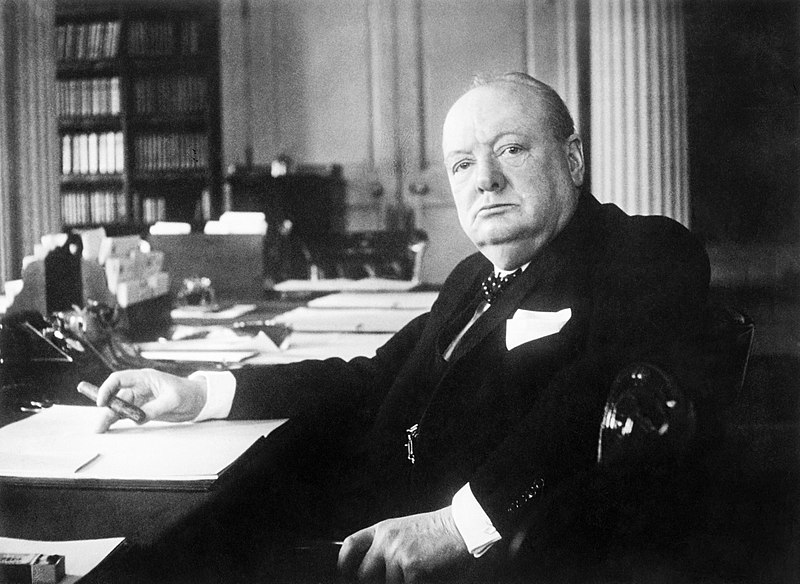
Winston Churchill, British Prime Minister during World War II
Wikimedia Commons, Public Domain

Thanks to COVID-19, we’re living in conditions that are almost unprecedented for many of us. Large swathes of the globe are living under the types of restrictions that many countries haven’t seen since the Second World War.

Students of history might be seeing additional parallels between the current pandemic and conditions during World War II. They might be calling to mind right now Winston Churchill’s famous line from a speech he delivered to the UK House of Commons in June of 1940, shortly after he became Prime Minister:

“Let us therefore brace ourselves to our duties, and so bear ourselves that, if the British Empire and its Commonwealth last for a thousand years, men will still say: ‘This was their finest hour.’ ”

Amid the news reports of hoarding and panic-buying, there are also some uplifting examples of people rising to the occasion and showing care and kindness to others.

Allow me to share with you some accounts of what may be some people’s “finest hour”:

Read more

Spot The Mistake

View from D-Day Landing Craft, June 6, 1944

On Remembrance Day in Canada (Veterans Day in the US), we remember the servicemen and -women who lost their lives to ensure the freedom we cherish so deeply today.

The numbers are staggering: it’s estimated that over 400,000 U.S. military personnel lost their lives during World War II. The US National D-Day Memorial Foundation estimates that over 4,000 Allied servicemen lost their lives on June 6, 1944 (D-Day) alone.

Read more