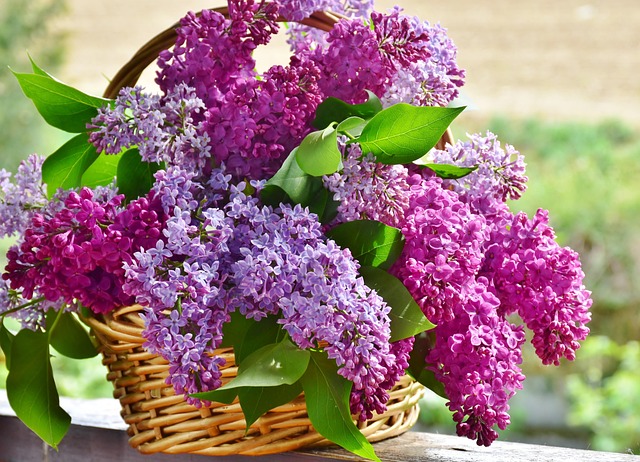
This is a special time of year in my part of Canada: the lilacs are speaking!
Lilac flowers don’t use words, of course. They announce their presence through their beautiful fragrance and delicate purple colour.
But there’s another way lilac shrubs can talk to us. Their very location can give us clues to the history of a place.
“…the story of early Canada can be read in the lilacs clustered where log cabins once stood, at the edge of abandoned fields—flowers marking time in centuries.” (from “A New Leaf,” by Merilyn Simonds)
Settlers to the northern parts of North America would often plant lilac shrubs on either side of the front door to their farmhouse. Generations or even centuries later, the building has long since been torn down, but the lilacs live on.
If you see a pair of huge lilac bushes in a field or empty lot, you can be pretty sure they used to flank someone’s front door. The house is gone, the family has moved away, but the fragrance of the lilacs they planted still fills the air.
This reminds me a bit of how prayers can live on, long after the person who prayed them is gone.
It’s important to remember that there’s no expiry date on prayers. Just because a person has passed away doesn’t mean that their prayers have been extinguished.
If a grandparent prayed over your future when you were a baby, those prayers still have influence long after your grandparent has passed away. If you’ve been praying for a family member to be saved, that prayer might well be answered in your lifetime. But if not, your prayer is still alive before God: the answer will come in His good time.
You never know how much the prayers of your forebears might be affecting your life today, even though those precious people may be long gone themselves. God can still honour and answer prayers generations later.

Sometimes God’s goodness overflows from one of His servants and blesses others. Genesis 39:5 tells us that from the day Joseph was put in charge of Potiphar’s house, the Lord began to bless Potiphar’s household for Joseph’s sake.
And in First and Second Kings we’re told that God was good to generations of King David’s descendants for David’s sake, even if this grace and mercy wasn’t always deserved, and even though David himself had died centuries before.
But is there a limit to how long God’s goodness and love for us endure? Let’s turn back to the natural world for some comparisons.
Some lilac shrubs are able to live for two hundred years. Olive trees live even longer than that: some are reputed to be thousands of years old. You can still see gnarled olive trees near the ruins of homes in Mediterranean nations. The family that originally planted the trees has died out, and their very language may have disappeared over the millennia.
But even olive trees can’t outlast God’s love.
Scripture tells us that God lavishes His unfailing love for a thousand generations on those who love Him and keep His commandments (Deuteronomy 5:10). A thousand generations equates to tens of thousands of years, but the meaning is essentially that God’s love is everlasting.
Prayers can live on long past the lilacs and olives, but God’s love outlasts them all: it never ends!
© 2025 Lori J. Cartmell. All rights reserved.
 The Faith Cafe
I can relate to your lovely message as my Aunt’s prayers for her son Harold were answered long after she died and as a result Harold went to be with Jesus on April 13th 2025.
LikeLike
What a wonderful testimony to God’s faithfulness! My condolences for the loss of your cousin, but how comforting it must be to know that he is with the Lord right now. Thank you so much for sharing this!
LikeLike