Message in a Bottle

Image by Antonios Ntoumas from Pixabay

Have you ever put a message in a bottle and then thrown it into the ocean?

More importantly, has anyone ever come across it years later?

Believe it or not, there are actually people who keep track of this sort of thing.

According to the Message in a Bottle Hunter website, the world’s oldest seagoing message in a bottle is almost 132 years old. It was dropped into the Indian Ocean by a German research vessel studying ocean currents in 1886, and was found on a beach in Western Australia in 2018. (Wikipedia records an even older message, a Japanese one found after 151 years afloat.)

Bottled messages have travelled many thousands of miles. The farthest recorded distance travelled is probably the one that floated from New Zealand to Spain, almost an antipodean journey.

Perhaps the most romantic message in a bottle story concerns Swedish sailor Ake Viking. In 1956, he stuffed the message “To Someone Beautiful and Far Away” into a bottle and cast it into the sea. It was later retrieved by a young woman named Paolina in Sicily. Their subsequent correspondence culminated in marriage in 1958, with the wedding ceremony attracting 4,000 people.

We marvel at events like these: the idea that something thought lost and forgotten can show up decades later.

But there are some things we don’t want to come across again.

Who wants to be reminded of a sordid episode in our past—something that we did that now makes us cringe with regret and horror?

Fortunately, once our sins have been forgiven by God, they won’t wash up on a beach somewhere to accuse us.

Read more

The Slippery Slope

Image by Hermann Kollinger from Pixabay

As in many northern climes, a favourite pastime of Canadian children in winter is tobogganing.

I did my share of barrelling down snowy slopes on a sled when I was a kid.

Even though we lived in a big city, we had nature nearby. A ravine adjoined our neighbourhood, featuring steep hills bordering a river valley.

These hills were perfect for tobogganing.

The trick was to follow the paths through the snow that others had already made. Trying to forge a path through newly fallen snow yourself was hard going, but if you positioned your sled on ready-made routes, you could really pick up some speed.

The highest hill in the ravine was nicknamed “The Killer” by the kids. When the snow was tamped down by dozens of tobogganing runs it became icy, and you’d find yourself going faster than you expected.

You could build up so much momentum sliding down this hill that you could end up plunging into the freezing cold river.

It was a slippery slope, quite literally.

And dangerous.

Sometimes in life we find ourselves on slippery slopes, don’t we?

If we’re not careful, we might blindly follow the path of others into sin. It might seem fun at first, and we might not notice that we’re accelerating.

Eventually, though, we may lose control and not be able to stop in time. We can unexpectedly end up in dangerous places.

Make no mistake, sin is a killer.

It kills relationships, reputations, trust, and future options.

Most importantly, it kills our connection with God.

Read more

The Storms of Jupiter

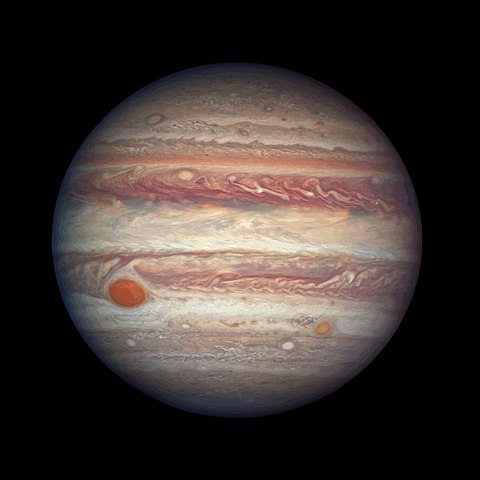
Image of Jupiter from NASA/ESA’s Hubble Space Telescope, via Wikimedia Commons CC 4.0

Can storms be beautiful?

Yes, if you’re far enough away from them!

The most distinctive feature of the planet Jupiter, its Great Red Spot, is actually a massive storm.

Astronomers have been observing this maelstrom continuously since 1878, but it’s likely that it had been raging for centuries before that. The size of this storm is so vast that it could swallow the entire earth.

From a safe distance away here on earth, the Great Red Spot’s colourful swirls are beautiful, like marbled ice cream or the end papers of antique books. Jupiter’s storms appear to us like abstract art; indeed, images of them have appeared on everything from posters and ties to bedsheets and yoga mats.

But up close, they’re violent tempests, howling hurricanes of ammonia and water. Because Jupiter is a gaseous planet, there is no solid ground to dissipate the energy of these swirling vortexes, as would happen on earth when a hurricane makes landfall. At its edges, the Red Spots’s wind speeds can reach 270-425 mph (430-680 km/h), over twice the speed of even the most monstrous hurricane here on earth.

Do you feel like you’re in a storm like that right now?

Perhaps you’ve been enduring heartache, unemployment, illness, or loneliness.

Maybe it seems like the tempest has been raging in your life for years. Nothing seems to slow it down. From a distance, people can’t see how destructive it is to you.

The good news is that God offers hope to those in the midst of the storms of life.

Read more

The Ultimate Love Story

Image by lillaby from Pixabay

Valentine’s Day is just around the corner!

On this beloved day of the calendar, we celebrate our love for that special someone in our lives. Many of us will be giving (or receiving) boxes of chocolates and bouquets of roses as an expression of that love.

But sometimes those roses have thorns, don’t they?

The truth is, love sometimes hurts. It can cost us something.

We think of Valentine’s Day as simply about romantic love, but the history behind this day shows us that true love is often about sacrifice.

This was certainly the case for Saint Valentine of Rome, for whom Valentine’s Day is named.

This third-century priest was known for his evangelistic work and for aiding persecuted Christians. He was martyred for his faith on February 14 in AD 269, executed by order of Emperor Claudius for refusing to deny Christ.

Saint Valentine patterned for us a life focussed on loving others; he refused to deny the Source of that love, even if it cost him his life.

Christ modelled that sort of sacrificial love, too.

He would let nothing stop His purpose of showing love to others by securing for them a way to spend eternity with Him, even if it cost Him His life.

And it did.

Read more

Thirteen By Any Other Name…Is Still Thirteen

I recently realized that I wasn’t living in the house that I thought I was.

Last summer I moved into a house bearing the number 15. I love everything about it: the house itself, the neighbours, and the area’s community spirit.

It wasn’t until some months later that I realized that I didn’t actually live at #15: I live at #13. The house next door is #11, and opposite my house is #12. Counting from the bottom of the street, mine is the thirteenth house.

So why didn’t the city call it #13 when it was assigning street numbers to the houses?

In many countries, the number 13 has unlucky connotations. Why? One reason is that there were thirteen present at the Last Supper, including Judas, who would betray Jesus.

Some people are superstitious about this number, and try to avoid its “bad luck” by keeping away from anything labelled 13. There’s even a word for the fear of the number thirteen: triskaidekaphobia.

The result is that many companies and cities fudge their numbering to avoid 13. This is why many hotels and tall buildings seem to lack a thirteenth floor: the elevator buttons skip from floor 12 to 14.

The thirteenth floor continues to exist, as does the thirteenth house on a street: we haven’t erased them. But we just call them by other names. We simply pretend that they’re actually the fourteenth floor or the fifteenth house. Everyone goes along with this fiction because it means we don’t have to face reality. We’re deluding ourselves, of course, but it seems we prefer to live in denial.

We do the same with sin, don’t we?

We call it by other names so we don’t have to face up to the reality of what it really is.

Read more

See What You’re Missing!

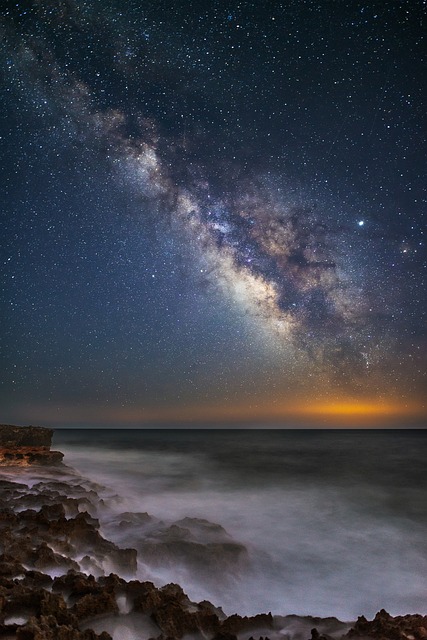
Image of the Milky Way by Evgeni Tcherkasski from Pixabay

Have you seen the Milky Way recently?

If you have, you can count yourself among the fortunate.

Astronomers say that light pollution from artificial lights is strong enough in many places to blot out the stars. They’ve calculated that over a third of humanity, and almost 80 percent of North Americans, can no longer see the Milky Way. Indeed, here in Toronto we’re lucky if we can even see the Big Dipper.

Few of us seem to recognize how sad this really is.

Vision scientist Sonke Johnsen does. He wrote:

“The thought of light traveling billions of years from distant galaxies only to be washed out in the last billionth of a second by the glow from the nearest strip mall depresses me no end.”

We seem to devalue the incredible gift of the night skies. We don’t pay it much mind when it’s there. And if we can’t see it any longer, the loss is of little importance to us.

Why is it that losing our connection to the wonder of our galaxy doesn’t seem to bother us? Is it our self-sufficiency? Are we so caught up with our shiny, man-made baubles that we’re blind to our need for something real?

I think this detachment from the cosmos speaks to a spiritual apathy, too.

How is it that we’re indifferent to the awesome gift of the Son of God?

Read more

The Beauty of Redeemed Brokenness

Image of parrot tulip by Coanri/Rita via Flickr CC BY-NC-ND-2.0

What’s your favourite flower?

Even though I certainly love roses, the tulip holds a special place in my heart. It’s not as showy or fragrant as a rose, but it brings such joy in spring after a long winter.

Among the many types of tulips, I especially like the variegated ones (with multicoloured petals).

But did you know that the dramatic colour combinations of variegated tulips are caused by a virus?

Gardeners had long noticed that tulip petals occasionally “broke” into unusual patterns. But it wasn’t until the late 1500s that botanists realized that the beautiful mixed colouring arising spontaneously in some tulips was actually the result of a disease.

While the tulip-breaking virus causes lovely variegated colouring, it also weakens the tulip bulb, eventually leading to the death of its genetic line.

So how is it that we can still enjoy variegated tulips today? Why haven’t they all died out?

Fortunately, botanists centuries ago learned to graft healthy tulip bulbs onto the diseased or “broken” ones, preserving their lineage. Today, we can enjoy countless cultivars in a dizzying array of colours and patterns.

Doesn’t this remind you of what God does for us?

Read more

Hark! The Herald Angels Sing

Image courtesy of Hippopx CCO 1.0: Public Domain

What’s your favourite Christmas carol?

“Jingle Bells” seems to be at the top of many lists of the top Yuletide songs. It’s catchy, kids love it, and it puts people in a cheery mood.

Or perhaps you’re more partial to “Silent Night”? I don’t blame you—it’s a beautiful classic.

The honour of the best-selling Christmas single would have to go to Bing Crosby’s “White Christmas.” And with good reason—how can you not love this song?

(I’m hoping that your favourite Christmas number isn’t “Grandma Got Run Over By A Reindeer.” If it is, I’m not sure we can be friends.)

As for me, my favourite carol is “Hark The Herald Angels Sing,” with lyrics by Charles Wesley and a rousing melody by Felix Mendelssohn.

This hymn is not only enjoyable to sing, it’s also richly loaded with Biblical truths. It starts out this way:

“Hark! The herald angels sing:
‘Glory to the new-born king
Peace on earth and mercy mild
God and sinners reconciled.’ “

The angels are celebrating the inauguration of a new Kingdom featuring world-wide peace and the reconciliation of humanity to its creator.

But wait a minute: aren’t the angels jumping the gun in this account?

God and sinners wouldn’t be reconciled until decades later in Jesus’ life, at the Cross.

And since Jesus was born the world hasn’t had a year without war somewhere or other. Where is the peace the carol describes?

Aren’t the angels being a bit premature in celebrating?

Not at all.

Read more

God With Us

I’m so pleased to share with you another guest post by my friend Veronica Gerber. I know you’ll be blessed by her wisdom!


What’s in a name?

So it’s Christmas time again … when we remember Jesus’ birth:

“For unto us a child is born, to us a son is given,
and the government will be on his shoulders.
And he will be called Wonderful, Counsellor,
Mighty God, Everlasting Father, Prince of Peace.” (Isaiah 9:6)

Do you have a favourite way of addressing God or thinking of Jesus?

I’m quite partial to Emmanuel which means “God with us” … ever alongside those who have eyes to see and ears to hear. It’s all too easy to lose sight, so to speak, of Jesus being with us in the day-to-day, especially during the hustle and bustle of Christmas, wouldn’t you say?

“Behold, a virgin shall be with child, and shall bring forth a son, and they shall call his name Emmanuel, which being interpreted is God with us.” (Matthew 1:23)

C.S. Lewis has written about God’s plan, “The whole thing narrows and narrows, until at last it comes down to a little point, small as the point of a spear—a Jewish girl at her prayers.”

Today as I read the accounts of Jesus’ birth I tremble to think of the fate of the world resting on the responses of two rural teenagers long ago. How many times did Mary review the angel’s words? How many times did Joseph second-guess his own encounter with an angel—“Was it just a dream?”—as he endured the hot shame of living among villagers who could plainly see the changing shape of his fiancée?

Mary, the virgin, whose parenthood was unplanned, had a commendable response to the angel. She heard the angel out, pondered the repercussions, and nonetheless replied:

“I am the Lord’s servant.
May it be to me as you have said.”

Often a work of God comes with two edges, great joy and great pain … as is the joy and travail of giving birth. In Mary’s matter-of-fact response, she embraced both. She was the first person to accept Jesus on his own terms, regardless of the personal cost. An ordinary beginning, an extraordinary journey.

It makes me wonder what work of God hinges on me at my prayers? And on you and your prayers?

Read more

Unsung Heroes

Image by Myriams-Fotos from Pixabay

Ever had a time when all your plans were upended?

Joseph certainly did.

The man who would become the earthly father of Jesus probably had his life all mapped out.

He thought he’d get married to Mary, settle in Nazareth with her, have a posse of kids, and build his business. He could probably foresee how his life would unfold over the ensuing decades.

But then God stepped in.

First Joseph had to deal with the jaw-dropping news that an angel told Mary that she would bear the Messiah. Joseph was told by a divine messenger to go ahead with the marriage, despite tongues wagging in town about his being cuckolded by some other man. No doubt Joseph hadn’t figured his married life would start out this way.

Then the couple had to travel to Bethlehem to be counted in a census. While there, Mary delivered her child in a stable. Joseph certainly never thought this was how a child of his would be born.

The next thing you know, the young family had to flee to Egypt to escape those who wanted to murder Jesus. I’m sure Joseph hadn’t banked on having to travel to a foreign country to evade capture by the authorities.

At every turn, Joseph’s life and plans were upended.

And yet he’s something of a hero in the Christmas story, albeit an unsung one.

Read more