The Way of Escape

Image of Jewelweed flower by jimaro morales from Pixabay

Sometimes Mother Nature can reach out and bite you.

If you’ve ever suffered the ill effects of a run-in with stinging nettles or poison ivy, you’ll know what I mean.

Both of these plants produce an unpleasant, itchy rash if your exposed skin comes in contact with them. If this happens when you’re out in the woods and nowhere near a pharmacy to buy rash cream, where do you find some relief?

From Mother Nature herself!

The wilderness might have stung you, but it also provides an effective solution.

Plants such as dock and jewelweed (also called touch-me-not) help relieve the sting from nettles and the itch from poison ivy. The sap of these “rescue” plants, when rubbed on the skin, provides a cooling, soothing effect. Native Americans have known this trick for millennia.

Conveniently, dock and jewelweed can usually be found growing in the same area as poison ivy and stinging nettles.

Coincidence? I’m not so sure.

I think God placed the “cures” near the harmful plants on purpose.

For one thing, He knew we’d need a ready remedy for skin woes when out in the bush.

Also, it illustrates a truth contained in the Bible:

When we are faced with temptation, God always provides a way of escape along with it.

Read more


Fast Or Slow, God Is Always At Work

Image by Valiphotos from Pixabay

If you look out the (virtual) window here at The Faith Cafe, you can see the leaves starting to change colour on the trees outside.

The tops of the maple trees are starting to blush with red. There’s a hint of yellow among the linden leaves. And the sumacs are beginning to fire up in vivid shades of orange.

This change creeps in gradually, however. At first, you barely notice fall coming on. Weeks from now, though, the trees will be ablaze in vibrant yellows, oranges, and reds. The difference from how they look today will be dramatic.

Oftentimes, I think this is the way God works in our lives.

He is slowly but surely leading us through a process of change and sanctification.

We may not notice that aspects of our character are being transformed, because the change is so gradual. One day, however, you look up and realize how far you’ve come and what amazing things God has done in your life.

Read more

Watch the Impossible Happen

Image by Josef Pichler from Pixabay

They say that it’s impossible for bumble bees to fly.

The theory goes that their weight and size are too great for their tiny wings to support, so according to the laws of aerodynamics they shouldn’t be able to get off the ground.

The only problem is, no one has told the bumble bees that.

They seem to have no difficulty in buzzing about in the air from flower to flower, collecting pollen and nectar to bring back to the hive.

So how do they do it, when physics would seem to suggest that they can’t?

For a long time, this was a mystery to us. Eventually we discovered that bumble bees actually don’t defy the laws of aviation: they simply fly in a different way than a plane or bird does.

We learned that the propeller-like way they beat their wings creates an invisible force above them, like a mini-tornado or -hurricane. This vortex actually sucks them upward, giving them lift in spite of their weight.

There was more going on than met the eye, which allowed the “impossible” to happen.

Likewise, when we believe in God, there is more going on in our lives than we’re aware of.

When God is working in your life, sometimes He will cause the impossible to happen, even when you can’t see how it could.

Read more

Fill Up Your Storehouse

This is a busy (and nutty) time of year for squirrels.

The little critters are hard at work storing up nuts and seeds for the hard winter ahead.

Depending on the species, they may either store their nuts in one spot (a stash), or hide them by burying them in multiple locations (known as “scatter-hoarding”). They’ve even been known to shamelessly steal nuts from the stashes of other squirrels.

The jury is out on whether squirrels actually remember where they’ve hidden all those nuts. Some studies suggest they can recall the location of thousands of buried nuts. Other research implies that squirrels fail to recover a good number of their treasures, which allows the nuts and acorns to grow into trees.

One thing is for certain: these little guys are single-minded about gathering up nuts before winter, often using unconventional places to store them.

Like cars.

Just ask Bill Fischer of Fargo, North Dakota. For the past eight years, a red squirrel has been using Bill’s pickup truck to store walnuts. Each year, the poor man has to remove thousands of walnuts from every crevice of his truck, including the engine compartment and bumpers.

This month, the critter set a new record, stashing 348 pounds of nuts in Bill’s vehicle. And this was all the work of one tiny squirrel.

These crafty little animals might exasperate us, but we can learn something from them:

They make sure they’ve “squirrelled away” provision for hard times to come.

I think we should do something similar:

Store up the Word of God in your heart, because you never know when you might need a certain verse to sustain you in a tough situation.

Read more

Plant the Seeds of Your Dreams

Vintage seed packets. Photo by Douglas Coulter on Flickr. CC BY-NC-SA 2.0

If you’re a gardener, you probably have a stash of seeds tucked away.

I certainly do. I have a special bin in a cupboard where I store all my seed packets:

Envelopes containing seeds I’ve harvested over the years from plants in my garden. Seeds that friends have collected from their own gardens and then passed on to me, along with handwritten notes about the plants.

Packets of seeds I’ve bought the Botanic Garden’s seed fairs that look intriguing: seeds of rare plants, unusual colours of better known plants, or hard-to-find heirloom varieties of vegetables or flowers.

I have a veritable treasure trove of seeds in my cupboard!

There’s only one problem:

Those seeds are doing me absolutely no good sitting in a bin on a shelf.

I may take the packets out from time to time and look rapturously at the photos on the front. I might imagine how nice it would be to grow such gorgeous flowers or unusual veggies.

But until I put those seeds in the ground, all they are is wishful thinking and pretty pictures.

If I don’t take a step of faith and plant my seeds, I’ll never get a harvest.

Similarly, we sometimes leave our dreams and desires on a shelf, so to speak.

Read more

The Law of the Universe

Newton’s cradle, a device which illustrates conservation of momentum and conservation of energy. Image by 3D Animation Production Company from Pixabay

If you were paying attention during physics class in high school, you’ll know that there are certain laws that the natural world abides by.

The Law of Gravity, for instance. Legend has it that this principle was discovered by a young Isaac Newton when he was hit on the head by an apple which fell from the tree he was sitting under.

Or the Law of Inertia, which states that an object at rest or in motion will continue in that state unless acted upon by an external force. So when I’m sitting in my easy chair and don’t want to get up to do any housework, I’m not being lazy. I’m simply obeying the law of inertia.

I recently heard a wag rephrase Newton’s Third Law of Motion (“For every action there is an equal and opposite reaction”). He dubbed it the Law of Emotion: for every male action there is a female overreaction!

Then there’s the Law of Conservation of Energy, which says that energy can’t be created or destroyed, but can be altered from one form to another. For instance, our bodies transform the chemical energy in food into kinetic energy to help us move around.

I think sin has a principle attached to it which is similar to the Law of Conservation of Energy.

Sin can’t just disappear. It has to be dealt with in some way.

But it can be transformed.

As author Dorothy Sayers said, “There is only one real law—the law of the universe. It may be fulfilled either by way of judgement or by the way of grace, but it must be fulfilled one way or the other.”

Read more

We Must Experience Christ Firsthand

What’s your favourite floral fragrance?

If you said rose or lavender, you’re in luck.

These flowers are among those from which we can easily extract essential oils. These substances can then be used in products ranging from perfumes to scented soaps. If you love the smell of these flowers, you have all manner of ways to experience the scent. You can do so directly, by smelling the flower, or secondhand, as it were, through items made from their oils.

But some flowers don’t produce enough usable essential oils.

My favourite floral scent, lilac, is one of them.

Unfortunately for me, the aromatic compounds in lilacs are nearly impossible to acquire. Trying to extract the fragrance through steam distillation can end up destroying the scent profile. And the tiny amount of essential oils that may result are so expensive to produce that it’s not economically worthwhile to bother.

The end result is that you can’t buy true lilac essential oil. Perfumers may be able to mimic the scent of lilacs through synthesis, but the resulting fragrance hasn’t been distilled solely from the actual flower itself; it’s merely an approximation, a blend of other floral notes. No chemist can authentically capture the unique scent of the lilac.

If you want to experience the true fragrance of lilacs, there’s only one way to do it. You have to experience it “live,” by smelling an actual cluster of flowers.

Likewise, if we want to experience Jesus, it has to be “live.”

Read more

Weeding, Like Forgiving, Never Ends

Weeding the garden, like forgiving, is a task that’s never-ending.

We can’t simply say, “I weeded last week, so I’m done now. I won’t need to weed for the rest of the season.”

Every gardener know that the weeds will keep cropping up. The job of weeding is one that lasts for as long as you have a garden.

So it is with forgiving those who have offended or hurt us. Forgiving is not optional for believers: we are to forgive others as God has forgiven us.

But sometimes we think that it’s a “one-and-done” effort. We grudgingly forgive someone once, and assume we’re done with it.

Inevitably, though, we learn that it doesn’t work that way. The next week, we might ruminate about what they did to us and get mad all over again. We find there’s still a root of bitterness in our heart, and we have to forgive them once more.

Like weeding, the duty to forgive is ongoing. It may require more “rinse and repeat” cycles than you might imagine.

Read more

Allow God to Prune You

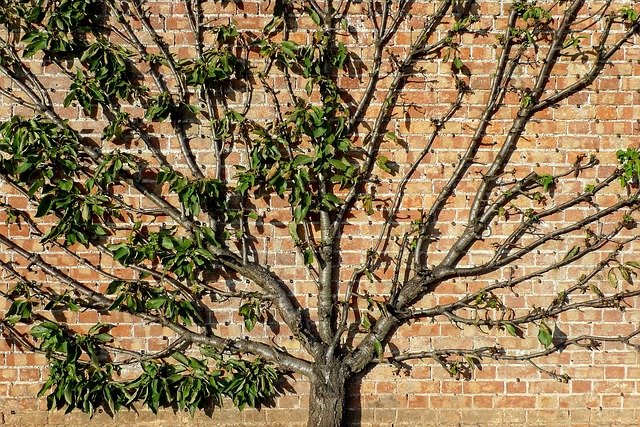
Fruit tree espaliered against wall. Image by Andrew Martin from Pixabay

If I were a young apple tree, I probably wouldn’t like being pruned very much.

If I saw the gardener heading my way with secateurs or pruning shears, I’d probably flinch. I would hope that he would just give me a little trim, and leave most of my luxuriant growth intact.

But the gardener invariably has other ideas.

I’d watch in horror as one branch after another was lopped off. They seemed perfectly good to me, but the gardener thought otherwise.

Why has the gardener cut me back so severely?

To make me more fruitful.

God does the same with us, and we find it just as uncomfortable.

The truth is, pruning hurts, and it seems to involve so much wastage.

But our loving Heavenly Father knows that it’s for our own good. Scripture says that it’s for His glory that we bear much fruit.

Read more

What Makes A Garden?

Japanese garden. Image by Drobekpetr from Pixabay

If something doesn’t fit your idea of a garden, is it still a garden?

I must confess to having trouble warming up to Japanese gardens. They often feature distinctive elements such as conifers and moss, gravel raked to suggest waves in water, stone lanterns or water basins, and perhaps a bridge.

But to me, a garden isn’t really a garden unless its primary focus is an abundance of colourful flowers.

So are Japanese gardens still gardens? Very much so!

They still celebrate nature, even if some elements are suggested rather than incorporated literally. They still reflect the beauty that God has placed on this Earth. They still have the essentials down pat.

I guess I need to expand my idea of what a garden is.

We shouldn’t look askance at the way others have created their gardens. God smiles on them all.

Perhaps this is a lesson we can apply to the Christian life, too.

Read more