The Burning Question

Image by Anelka from Pixabay

Are tomatoes fruits or vegetables?

I might have opened up a can of worms just by asking, because disagreement has surrounded this issue for generations.

In fact, the US Supreme Court has even weighed in on this burning question.

This issue was brought to a head in 1893 in Nix v. Hedden. The Court held that, even though tomatoes are fruits botanically, they would be classified as vegetables for the purposes of tariffs, imports and customs.

Did this settle the matter? Hardly.

Some US states have since named the tomato their state fruit; others call it their state vegetable.

It’s the sort of issue that produces arguments to this day.

Let me ask you another question:

Was Jesus simply a good man and teacher, or was He Lord?

The answer to this question has eternal consequences for each of us. It’s not simply a matter of “You say tomayto, I say tomahto.”

Read more

Turning the Bitter Sweet

Image by Steve Buissinne from Pixabay

“Go suck a lemon!”

Have you ever heard anyone say that?

It means they’re annoyed with you and want you to experience something unpleasant. Lemon juice is so sour that it makes your mouth pucker.

But if lemon juice is so bitter, why are lemon desserts so yummy?

It’s thanks to the addition of a sweetener.

I like lemon-based desserts much better than orange-flavoured ones. It seems to me that the combination of sour and sweet is what makes lemon desserts so satisfying (see below for Lemon Poppyseed Cake recipe).

They say when life hands you lemons, make lemonade.

No, when life hands you lemons, turn it over to God.

He can transform your unwelcome experiences into something good, and make the bitter waters of your life sweeter than any lemonade.

Read more

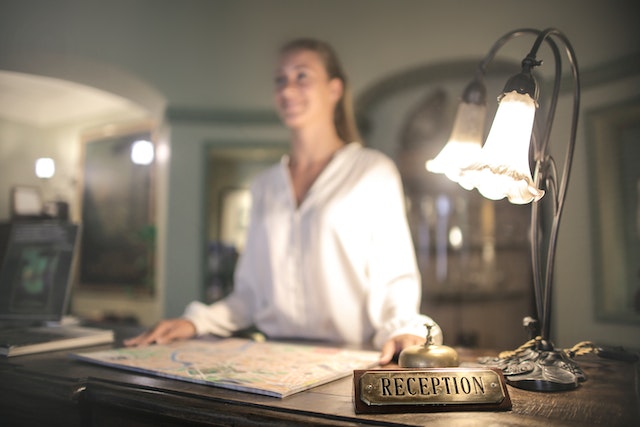
Check In To The Grace Hotel

Image by Andrea Piacquadio via Pexels.

As any traveller knows, hotel staff can make or break your stay.

Especially the staff at the front desk, because they set the tone immediately. Within minutes, you get the sense of whether your hotel stay will be a happy or problematic one.

Case in point: when I was very young, my family spent some time travelling in Europe.

We stayed in a beautiful country where the people happened to be sticklers for rules and regulations. While we enjoyed our time in this nation, dealing with officials who insisted on strict adherence to protocols and procedures, even for tourists, became a bit tiresome.

Then we landed up in the south of France.

We arrived at a hotel late at night, exhausted, and trudged up to the front desk. My father introduced himself and mentioned to the clerk what country we’d just arrived from. He then began fishing out the documentation he needed to register for our stay.

The desk clerk took one look at two weary travellers with a cranky toddler in tow (me!), and said,

“Relax. You’re not in that country anymore. Here’s your room key. Go get some sleep and we’ll deal with the paperwork in the morning.”

I think my Dad almost cried out of gratitude and relief.

Although we settled the bill with the hotel when we left, my Dad doesn’t remember us ever properly registering with them!

Isn’t that what God’s grace is like?

God accepts us before we’ve proven ourselves or filled out all the forms or ticked off all the boxes.

Read more

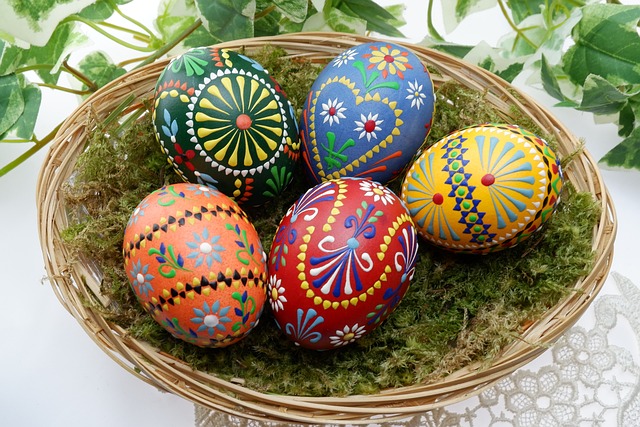
New Life From Broken Eggs

Image by Kornelia Thor on Pixabay

There is often great beauty in simple things. Take the egg, for instance.

Even a plain white egg is pleasingly shaped, adorably sized, and a perfect blend of form and function.

Add some decoration, and you’ve got a small masterpiece.

Countries such as Ukraine have made an art out of decorating eggs as an Easter tradition.

Eggs “decorated” by God have a beauty all their own. There’s a charm to naturally speckled bird eggs that is irresistible.

You’d like to keep them intact forever, enjoying their freckled surface and gentle colours for as long as possible.

But if the eggs perpetually remained in the same state and were never broken open, you’d miss out on an even greater joy: you’d never get to see the chick emerge.

Sometimes you have to let go of something you love to receive an ever greater blessing.

This is something the disciples had to learn at the first Easter.

Read more

Welcome to Your Spring!

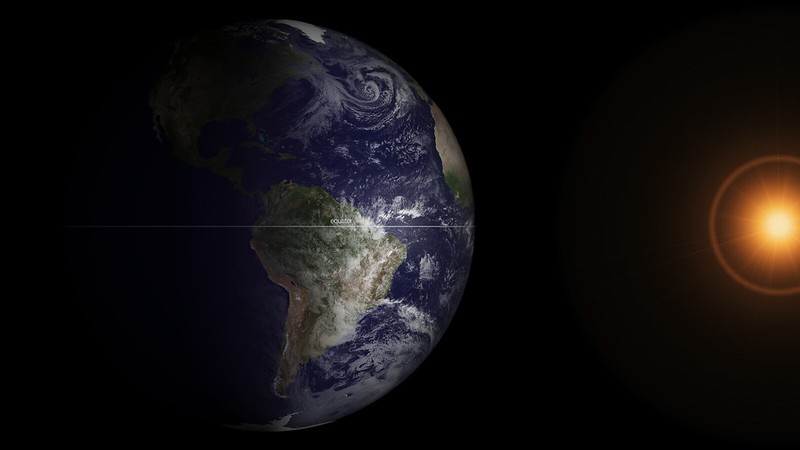
Satellite captures moment of spring equinox. Image by NASA Goddard Space Flight Center via Flickr CC BY-2.0

Welcome to Spring!

If you live in the Northern Hemisphere, today marks the vernal equinox, the first day of astronomical spring. (For those Down Under, this day heralds the arrival of autumn.)

The return of spring signals longer days with more sunlight and warmer temperatures. Even though it may take a while to see blooming flowers (especially in Canada!), the spring equinox is a reminder that brighter days are ahead.

But what exactly is an equinox?

We have two of them each year, in spring and fall. Each one marks the day when the sun is directly above the Earth’s equator (from our perspective), and night and day are of equal length.

The sun’s path then crosses the celestial equator (an imaginary line or circle in the sky directly above the Earth’s equator), and heads north or south, depending on the time of year.

At the spring equinox, the sun is rising into the Northern Hemisphere: it’s our turn for renewal.

But no matter where you live on the planet or what time of year it is, you can experience a new season of rebirth in your life.

Your new beginning comes when the Son rises in your life.

Read more

Message in a Bottle

Image by Antonios Ntoumas from Pixabay

Have you ever put a message in a bottle and then thrown it into the ocean?

More importantly, has anyone ever come across it years later?

Believe it or not, there are actually people who keep track of this sort of thing.

According to the Message in a Bottle Hunter website, the world’s oldest seagoing message in a bottle is almost 132 years old. It was dropped into the Indian Ocean by a German research vessel studying ocean currents in 1886, and was found on a beach in Western Australia in 2018. (Wikipedia records an even older message, a Japanese one found after 151 years afloat.)

Bottled messages have travelled many thousands of miles. The farthest recorded distance travelled is probably the one that floated from New Zealand to Spain, almost an antipodean journey.

Perhaps the most romantic message in a bottle story concerns Swedish sailor Ake Viking. In 1956, he stuffed the message “To Someone Beautiful and Far Away” into a bottle and cast it into the sea. It was later retrieved by a young woman named Paolina in Sicily. Their subsequent correspondence culminated in marriage in 1958, with the wedding ceremony attracting 4,000 people.

We marvel at events like these: the idea that something thought lost and forgotten can show up decades later.

But there are some things we don’t want to come across again.

Who wants to be reminded of a sordid episode in our past—something that we did that now makes us cringe with regret and horror?

Fortunately, once our sins have been forgiven by God, they won’t wash up on a beach somewhere to accuse us.

Read more

The Slippery Slope

Image by Hermann Kollinger from Pixabay

As in many northern climes, a favourite pastime of Canadian children in winter is tobogganing.

I did my share of barrelling down snowy slopes on a sled when I was a kid.

Even though we lived in a big city, we had nature nearby. A ravine adjoined our neighbourhood, featuring steep hills bordering a river valley.

These hills were perfect for tobogganing.

The trick was to follow the paths through the snow that others had already made. Trying to forge a path through newly fallen snow yourself was hard going, but if you positioned your sled on ready-made routes, you could really pick up some speed.

The highest hill in the ravine was nicknamed “The Killer” by the kids. When the snow was tamped down by dozens of tobogganing runs it became icy, and you’d find yourself going faster than you expected.

You could build up so much momentum sliding down this hill that you could end up plunging into the freezing cold river.

It was a slippery slope, quite literally.

And dangerous.

Sometimes in life we find ourselves on slippery slopes, don’t we?

If we’re not careful, we might blindly follow the path of others into sin. It might seem fun at first, and we might not notice that we’re accelerating.

Eventually, though, we may lose control and not be able to stop in time. We can unexpectedly end up in dangerous places.

Make no mistake, sin is a killer.

It kills relationships, reputations, trust, and future options.

Most importantly, it kills our connection with God.

Read more

The Ultimate Love Story

Image by lillaby from Pixabay

Valentine’s Day is just around the corner!

On this beloved day of the calendar, we celebrate our love for that special someone in our lives. Many of us will be giving (or receiving) boxes of chocolates and bouquets of roses as an expression of that love.

But sometimes those roses have thorns, don’t they?

The truth is, love sometimes hurts. It can cost us something.

We think of Valentine’s Day as simply about romantic love, but the history behind this day shows us that true love is often about sacrifice.

This was certainly the case for Saint Valentine of Rome, for whom Valentine’s Day is named.

This third-century priest was known for his evangelistic work and for aiding persecuted Christians. He was martyred for his faith on February 14 in AD 269, executed by order of Emperor Claudius for refusing to deny Christ.

Saint Valentine patterned for us a life focussed on loving others; he refused to deny the Source of that love, even if it cost him his life.

Christ modelled that sort of sacrificial love, too.

He would let nothing stop His purpose of showing love to others by securing for them a way to spend eternity with Him, even if it cost Him His life.

And it did.

Read more

Thirteen By Any Other Name…Is Still Thirteen

I recently realized that I wasn’t living in the house that I thought I was.

Last summer I moved into a house bearing the number 15. I love everything about it: the house itself, the neighbours, and the area’s community spirit.

It wasn’t until some months later that I realized that I didn’t actually live at #15: I live at #13. The house next door is #11, and opposite my house is #12. Counting from the bottom of the street, mine is the thirteenth house.

So why didn’t the city call it #13 when it was assigning street numbers to the houses?

In many countries, the number 13 has unlucky connotations. Why? One reason is that there were thirteen present at the Last Supper, including Judas, who would betray Jesus.

Some people are superstitious about this number, and try to avoid its “bad luck” by keeping away from anything labelled 13. There’s even a word for the fear of the number thirteen: triskaidekaphobia.

The result is that many companies and cities fudge their numbering to avoid 13. This is why many hotels and tall buildings seem to lack a thirteenth floor: the elevator buttons skip from floor 12 to 14.

The thirteenth floor continues to exist, as does the thirteenth house on a street: we haven’t erased them. But we just call them by other names. We simply pretend that they’re actually the fourteenth floor or the fifteenth house. Everyone goes along with this fiction because it means we don’t have to face reality. We’re deluding ourselves, of course, but it seems we prefer to live in denial.

We do the same with sin, don’t we?

We call it by other names so we don’t have to face up to the reality of what it really is.

Read more

See What You’re Missing!

Image of the Milky Way by Evgeni Tcherkasski from Pixabay

Have you seen the Milky Way recently?

If you have, you can count yourself among the fortunate.

Astronomers say that light pollution from artificial lights is strong enough in many places to blot out the stars. They’ve calculated that over a third of humanity, and almost 80 percent of North Americans, can no longer see the Milky Way. Indeed, here in Toronto we’re lucky if we can even see the Big Dipper.

Few of us seem to recognize how sad this really is.

Vision scientist Sonke Johnsen does. He wrote:

“The thought of light traveling billions of years from distant galaxies only to be washed out in the last billionth of a second by the glow from the nearest strip mall depresses me no end.”

We seem to devalue the incredible gift of the night skies. We don’t pay it much mind when it’s there. And if we can’t see it any longer, the loss is of little importance to us.

Why is it that losing our connection to the wonder of our galaxy doesn’t seem to bother us? Is it our self-sufficiency? Are we so caught up with our shiny, man-made baubles that we’re blind to our need for something real?

I think this detachment from the cosmos speaks to a spiritual apathy, too.

How is it that we’re indifferent to the awesome gift of the Son of God?

Read more